

Attorney Advertising. This article was prepared with the assistance of artificial intelligence and reviewed by Oaks Law Firm prior to publication.
Legal referrals are one of the most consequential decisions made in a personal injury case, and they happen before most clients even realize it. When an attorney sends your case to a specialist, they are not passing you off. They are making a judgment call that your situation requires deeper expertise, more resources, or trial readiness that their practice cannot provide. That decision, made early and made well, can shape everything that follows.
- Referrals connect clients to attorneys with focused personal injury experience
- They protect referring attorneys from ethical exposure and reputational risk
- Specialized receiving firms bring medical-legal resources, trial infrastructure, and negotiating leverage
- Timely referrals preserve legal deadlines that, once missed, cannot be recovered
- Firms like Oakslawfirm receive referrals precisely because of their track record and focused practice
Why legal referrals matter in personal injury cases
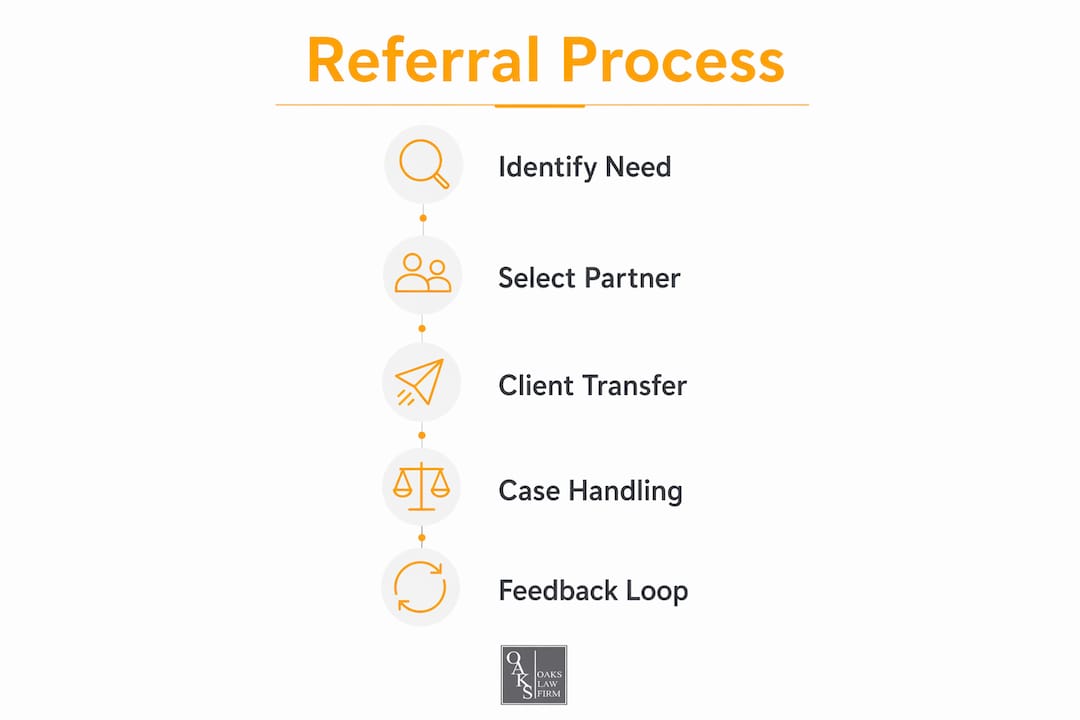
A legal referral in the personal injury context means one attorney formally transfers a client’s case to another attorney better suited to handle it. This happens for several reasons: the case involves catastrophic injuries outside the referring firm’s experience, the litigation costs exceed what a smaller practice can absorb, or the client simply needs a specialist in California tort law. The referral is not a rejection. It is a professional acknowledgment that the client’s interests come first.
Referral networks in personal injury law are built over years of consistent performance. Attorneys refer to firms they trust, and that trust is earned through communication, results, and reliability. Referral success depends heavily on the referring attorney’s confidence that the receiving firm will protect their reputation with the client they are sending over.
Selecting a referral partner involves more than checking credentials. Referring attorneys look at trial history, client satisfaction, financial stability to fund complex litigation, and whether the firm has dedicated medical-legal staff. Personal injury cases can involve significant upfront costs for expert witnesses and diagnostics, making referrals to well-resourced firms critical.
Ethical rules also shape how referrals work. Under California State Bar guidelines, any fee-sharing arrangement must be disclosed to the client in writing, and the client must consent. The total fee must remain reasonable. Transparency is not optional. It is the foundation that keeps the referral relationship legally sound and professionally defensible.
How trust and specialization drive referral outcomes
When a colleague refers a client to you, they are putting their own reputation on the line. That is the core psychology behind every referral decision. Referrers are running a risk assessment, even when they never call it that. A CPA who sends a client to the wrong attorney, or a general practitioner who refers to a firm that goes silent for months, pays a professional price for that mistake.

This is why the attorneys who receive the most referrals are not always the most visible. They are the most predictable. They communicate proactively, meet deadlines, and make the referrer feel safe. Competence alone does not create that confidence. Consistency does.
Specialization matters just as much. Personal injury law demands fluency in tort doctrine, insurance strategy, medical terminology, and trial preparation. A general practice attorney handling a catastrophic injury case for the first time is learning on the client’s time. Specialized firms with in-house medical-legal experts produce stronger cases and are favored referral partners for exactly that reason.
Oakslawfirm, led by attorney Matthew Nezhad, has built its referral reputation on this model since 2002. The firm accepts a limited number of cases each year, which means every client receives focused attention rather than being absorbed into a high-volume pipeline. That selectivity is itself a signal to referring attorneys: when Oakslawfirm takes a case, it is prepared to fight it.
Pro Tip: When evaluating a potential referral partner, ask specifically about their trial history. Firms that regularly prepare cases for trial, even when most settle, negotiate from a fundamentally different position than firms that rarely see a courtroom.
California deadlines make timely referrals urgent
California law sets hard deadlines that do not bend for unprepared clients. Under CCP §335.1, most personal injury claims must be filed within two years of the injury date. Miss that window and the right to sue is gone, regardless of how strong the case might have been.

The deadline tightens sharply when a government entity is involved. Under Gov. Code §911.2, a claim against a city, county, or state agency must be filed within six months of the incident. That is not six months to file a lawsuit. It is six months to file an administrative claim, before any litigation can even begin.
Exceptions do exist. Minors generally have until two years after their 18th birthday to file. The discovery rule can extend the clock when an injury was not immediately apparent. But these exceptions require legal analysis. Assuming you qualify is not a strategy.
This is where a timely referral becomes urgent. A client who spends three months with a general practitioner who is uncertain how to proceed may arrive at a specialist’s door with the deadline already close. Early referral to an experienced firm like Oakslawfirm protects the client’s options and gives the legal team time to investigate properly. You can learn more about California’s filing deadlines and how they apply to specific accident types.
How referrals benefit clients and attorneys alike
Clients gain the most obvious advantage: access to expert legal representation that improves their odds of a favorable outcome. A specialist who has handled hundreds of similar cases knows which experts to retain, which arguments insurers respond to, and when a settlement offer is genuinely fair versus strategically low.
- Clients reach attorneys with the resources to fund litigation through trial if necessary
- Referring attorneys fulfill their ethical duty to prioritize client interests over firm convenience
- Receiving firms like Oakslawfirm build a consistent caseload aligned with their specialty
- Referral fees create a financial incentive for attorneys to maintain and grow their professional networks
- Both sides of the referral relationship benefit from reciprocity over time
Referrals remain foundational for legal client acquisition, and a referred client arrives with more trust and converts at a higher rate than almost any other source. That dynamic benefits the receiving firm directly. It also means the referring attorney is delivering something genuinely valuable, not just clearing their desk.
One dynamic that surprises many clients: the referral often strengthens the relationship with the original attorney. When a general practitioner refers a client to a personal injury specialist and the outcome is strong, the client returns for estate planning, business matters, or family law with more confidence in the referring attorney’s judgment, not less.
Referred clients frequently research firms online before making contact, so a firm’s digital presence and review profile matter even after a warm introduction. The referral gets you considered. What the client finds online determines whether they call.
If you or someone you know has been injured in an accident in the or anywhere in California, Oakslawfirm offers a free case evaluation. Attorney Matthew Nezhad and his team handle car accident claims and a full range of serious injury matters with the focused attention that complex cases require. Contact Oakslawfirm today to discuss your situation.

Key Takeaways
Legal referrals in personal injury cases connect clients to specialized attorneys with the expertise, resources, and trial readiness to pursue maximum compensation under California law.
| Point | Details |
|---|---|
| Referrals serve the client first | Specialized attorneys handle injury cases more effectively than general practitioners unfamiliar with tort law. |
| Trust drives referral decisions | Referring attorneys choose partners who communicate proactively and protect the referrer’s professional reputation. |
| California deadlines are strict | CCP §335.1 sets a two-year limit; Gov. Code §911.2 requires government claims within six months. |
| Specialization improves outcomes | Firms with medical-legal staff and trial infrastructure build stronger cases and negotiate from a better position. |
| Referrals benefit all parties | Clients gain expert representation, referring attorneys fulfill ethical duties, and receiving firms build their practice. |
FAQ
What is a legal referral in a personal injury case?
A legal referral occurs when one attorney transfers a client’s case to another attorney better equipped to handle it, typically due to specialization, resources, or case complexity. The referring attorney may share in the fee under a written agreement approved by the client and consistent with State Bar rules.
Why do lawyers refer out personal injury cases?
Attorneys refer personal injury cases when a matter requires specialized expertise, significant litigation funding, or falls outside their core practice area. Referring the case protects both the client’s interests and the referring attorney’s professional reputation.
What are signs of a good settlement offer in an injury case?
A fair settlement offer accounts for all medical costs, lost wages, future treatment needs, and pain and suffering, not just current bills. An experienced personal injury attorney can evaluate whether an offer reflects the full value of your claim or is designed to close the case before the full extent of your injuries is known.
What should you not say to a personal injury lawyer?
Avoid minimizing your injuries, guessing at facts you are not certain about, or discussing your case on social media before speaking with an attorney. Statements made early in a claim, even casual ones, can be used to limit your recovery later.
Does the 80/20 rule apply to legal referrals?
In practice, most referral volume at any firm tends to come from a small number of consistent sources. Attorneys who invest in those relationships through communication, results, and reciprocity tend to see compounding returns, while those who treat referrals as passive income watch that pipeline shrink over time.
Legal Disclaimer: The information provided in this article is for general informational purposes only and does not constitute legal advice. Reading this article does not create an attorney-client relationship between you and Oaks Law Firm. Every legal situation is unique, and the outcome of any legal matter depends on the specific facts and circumstances involved. Oaks Law Firm does not guarantee any particular result. If you have been injured and need legal assistance, please contact a qualified California personal injury attorney to discuss your individual situation. Oaks Law Firm is located in Sherman Oaks and Woodland Hills, California, and serves clients throughout the and the state of California.
