

A soft tissue injury claim is a legal demand for compensation when muscles, ligaments, or tendons are damaged due to someone else’s negligence. These injuries are among the most common results of car accidents, slip and falls, and workplace incidents throughout California. Understanding a soft tissue injury claim explained properly means knowing what evidence you need, how insurers evaluate your case, and what your compensation could realistically look like. This article covers every stage of the process, from the moment of injury through settlement or lawsuit. This article provides general information only. Your specific case facts may differ, and outcomes vary based on individual circumstances.
What is a soft tissue injury claim and how does it work?
A soft tissue injury claim is a formal request for damages filed against a negligent party whose actions caused damage to your muscles, tendons, or ligaments. The most common types include whiplash, sprains, strains, and contusions. These injuries frequently result from rear-end collisions, slip and fall accidents, and workplace incidents where another party bears legal responsibility.
The claim process works by establishing three things: that the other party was negligent, that their negligence directly caused your injury, and that you suffered measurable harm as a result. Without all three elements, a claim will not succeed. Negligent drivers, careless property owners, and employers who fail to maintain safe conditions are the most common responsible parties in California personal injury cases.

One critical fact about soft tissue injuries is that they often do not show up on standard X-rays. MRI or CT scans provide far better proof of damage to soft tissue structures. This imaging gap is one reason these claims face more scrutiny than fracture cases, and it is why building a strong evidence file from day one matters so much.
How to document and prove a soft tissue injury claim effectively
Strong documentation is the foundation of any successful soft tissue injury claim. Without it, insurers have every reason to minimize or deny your case.
Seek medical care within 24–72 hours
Documenting injuries within 24–72 hours is critical because inflammation typically peaks during this window, creating a clear medical record that links the incident to your injury. Waiting days or weeks to see a doctor gives insurers grounds to argue your injury came from a different cause. Your first medical visit sets the legal and medical timeline for your entire claim.
The medical records you gather should include:
- Doctor’s notes describing your specific symptoms and physical findings
- Range of motion measurements and functional limitations
- Imaging results from MRI or CT scans where applicable
- Physical therapy records showing treatment frequency and progress
- Prescription records for pain management
Build supplemental evidence beyond medical records
Medical records alone rarely win a soft tissue claim. Prompt medical care and thorough documentation increase your chances of success even when symptoms appear delayed, which is common with whiplash and ligament injuries. Supplemental evidence fills the gaps that medical records cannot cover.
Effective supplemental evidence includes photographs of the accident scene, your vehicle damage, and any visible bruising or swelling. A daily pain and activity journal is one of the most underused tools in personal injury cases. It records how your injury affects your sleep, work, and daily activities in real time, which is far more persuasive than a general statement made months later.
Witness statements from people who saw the accident or observed your condition afterward also carry significant weight. Claimants who maintain a daily pain journal and gather witness statements consistently build stronger cases than those who rely on medical records alone.
Pro Tip: Start your pain journal the day of the accident. Write one entry per day, noting your pain level on a scale of 1–10, which activities you could not perform, and how long symptoms lasted. This contemporaneous record is difficult for insurers to challenge.
Common documentation challenges
Insurers frequently argue that soft tissue injuries are subjective because patients report pain but scans show no visible structural damage. Physician documentation that includes specific clinical findings, such as muscle spasm, tenderness on palpation, and restricted range of motion, directly counters this argument. The more objective and specific your medical records are, the harder it becomes for an adjuster to dismiss your claim.
Why are soft tissue injury claims often contested by insurers?
Soft tissue injury claims face more resistance from insurance companies than almost any other injury type. The core reason is that these injuries lack the visible, objective proof that fractures or lacerations provide.
The MIST program and how it affects your claim
Insurance adjusters use Minor Impact Soft Tissue (MIST) programs to flag low-damage collision claims for reduced settlement offers. MIST programs automatically cast doubt on injury validity when vehicle damage is minor, regardless of what your medical records show. This approach can significantly lower offer amounts even when your treatment history is thorough and consistent.
The logic insurers use goes like this: if the car sustained little damage, the human body could not have been seriously injured. This reasoning is medically flawed. Biomechanical research consistently shows that low-speed impacts can produce significant soft tissue trauma, particularly in the cervical spine. However, insurers use MIST as a negotiating tool, not a medical assessment.
“Insurance adjusters’ MIST programs aggressively reduce settlement offers for low-impact collisions by questioning injury legitimacy, requiring stronger claimant documentation to overcome the presumption of minor injury.”
How to counter insurer skepticism
The most effective counter to MIST tactics is consistent, ongoing medical treatment. Gaps in treatment give adjusters ammunition to argue that your injury was not serious or that you have already recovered. Attend every scheduled appointment and follow your doctor’s treatment plan without interruption.
Here are the four most effective strategies for pushing back against insurer skepticism:
- Get objective diagnostic imaging. MRI findings showing disc bulges, ligament tears, or muscle damage are far harder to dismiss than subjective pain reports alone.
- Document functional limitations in writing. Ask your doctor to note specifically what you cannot do, such as lifting, driving, or sitting for extended periods.
- Maintain consistent treatment. Irregular or abandoned treatment signals recovery to adjusters and weakens your claim significantly.
- Track partial fault carefully. Partial fault assigned to a claimant reduces settlement proportionally. A 20% fault finding on a $30,000 award reduces your recovery to $24,000. Disputing fault assignments early protects your final number.
California follows a pure comparative fault rule, meaning you can recover damages even if you are partially at fault. However, every percentage point of fault assigned to you directly reduces your compensation.
How are soft tissue injury settlement amounts calculated?
Soft tissue injury settlements typically range from $2,500 to $15,000 for standard sprains and strains. That range reflects the most common outcomes, but individual cases can fall well outside it depending on severity, treatment duration, and lasting effects.
The multiplier method
The multiplier method is the standard approach insurers and attorneys use to calculate pain and suffering damages. It works by multiplying your total medical bills by a severity factor. The multiplier for pain and suffering typically falls between 1.5 and 2.5 for soft tissue injuries. Severity multipliers for soft tissue claims tend to stay low because these injuries often heal without surgery and rarely produce permanent damage.
For example, if your total medical bills are $8,000 and the assigned multiplier is 2.0, your pain and suffering component equals $16,000. Add that to your economic damages and you arrive at a total demand figure.
Economic vs. non-economic damages
Economic damages include medical bills and lost wages. Non-economic damages cover pain, suffering, emotional distress, and limitations on daily activities. Both categories contribute to your total settlement value.
| Injury severity | Typical treatment duration | Estimated settlement range |
|---|---|---|
| Minor sprain or strain | 4–8 weeks | $2,500–$5,000 |
| Moderate whiplash | 3–6 months | $5,000–$15,000 |
| Severe ligament damage | 6–12 months or longer | $15,000–$50,000+ |
| Permanent soft tissue impairment | Ongoing | Varies widely by case |
Insurance policy limits also cap what you can recover. If the at-fault driver carries only $15,000 in bodily injury coverage, that ceiling applies regardless of your actual damages. Understanding how car accident compensation works in California helps you set realistic expectations before entering negotiations.
Pro Tip: Never accept a first settlement offer without reviewing your full treatment history and projected future costs. Insurers make early offers before your maximum medical improvement is reached, which means your final damages may be significantly higher than what the initial offer reflects.
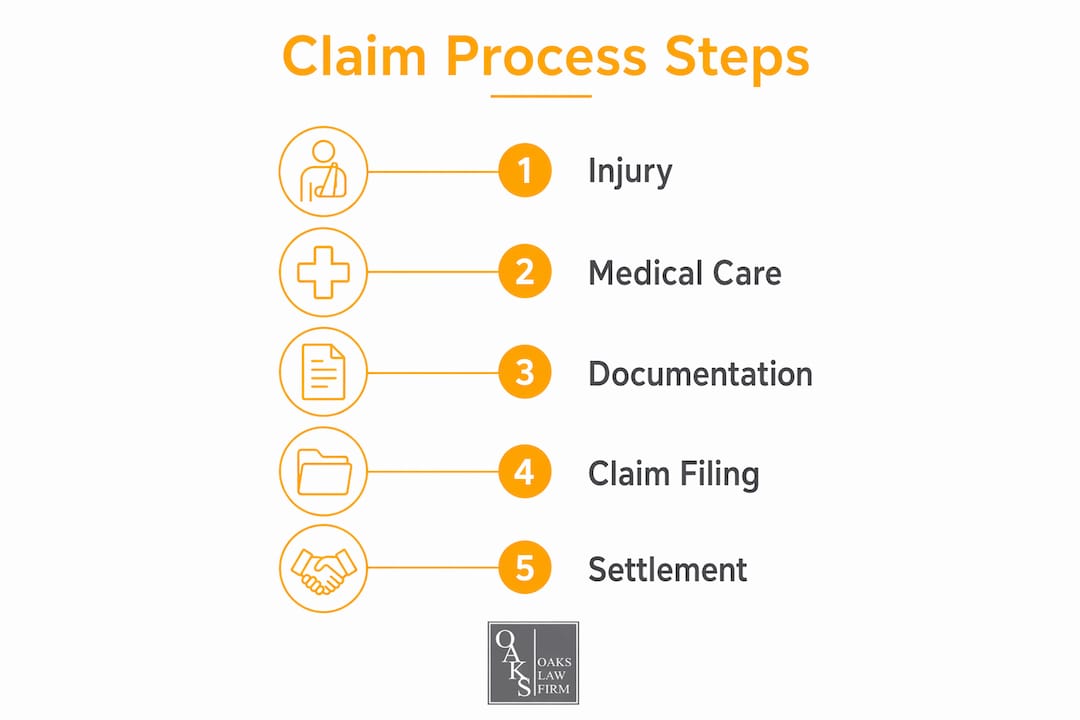
What is the step-by-step process for filing a soft tissue injury claim?
Filing a soft tissue injury claim follows a defined sequence. Missing any step, or missing a deadline, can permanently reduce or eliminate your recovery.
Immediate actions after the injury
- Seek medical care immediately, even if symptoms feel minor at first
- Report the incident to the relevant party: the police for car accidents, your employer for workplace injuries, or the property owner for slip and falls
- Photograph the scene, your injuries, and any property damage before anything is cleaned up or repaired
- Collect contact information from witnesses at the scene
- Notify your own insurance company of the incident promptly
Filing the claim
For car accidents, you will typically file either a no-fault insurance claim through your own policy or a liability claim against the at-fault driver’s insurer, depending on your state’s rules. California is a fault state, so most claims go directly against the at-fault party’s liability coverage.
In Michigan, no-fault insurance claims for soft tissue injuries must be filed within 1 year of the accident, with a general 3-year statute of limitations for lawsuits in pain and suffering cases. California has its own deadlines. The general statute of limitations for personal injury lawsuits in California is 2 years from the date of injury. Claims against government entities require a government tort claim filed within 6 months. Missing these deadlines ends your legal right to recover.
Negotiation and lawsuit
Once you reach maximum medical improvement, your attorney prepares a demand package. This document includes your medical records, bills, lost wage documentation, and a written demand for a specific settlement amount. The insurer responds with a counteroffer, and negotiation proceeds from there.
If negotiation fails, filing a personal injury lawsuit becomes the next step. Most soft tissue cases settle before trial, but the credible threat of litigation often produces better offers. Hiring an attorney before you submit your demand package gives you a measurable advantage in this process. Attorneys who handle personal injury cases regularly know the tactics adjusters use and how to counter them effectively.
Key Takeaways
A successful soft tissue injury claim requires early medical documentation, consistent treatment, and a clear understanding of how insurers calculate and contest settlement values.
| Point | Details |
|---|---|
| Document within 24–72 hours | Early medical records establish the causal link between the incident and your injury. |
| Counter MIST tactics proactively | Consistent treatment and objective imaging directly undermine insurer attempts to minimize low-impact claims. |
| Know the multiplier method | Settlements use medical bills multiplied by 1.5–2.5 for pain and suffering; economic damages are added separately. |
| Watch your deadlines | California’s 2-year statute of limitations is firm; government claims require action within 6 months. |
| Partial fault reduces recovery | Every percentage of fault assigned to you proportionally reduces your final compensation under California law. |
What I’ve learned from years of soft tissue injury cases
By Matthew Nezhad
The single biggest mistake I see injured people make is waiting too long to get medical care. They feel sore after a crash, assume it will pass, and wait a week before seeing a doctor. By then, the insurer has already built a narrative that the injury was not serious. That narrative is very hard to undo.
The second pattern I see constantly is people who stop treatment once they feel slightly better. Soft tissue injuries are deceptive. They improve, then flare up again, especially with whiplash and ligament damage. Stopping treatment early signals recovery to the adjuster, and the final settlement reflects that assumption rather than your actual experience.
What actually works is treating your claim like a job from day one. Document everything, attend every appointment, and keep a written record of how the injury affects your life. When I review a case file and see a detailed pain journal alongside consistent treatment records and objective imaging, I know we have something to work with. When I see gaps and vague medical notes, the path to fair compensation gets much harder.
Partial fault situations deserve special attention. Insurers often try to assign you a percentage of fault to reduce their exposure. Disputing those assignments early, with evidence, is one of the highest-value things an attorney can do for a client. A 20% fault reduction on a significant claim is real money lost.
The legal process for soft tissue claims has become more adversarial over the past decade. Insurers are more aggressive with MIST programs and more willing to deny claims outright. That shift makes professional legal representation more important now than it was ten years ago, not less.
— Matthew Nezhad
How Oakslawfirm can help with your soft tissue injury claim

Oakslawfirm has spent over two decades protecting injured people throughout the and California. Lead attorney Matthew Nezhad and his team handle every stage of the soft tissue injury claim process, from building your initial evidence file to negotiating directly with insurance adjusters. If negotiation fails, the firm takes cases to court. Oakslawfirm accepts a limited number of cases each year, which means every client receives focused attention rather than assembly-line handling. Contact Oakslawfirm today for a free case evaluation to discuss your specific situation. Results vary based on individual case facts and circumstances.
Disclaimer: This article provides general legal information only and does not constitute legal advice. Your case facts are unique, and outcomes depend on the specific details of your situation. Consult a qualified attorney for advice tailored to your circumstances.
FAQ
What counts as a soft tissue injury in a legal claim?
A soft tissue injury in a legal claim covers damage to muscles, tendons, ligaments, and connective tissue, including whiplash, sprains, strains, and contusions. These injuries must be caused by another party’s negligence to support a compensation claim.
How long does a soft tissue injury claim take to settle?
Most soft tissue injury claims settle within 3–12 months, depending on treatment duration, insurer cooperation, and whether a lawsuit is filed. Cases that reach litigation take longer, often 1–2 years or more.
Why do insurance companies dispute soft tissue injury claims?
Insurers dispute these claims because soft tissue injuries often lack visible proof on standard X-rays, and MIST programs flag low-impact collisions for reduced offers regardless of medical records. Consistent treatment and objective imaging are the most effective counters.
What is the statute of limitations for filing a soft tissue injury claim in California?
California allows 2 years from the date of injury to file a personal injury lawsuit. Claims against government entities require a government tort claim within 6 months of the incident.
Does partial fault affect my soft tissue injury settlement?
Yes. Under California’s pure comparative fault rule, partial fault reduces your award proportionally. A 20% fault finding on a $30,000 case reduces your recovery to $24,000.
