
Sherman Oaks is a well-established Los Angeles neighborhood in the , known for its tree-lined streets, the commercial energy of Ventura Boulevard, and a housing market that draws entertainment professionals and families alike. Sitting between the 405 and 101 freeways, the neighborhood offers genuine access to Hollywood, Burbank, and the Westside without sacrificing suburban space. Whether you are considering moving to Sherman Oaks, buying property, or simply exploring what the area offers, this guide covers the real estate market, local lifestyle, commuting realities, and community resources you need to know.
What defines the Sherman Oaks real estate market?
Sherman Oaks real estate sits at the upper end of the Los Angeles market. Median home prices range between $1.37 million and $1.68 million in 2026, with price per square foot running approximately $700 to $740. That range reflects a market where location within the neighborhood matters as much as the property itself.
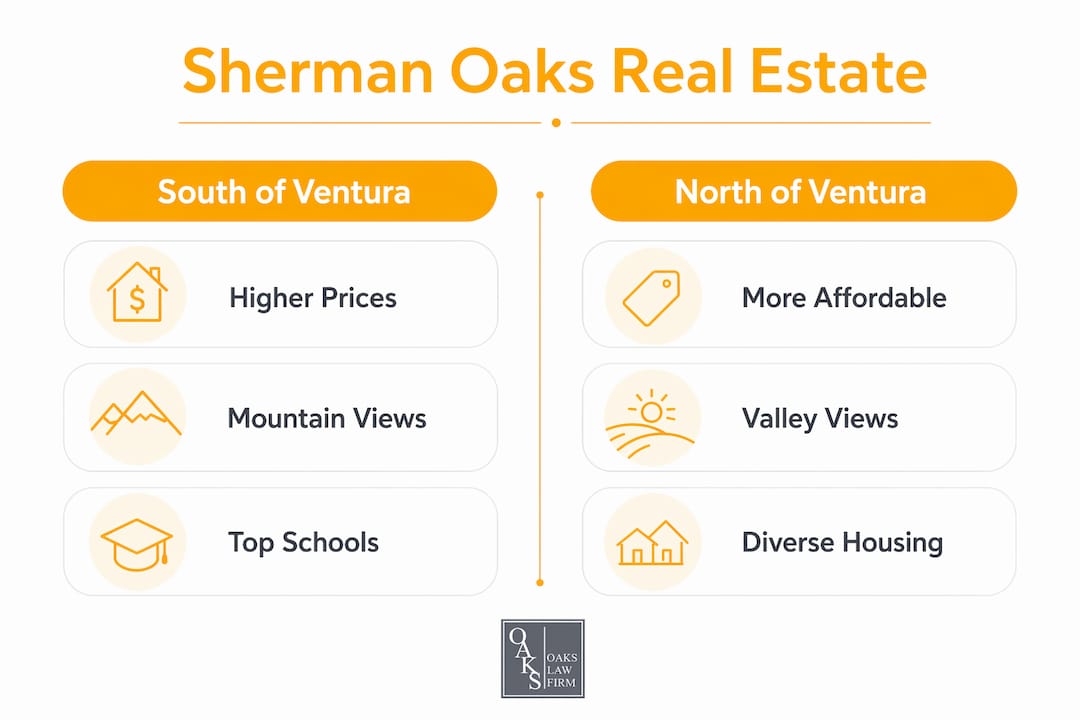
The most significant pricing factor is Ventura Boulevard. Homes south of Ventura Boulevard command a 15–20% price premium over comparable homes to the north. The south side sits closer to the Santa Monica Mountains and feeds into higher-rated schools, which drives demand and sustains that gap. Buyers who treat the neighborhood as a single uniform market consistently overpay or miss value.

Housing tenure reflects a renter-heavy community. The population of roughly 64,800 to 69,500 splits approximately 42% homeowners and 58% renters. That ratio means the rental market is active and competitive, particularly for well-located units near Ventura Boulevard.
The housing stock itself spans a wide range. Residential styles run from 1930s vintage bungalows to mid-century ranch homes and modern hillside contemporaries. Buyers looking for character find it in the older neighborhoods north of Ventura. Those seeking newer construction or larger lots tend to focus on the hillside pockets to the south.
| Housing factor | Key detail |
|---|---|
| Median home price (2026) | $1.37M to $1.68M depending on location and size |
| Price per square foot | Approximately $700 to $740 |
| South of Ventura premium | 15–20% above comparable north-side homes |
| Ownership vs. renting | Roughly 42% owners, 58% renters |
| Housing styles | 1930s bungalows through modern hillside contemporaries |
Pro Tip: Before making an offer, map the specific block against school district boundaries and freeway noise corridors. Two homes on the same street can sit in different school zones, which directly affects resale value.
What lifestyle and cultural amenities make the area attractive?
Sherman Oaks delivers a well-rounded mix of shops, restaurants, parks, and community centers that most neighborhoods cannot match at the same density. Ventura Boulevard is the spine of daily life here. It runs east to west through the neighborhood and concentrates dining, retail, fitness studios, and nightlife within walking distance for residents who live nearby.
The dining scene reflects the neighborhood’s demographic mix. You will find everything from casual Japanese ramen spots and upscale Italian trattorias to neighborhood wine bars and weekend brunch cafes. The variety is genuine, not manufactured. Sherman Oaks nightlife centers on Ventura Boulevard as well, with cocktail bars and live music venues drawing both locals and visitors from neighboring communities like Van Nuys and Studio City.
Outdoor options are strong for a Valley neighborhood. Key parks and recreational spaces include:
- Van Nuys Sherman Oaks Park on Magnolia Boulevard, which offers tennis courts, a pool, and a recreation center
- Balboa Park, a large green space with a golf course, athletic fields, and the Japanese Garden
- Woodley Park, which connects to the Sepulveda Basin Recreation Area and offers trails, cricket pitches, and open space
- Fryman Canyon Park, accessible from the south side, offering hillside hiking with views across the Valley
- Sherman Oaks Castle Park, a local entertainment venue with mini golf and batting cages popular with families
Community events run throughout the year. Farmers markets, street fairs, and neighborhood council-organized gatherings keep the area socially active. The neighborhood has a genuine local identity rather than the anonymous suburban feel common in other Valley communities.
Pro Tip: If walkability matters to your daily routine, prioritize addresses within four blocks of Ventura Boulevard. Walkability drops off noticeably once you move into the residential grid north or south of the corridor.
How does location affect commuting and traffic?
Sherman Oaks sits at one of the most connected freeway intersections in Los Angeles. The 405 and 101 freeways meet just west of the neighborhood center, giving residents direct access to the Westside, Hollywood, Burbank, and Downtown LA. That connectivity is the neighborhood’s biggest practical selling point.
The trade-off is daily congestion. Traffic near the 405 and 101 interchange is a consistent challenge, with major backups at Sepulveda and Ventura before 10 a.m. Afternoon congestion builds from around 4 p.m. and can last well past 7 p.m. Residents who commute to Century City, Santa Monica, or Culver City face some of the worst bottlenecks in the region on the southbound 405.
Experienced residents use these strategies to manage the commute:
- Leave before 7 a.m. Traffic on the 405 south and 101 west escalates sharply after 7:15 a.m. on weekdays.
- Use surface streets through Studio City. Coldwater Canyon and Laurel Canyon offer alternatives when freeway on-ramps are backed up.
- Reverse-commute to Burbank or North Hollywood. The 101 east runs faster than westbound during morning hours, making Burbank and the NoHo Arts District genuinely accessible.
- Use the Orange Line bus rapid transit. The Metro G Line (formerly Orange Line) runs along Chandler Boulevard and connects to the Red Line subway, giving car-free access to North Hollywood and beyond.
- Avoid Sepulveda between Ventura and Burbank on weekday mornings. This stretch is a known chokepoint and adds significant time to any north-south surface street trip.
Walkability along Ventura Boulevard is genuine for daily errands, but the residential grid requires a car. Public transit coverage outside the Ventura and Chandler corridors is limited. Residents without a car will find the neighborhood functional but not fully walkable.
What community resources support Sherman Oaks residents?
Sherman Oaks has an active civic infrastructure that sets it apart from many comparable Los Angeles neighborhoods. The Sherman Oaks Neighborhood Council meets monthly on the second Monday at 6:30 p.m., with both in-person and virtual attendance options. The council gives residents a direct channel to the Los Angeles City Council and handles issues from zoning changes to park improvements.
Key community resources available to residents include:
- Sherman Oaks Branch Library on Moorpark Street, offering programs for children, adults, and seniors
- Van Nuys Sherman Oaks Recreation Center, which runs youth sports leagues, fitness classes, and seasonal programs
- Sherman Oaks Hospital, a full-service acute care facility on Van Nuys Boulevard
- Multiple community clinics along Ventura Boulevard and Van Nuys Boulevard serving uninsured and underinsured residents
- Several dog parks within the Sepulveda Basin Recreation Area, popular with the neighborhood’s large pet-owning population
Schools are a major draw for families. The neighborhood is served by the Los Angeles Unified School District, with several schools receiving strong ratings. Millikan Middle School and Birmingham Community Charter High School are among the most referenced by families relocating to the area. Private school options, including Notre Dame High School in Sherman Oaks, add further choice.
Resident experience varies by location within the neighborhood. Areas near commercial corridors can face challenges from construction noise and urban issues, while hillside pockets to the south tend to be quieter and more insulated. Understanding which pocket you are buying or renting in matters more than the neighborhood name alone.
Key takeaways
Sherman Oaks offers a genuinely strong quality of life for residents who understand its micro-market differences, traffic realities, and the specific blocks where value and livability align best.
| Point | Details |
|---|---|
| Real estate pricing | Median prices run $1.37M to $1.68M, with south-of-Ventura homes commanding a 15–20% premium. |
| Renter-heavy market | About 58% of residents rent, keeping the rental market active and competitive year-round. |
| Traffic trade-off | Freeway access is excellent, but the 405 and 101 interchange creates daily congestion before 10 a.m. |
| Community engagement | The Neighborhood Council meets monthly and gives residents direct input on local decisions. |
| Location within the neighborhood | Block-level differences in schools, noise, and pricing matter more than the zip code alone. |
What I have learned from years of working in Sherman Oaks
I have spent my entire legal career in the , with offices in Sherman Oaks and Woodland Hills. That means I have watched this neighborhood closely for a long time, not just as a professional but as someone embedded in the community.
The thing most people get wrong about Sherman Oaks is treating it as a single place. It is not. The hillside streets south of Ventura feel like a different city compared to the flat grid north of the boulevard. The schools are different, the noise levels are different, and the price per square foot reflects that gap precisely. Buyers who do not account for this end up frustrated when their home does not appreciate the way a neighbor’s did.
The lifestyle appeal is real, but it comes with honest trade-offs. The traffic is not a minor inconvenience. It is a daily commitment. Residents who thrive here either work locally, reverse-commute east toward Burbank, or have genuinely flexible schedules. Anyone planning a daily drive to Santa Monica or Century City should budget at least 45 minutes each way and plan accordingly.
What I value most about this community is its civic engagement. The Neighborhood Council is not just a formality. Residents show up, ask hard questions, and hold city officials accountable. That kind of participation keeps the neighborhood from sliding into the neglect that affects other Valley communities. If you are moving here, get involved early. It makes a real difference.
One more thing worth saying directly: accidents and injuries happen in this neighborhood just like anywhere else in Los Angeles. Freeways, busy intersections, and commercial corridors all carry risk. If you or someone you know is hurt due to someone else’s negligence, knowing your legal options matters. The personal injury attorneys in Sherman Oaks at Oakslawfirm are here for exactly that reason.
— Matthew Nezhad
Oakslawfirm is here for Sherman Oaks residents

Accidents do not follow a schedule. Whether it is a car crash on the 405, a slip and fall on Ventura Boulevard, or a more serious incident involving wrongful death, Oakslawfirm has represented injured residents across the since 2002. Attorney Matthew Nezhad and his team know this community because they work here every day. If you need to understand how to file a personal injury lawsuit or want to know whether you have a case, contact Oakslawfirm for a free case evaluation. The firm operates on a no-fee guarantee basis, meaning you pay nothing unless your case wins.
Disclaimer: This article provides general information about Sherman Oaks and related legal topics. It does not constitute legal advice. Every case involves unique facts and circumstances that may lead to different outcomes. Contact Oakslawfirm directly for guidance specific to your situation.
FAQ
What is the median home price in Sherman Oaks in 2026?
Median home prices in Sherman Oaks range between $1.37 million and $1.68 million in 2026, with price per square foot running approximately $700 to $740.
Why do homes south of Ventura Boulevard cost more?
Homes south of Ventura Boulevard sit closer to the Santa Monica Mountains and feed into higher-rated schools, which drives a consistent 15–20% price premium over comparable homes to the north.
Is Sherman Oaks a good neighborhood for families?
Sherman Oaks is a strong choice for families, with access to well-rated public schools, parks, recreation centers, and a low-crime residential grid south of Ventura Boulevard.
How bad is the commute from Sherman Oaks?
The 405 and 101 freeway interchange provides excellent regional access, but congestion before 10 a.m. and after 4 p.m. is significant. Commutes to the Westside or Downtown LA can run 45 minutes or more each way during peak hours.
How can I get involved in the Sherman Oaks community?
The Sherman Oaks Neighborhood Council meets on the second Monday of each month at 6:30 p.m. and welcomes both in-person and virtual participation. It is the most direct way to engage with local governance and neighborhood decisions.
