

Attorney Advertising. This article was prepared with the assistance of artificial intelligence and reviewed by Oaks Law Firm prior to publication.
Medical records are the single most important piece of objective evidence in a personal injury claim. They connect your injuries to the accident, document your treatment and limitations, and drive the dollar value of any settlement or verdict. Without them, your account of what happened is just a story. With them, it becomes a case.
Here is what you need to do right now if you were recently injured:
- Seek medical care immediately, even if you feel “okay.” Delayed symptoms are common in soft-tissue and concussive injuries, and early documentation strengthens causation arguments in ways that later records simply cannot replicate.
- Tell every treating clinician how the injury happened. The mechanism of injury needs to be in the chart from day one.
- Preserve physical evidence: photographs, clothing, the accident scene, and any dashcam or surveillance footage.
- Start a simple file folder, physical or digital, and drop every receipt, discharge summary, and appointment note into it from the first day.
Three parties will read your records before you ever see a settlement offer: the insurance adjuster, defense counsel, and possibly a defense-retained medical expert. Each one is looking for gaps, inconsistencies, and prior complaints they can use to reduce what they owe you. Early, thorough documentation creates leverage before negotiations even begin.
California deadline notice: The general statute of limitations for personal injury claims is two years from the date of injury under CCP §335.1. If a government entity is involved, you must file a government tort claim within six months under Gov. Code §911.2. Exceptions exist, but they are narrow. Contact an attorney promptly if a city, county, state agency, or public transit system played any role in your accident.
Key Takeaways
Medical records are the foundation of every personal injury claim: they prove causation, document damages, and determine settlement value, making prompt treatment and careful record control the two most important steps any injured person can take.
| Point | Details |
|---|---|
| Seek care immediately | Same-day or next-day treatment creates the contemporaneous record that ties injuries to the accident. |
| Document the mechanism | Tell every provider how the accident happened so the chart reflects causation from the first visit. |
| Control every release | Sign only narrow, provider-specific authorizations; never hand insurers a blanket release of your full history. |
| Build a master chronology | A one-page care summary and indexed file make records readable to adjusters, mediators, and experts. |
| Oaks Law Firm | Handles records retrieval, preservation letters, and expert coordination on a contingency fee with a free case evaluation. |
Table of Contents
- What medical records are and which documents matter for a personal injury claim
- How medical records function as evidence: causation, extent of injury, and future care
- Privacy, HIPAA, California rules, and when medical records can be disclosed
- How to obtain your medical records: step-by-step requests, timelines, and typical costs
- Pre-existing conditions and gaps in care: how they affect your claim and how to address them
- Medical experts, IMEs, and how records are interpreted by experts
- Strategic use of medical records in settlement and trial: preservation and organization
- When to hire a personal injury attorney to handle medical records
- What Oaks Law Firm sees clients get wrong, and how to fix it
- Oaks Law Firm handles the records work so you can focus on healing
- Sources
- FAQ
What medical records are and which documents matter for a personal injury claim
“Medical records” covers far more than a doctor’s visit note. In a personal injury case, claim reviewers expect a complete picture, and each document type serves a distinct evidentiary purpose.
Core record categories and why each matters:
- Emergency room records and triage notes: Establish the first documented link between the accident and your injuries. Timestamps here are critical.
- Hospital discharge summaries: Summarize diagnoses, treatment, and follow-up instructions; adjusters use these to confirm the severity of acute injuries.
- Imaging reports (X-ray, MRI, CT): Provide objective, radiologist-interpreted findings. A herniated disc on an MRI is harder to dispute than a reported symptom.
- Operative and procedure reports: Document surgical intervention, which directly supports economic damages.
- Specialist notes (orthopedic, neurological, pain management): Show treatment escalation and the complexity of your injuries.
- Physical therapy and chiropractic notes: Demonstrate functional limitations, compliance with treatment, and progress or plateau over time.
- Nursing notes: Often capture real-time symptom reports that attending physicians’ notes miss.
- EMS and ambulance reports: The first contemporaneous record of your condition, often written minutes after impact.
- Mental health and therapy notes: Support non-economic damages like anxiety, PTSD, and depression following a traumatic event.
- Medication records and prescription logs: Show the type and duration of pain management, which speaks to severity.
- Itemized billing statements and Explanation of Benefits (EOBs): Prove economic damages dollar by dollar. Adjusters use these to calculate special damages.
Courts have long recognized that medical records carry legal weight as documents with duties of accuracy and maintenance, meaning providers have an obligation to record what actually happened, not a sanitized version.
Pro Tip: At every visit, tell your provider exactly how the accident happened and describe every symptom, even minor ones. Ask them to note the mechanism of injury (“patient reports rear-end collision on [date]”), your functional limitations (“unable to lift arm above shoulder”), and any changes since the last visit. A chart that reads “patient complains of pain” is far weaker than one that reads “patient reports worsening cervical pain radiating to left arm since MVA on [date], limiting ability to work.”
How medical records function as evidence: causation, extent of injury, and future care
Records build your medical story in a sequence that mirrors how liability is proven: incident, first visit, diagnostic tests, treatment course, documented limitations, and future care needs. Break that chain anywhere and the claim weakens.
What adjusters and defense counsel scan for:
- Mechanism documentation: Was the cause of injury recorded at the first visit? A chart that never mentions the accident is a gift to the defense.
- Initial symptom timing: Did you report pain immediately, or did a gap appear between the accident and your first complaint? Gaps invite “pre-existing” arguments.
- Objective findings: Imaging, range-of-motion measurements, and neurological test results that corroborate subjective complaints.
- Consistency across visits: Symptoms that appear, disappear, and reappear without explanation raise credibility questions.
- Treatment escalation: Moving from primary care to specialist to surgery tells a coherent story of worsening injury.
- Causation statements from providers: A treating physician who writes “in my opinion, the patient’s lumbar disc herniation was caused by the motor vehicle accident” is worth more than a hundred pages of raw chart notes.
Insurance adjusters and defense counsel read records carefully for inconsistencies, gaps, prior complaints, and treatment compliance. A consistent, complete record creates leverage and supports higher settlement value.
Records also support two distinct categories of damages. Economic damages, including medical bills, future treatment costs, and lost wages, are proven through itemized billing, EOBs, and physician opinions on future care needs. Non-economic damages, covering pain, suffering, and loss of enjoyment of life, are supported by therapy notes, functional limitation entries, and the overall arc of your treatment history. For a deeper look at how California calculates these categories, the car accident compensation guide from Oaks Law Firm explains the mechanics in plain terms.

A missing mechanism entry, one where the chart simply says “back pain” with no reference to the accident, is one of the most common ways claims lose value. Defense counsel will argue the injury predates the incident, and without a contemporaneous note tying the two together, that argument is difficult to counter.
Privacy, HIPAA, California rules, and when medical records can be disclosed
You control most releases of your medical records. That control is both a right and a strategic tool.
The HIPAA Privacy Rule gives you the right to access, review, and obtain copies of your own health information. Providers must respond to access requests within 30 days (with one 30-day extension if they notify you). In litigation, records can be disclosed to third parties only with your written authorization or pursuant to a court order or valid subpoena.
What a proper authorization should include:
- The name and address of the specific provider being asked to release records
- A defined date range (not “all records ever”)
- The specific purpose of the disclosure (e.g., “personal injury litigation”)
- Your signature and the date
- An expiration date or event
The narrower the authorization, the safer you are. A blanket release covering your entire medical history hands the insurer access to every prior complaint, unrelated condition, and mental health note you have ever generated. That information can and will be used to argue that your current injuries are not accident-related.
HIPAA intersects with other federal and state laws that affect how providers must safeguard and release health information. California adds its own layer: the Confidentiality of Medical Information Act (CMIA) provides protections that in some respects exceed HIPAA’s floor, particularly for mental health records, substance use records, and HIV-related information. These categories require separate, specific authorizations under California law and cannot be swept up in a general release.
The HITECH Act and the 21st Century Cures Act further require that providers give patients electronic access to eight categories of health data through certified EHR systems, often at low or no cost. Knowing this matters when you are trying to gather records quickly and inexpensively.
Pro Tip: If an insurer hands you a broad medical authorization to sign at the start of a claim, do not sign it without reading it carefully, and consider consulting an attorney first. A release that says “any and all medical records” is rarely in your interest.
How to obtain your medical records: step-by-step requests, timelines, and typical costs
You have a legal right to copies of your own records. The process is straightforward when you know the steps.
- Identify every provider involved in your care since the accident: ER, urgent care, primary care, specialists, physical therapists, chiropractors, imaging centers, and mental health providers.
- Send a dated, written request or signed patient authorization to each provider’s medical records department. Written requests create a paper trail and start the statutory clock.
- Specify the date range and record categories you need. “All records from [accident date] through [today’s date], including imaging, billing, and clinical notes” is better than an open-ended request.
- Request certified copies if you anticipate litigation. Certified copies carry more evidentiary weight and are required for some court filings.
- Ask for electronic delivery when possible. Under HITECH, providers must supply electronic records in a readable format, often at significantly lower cost than paper copies.
- Log every request: date sent, method, provider contact, and expected response date. Follow up in writing if you receive no response within 30 days.
Sample request language: “Pursuant to HIPAA, 45 CFR §164.524, I request copies of all medical records related to treatment received from [date] through [date], including clinical notes, imaging reports, operative reports, and itemized billing. Please provide records in electronic format if available.”
Typical timelines and costs:
- HIPAA requires providers to respond within 30 days, with one 30-day extension allowed if they notify you in writing.
- California law generally mirrors this timeline.
- Paper copy fees vary by provider but are regulated; electronic copies are often free or low-cost under HITECH rules.
- Patients can request records directly, and in many cases a simple written request is faster than waiting for attorney subpoenas.
When a provider refuses, stonewalls, or when you need records from a third party (such as a prior treating physician the defense wants to depose), your attorney can issue a subpoena or seek a court order through the discovery process. That route takes longer but carries legal compulsion. For most of your own treating providers, a direct patient request is the faster path.
Pre-existing conditions and gaps in care: how they affect your claim and how to address them
A prior injury or degenerative condition does not automatically defeat your claim. California follows the aggravation doctrine: if the accident worsened a pre-existing condition, you are entitled to compensation for that worsening, even if the underlying condition was already present.
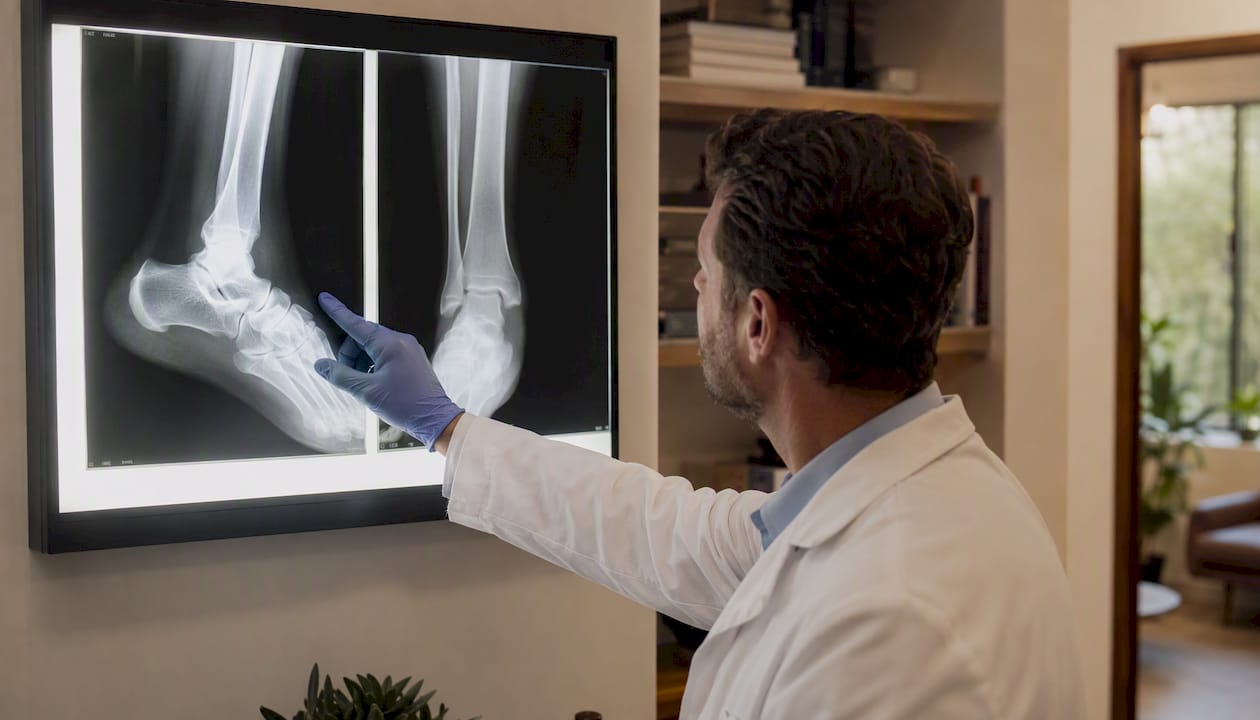
What matters is what changed after the incident. A spine that had mild degenerative disc disease before the crash but now produces radicular pain and limits your ability to work is a compensable injury. The records need to show the before-and-after contrast clearly.
Common record problems insurers exploit:
- Prior complaints of the same body part in older records
- Degenerative findings on imaging that predate the accident
- Long gaps between visits (suggesting the injury wasn’t serious enough to treat)
- Treatment that stopped and restarted without explanation
- Notes that lack “new,” “worse,” or “since the accident” language
How to address each:
- Collect older records to establish your baseline. A 2022 MRI showing mild disc bulge, compared to a 2025 MRI showing herniation with nerve compression, tells the story without argument.
- Ask your treating provider to document explicitly whether the accident aggravated a prior condition. A note reading “patient’s pre-existing lumbar degeneration was significantly aggravated by the motor vehicle accident” is direct and defensible.
- Explain gaps in writing. If you missed three months of PT because your insurance lapsed, your employer denied leave, or you were caring for a family member, document that reason contemporaneously. A gap with an explanation is far less damaging than a gap that looks like abandonment.
- Keep a personal symptom journal. Dated entries describing daily pain levels, functional limitations, and how the injury affects your work and home life fill the space between clinical visits and support non-economic damages.
For injuries like back pain after a car accident, where degenerative findings are common, documenting the specific changes caused by the collision is often the difference between a strong claim and a disputed one.
Medical experts, IMEs, and how records are interpreted by experts
Experts translate raw records into admissible opinions on causation, permanency, and future care needs. Your treating providers can serve as experts, but defense attorneys often arrange their own examinations.
Treating providers vs. defense IMEs:
Your treating physician’s opinion carries significant weight because it is based on an ongoing clinical relationship, multiple examinations, and a complete treatment history. A defense-ordered Independent Medical Examination (IME) is conducted by a physician hired by the insurer or defense, typically in a single visit, often without reviewing your complete records.
What an IME involves and how to prepare:
- The defense schedules the exam; you are generally required to attend under California discovery rules.
- The examining physician will review records provided by the defense (which may not be your complete file), conduct a physical examination, and write a report.
- Common IME tactics include minimizing findings, attributing symptoms to pre-existing conditions, and concluding that further treatment is unnecessary.
- Bring a concise written timeline of your symptoms, treatments, and functional limitations. Stick to facts. Do not exaggerate, minimize, or speculate.
- Consult your attorney before attending. Your attorney may be able to limit the scope of the exam or arrange for an observer.
When treating notes lack explicit causation language, your attorney can work with a medical expert to prepare a narrative report or declaration that connects the clinical findings to the accident. This is standard practice in California personal injury litigation and is particularly important for traumatic brain injury claims, where objective imaging may appear normal despite genuine injury.
Pro Tip: Before your IME, ask your attorney for a copy of the defense’s record request so you know what the examining physician has reviewed. If key records are missing from that set, your attorney can flag the omission and supply the complete file.
Strategic use of medical records in settlement and trial: preservation and organization
Organized, curated records increase settlement value. Disorganized ones give adjusters an excuse to lowball.
Preservation steps to take immediately:
- Request imaging files on CD or in DICOM format directly from the imaging center. Do not rely on the radiologist’s report alone; the raw images are more persuasive to experts and juries.
- Log every records request you make: date, provider, method, and response received.
- Avoid signing broad releases before consulting counsel. Once records are in the insurer’s hands, you cannot un-ring that bell.
- If you suspect a provider or defendant may delete or alter records, contact an attorney immediately. A preservation letter sent to the responsible party creates a legal duty to retain evidence, and failure to comply can result in spoliation sanctions.
Building your master file:
A well-organized master file makes large record sets readable to mediators, adjusters, and experts. Structure it this way:
- Chronological index: One page listing every provider, date of service, and record type.
- One-page care summary: Provider name, dates of treatment, diagnoses, and key findings. Mediators and adjusters read this first.
- Active treatment file: Current records, ongoing bills, and pending appointments.
- Archival file: Pre-accident records, older imaging, and baseline documentation.
Spoliation: Spoliation occurs when evidence is destroyed, altered, or lost after a duty to preserve it arises. In California, courts can impose sanctions including adverse jury instructions (telling the jury to assume the missing evidence was harmful to the spoliating party). If a hospital, employer, or defendant loses records relevant to your claim, notify your attorney immediately and send a written preservation demand to every party holding potentially relevant evidence.
Template request for imaging files: “I request all imaging studies related to treatment on [date(s)], including raw DICOM files on CD or via secure electronic transfer. Please confirm receipt of this request and provide an estimated completion date.”
For documentation best practices that apply across serious injury claims, the serious injury claim documentation guide offers useful organizational frameworks.
When to hire a personal injury attorney to handle medical records
Hire an attorney early if your records are incomplete, a government defendant is involved, or an insurer is pressuring you to sign a broad release. Those three situations are where unrepresented claimants most often lose ground they cannot recover.
What an attorney does with your records that you cannot easily do alone:
- Sends targeted, provider-specific authorizations that limit disclosure to relevant records
- Issues subpoenas for records held by third parties or uncooperative providers
- Sends preservation letters to defendants and providers before evidence disappears
- Coordinates with treating physicians and retained experts to develop causation narratives
- Reviews IME reports and retains counter-experts when defense opinions are unfair
- Builds the master chronology and one-page care summary used in mediation
California deadline callout:
The general statute of limitations is two years from the date of injury under CCP §335.1. If a government entity is involved, a government tort claim must be filed within six months under Gov. Code §911.2. Both deadlines have narrow exceptions, and missing either one typically bars your claim entirely. An attorney needs to evaluate your situation quickly, not after the deadline passes.
Oaks Law Firm, founded by Matthew Nezhad in 2002, has spent more than two decades protecting injured Californians in the and throughout the state. The firm accepts a limited number of cases annually, which means every client receives focused attention rather than assembly-line handling. Matthew Nezhad and his team handle records retrieval, narrow releases, expert coordination, and aggressive preservation from the first day of representation.
What Oaks Law Firm does for clients on the records side:
- Obtains certified records from every treating provider
- Prepares a master chronology and care summary for negotiations
- Protects against spoliation with immediate preservation letters
- Litigates subpoenas when providers or defendants resist
- Coordinates with medical experts to fill causation gaps in treating notes
Pro Tip: Before your first consultation, gather every record, bill, and discharge summary you already have and bring it in a single folder. The consultation prep guide from Oaks Law Firm walks you through exactly what to collect so your attorney can assess your claim on day one.
What Oaks Law Firm sees clients get wrong, and how to fix it
The most damaging mistakes happen in the first two weeks after an accident, before most people have even thought about hiring an attorney.
Common missteps:
- Signing a broad medical authorization handed over by the insurer without reading it
- Skipping or delaying medical treatment because symptoms seem minor
- Failing to tell providers how the accident happened, leaving the chart silent on mechanism
- Letting records pile up unsorted, making it impossible to build a coherent timeline later
Quick corrections:
Narrow every release to a specific provider and date range. Keep a daily symptom journal starting the day of the accident. At every appointment, say the words “this started after the accident on [date]” and confirm the provider wrote it down. Build your master chronology within the first month, not the week before mediation.
One pattern that appears repeatedly: a client who felt fine for 48 hours after a rear-end collision, skipped the ER, and then saw a doctor a week later. The insurer’s first argument was that the gap proved the injury wasn’t serious. The fix was straightforward: the treating physician documented that delayed symptom onset is clinically consistent with soft-tissue injuries, and the client’s own journal entries from those 48 hours showed progressive stiffness and pain. The claim survived, but it required extra work that a same-day ER visit would have made unnecessary.
Oaks Law Firm handles the records work so you can focus on healing

Gathering, organizing, and protecting medical records is a full-time job when you are also trying to recover from an injury. Oaks Law Firm takes that work off your plate entirely. The firm handles targeted records requests, sends preservation letters before evidence disappears, narrows insurer authorizations to protect your privacy, and coordinates with medical experts to build the causation narrative your claim needs.
There is no upfront cost. Oaks Law Firm works on a contingency fee basis, meaning you pay nothing unless the firm wins your case. Matthew Nezhad and his team offer a free case evaluation to every prospective client. If you were injured in the Los Angeles area or anywhere in California, the right time to call is before the insurer’s next move, not after. Start with the personal injury lawsuit guide to understand what filing looks like, or contact Oaks Law Firm directly for a no-cost review of your situation.
Sources
The statutes and federal guidance below are the primary authorities governing medical records in California personal injury claims. Your attorney should be familiar with all of them; you should know they exist.
Readers should consult qualified legal counsel for case-specific application of these authorities. Statutes and regulations change, and the interaction between federal and California law requires professional interpretation.
This article is general information, not a substitute for advice from a qualified lawyer. Consult a qualified legal professional about your own circumstances before acting on anything here.
FAQ
Can medical records be used in a lawsuit?
Yes. Medical records are admissible evidence in personal injury lawsuits and are typically the primary documentation used to prove causation, the extent of injuries, and the cost of treatment. Courts have long recognized their legal weight as documents maintained with duties of accuracy.
Can you lose a personal injury claim because of gaps in your medical records?
Gaps in treatment or missing mechanism documentation can significantly reduce a claim’s value or, in some cases, lead to denial. Insurers and defense counsel specifically look for gaps to argue that injuries were not serious or were pre-existing, but a well-documented explanation for any gap can mitigate the damage.
How do pre-existing conditions affect a personal injury claim?
A pre-existing condition does not bar recovery in California. Under the aggravation doctrine, you are entitled to compensation for any worsening of a prior condition caused by the accident. The key is having records that show the before-and-after contrast clearly, ideally with a treating provider’s opinion that the accident aggravated the condition.
How much does it cost to get medical records for a claim?
Paper copy fees vary by provider and are regulated under state law. Electronic copies are often available at low or no cost under HITECH rules. Your attorney can often obtain records through targeted authorizations or subpoenas, with costs typically advanced by the firm and recovered from any settlement.
When should you contact a personal injury attorney about your medical records?
Contact an attorney as early as possible, especially if a government entity is involved (six-month deadline under Gov. Code §911.2), if an insurer is pressuring you to sign a broad release, or if records appear to be incomplete or missing. The two-year statute of limitations under CCP §335.1 applies to most California personal injury claims, but waiting reduces your attorney’s ability to preserve evidence.
This article is for general informational purposes only and does not constitute legal advice. Laws and procedures vary by jurisdiction and individual circumstance. Consult a qualified California personal injury attorney for guidance specific to your situation.
