

A police report is an official document that summarizes law enforcement’s account of an incident, and knowing how to read a police report accurately is the first step toward protecting your legal rights. Whether you were injured in a car accident on the 405 Freeway, arrested, or named as a witness, the report shapes how insurers, courts, and attorneys view your case. These documents are not neutral records. Police reports are subjective summaries aimed at justifying police actions, and they often omit details that do not support the officer’s narrative. Reading one with a critical eye is not optional. It is necessary.
How to read a police report: the structure you need to know
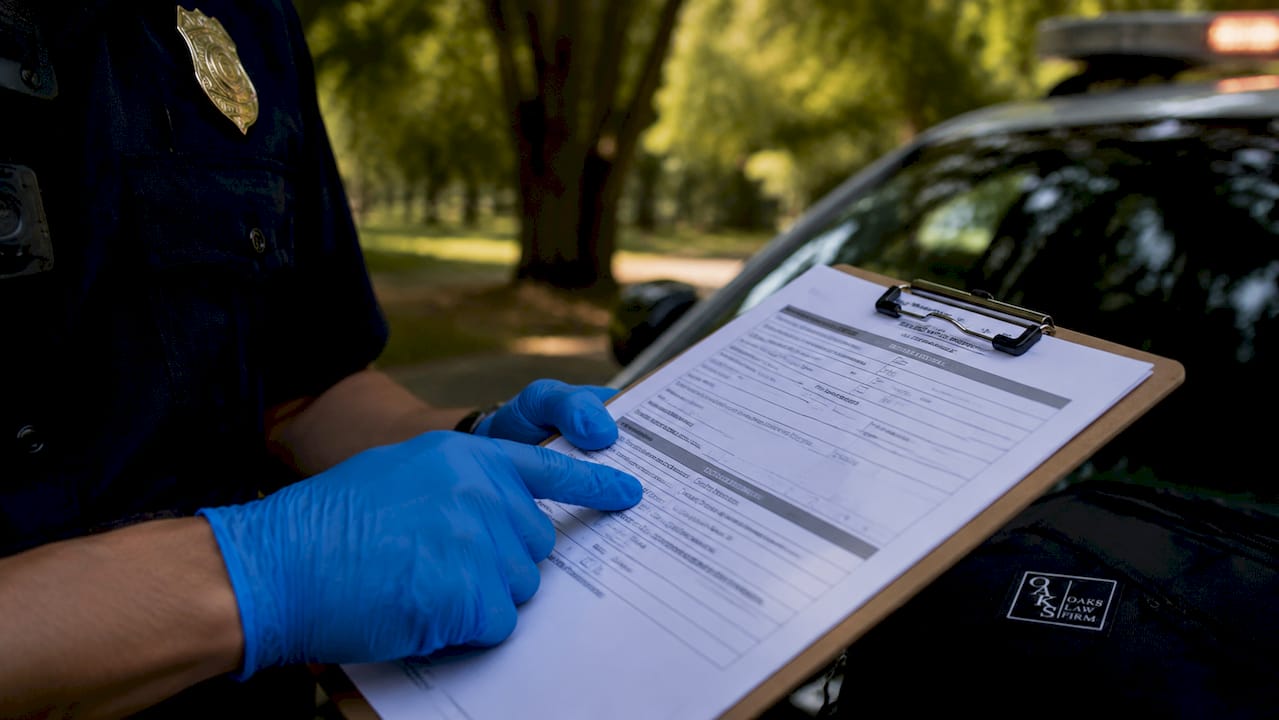
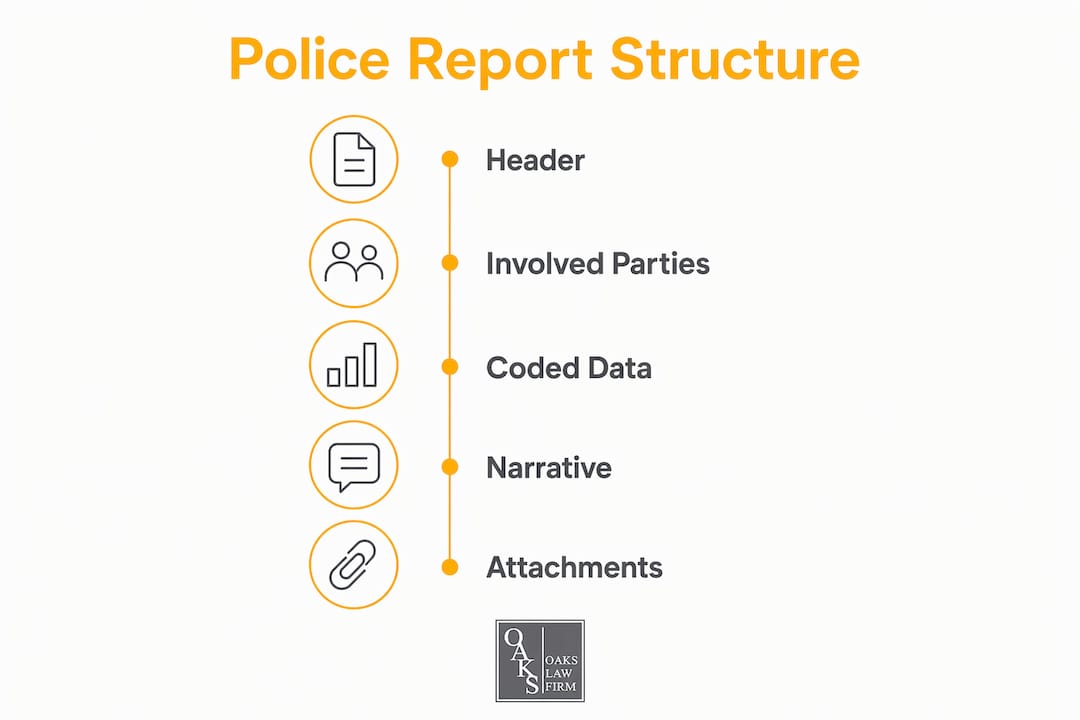
A police report is structured into three main parts: a header with administrative data, identification of involved parties, and a narrative summary. Each section serves a distinct purpose, and skipping any one of them means missing information that could affect your case.
The header section
The header contains the administrative backbone of the report. You will find the case number, date and time of the incident, location, the responding officer’s badge number, and the report number. The case number is the most critical detail here. Every future legal filing, insurance claim, and court reference will use it to track your case. Write it down and keep it accessible.
The header also lists the type of incident using a code or category label. In California, traffic collision reports often use the CHP 555 form, while Los Angeles Police Department reports follow their own internal format. Knowing which form you are reading helps you locate the right fields quickly.
Involved parties section
This section identifies every person connected to the incident. Victims, suspects, witnesses, and involved drivers each get their own entry. Each entry typically includes a name, date of birth, address, phone number, and role designation.
Role codes matter here. You may see labels like V1 (Victim 1), S1 (Suspect 1), or W1 (Witness 1). These codes tell you how the officer classified each person at the time of writing. That classification directly influences how insurance adjusters and prosecutors approach the case.
Coded data fields
Between the narrative and the header, most reports contain a grid of coded fields. These cover vehicle information, road conditions, weather, contributing factors, and violation codes. In accident reports, you may see a “primary collision factor” field that assigns fault using a numeric or letter code.
Pro Tip: Print the report and use a highlighter on every coded field before reading the narrative. Codes set the officer’s frame before the story begins, and knowing them first prevents the narrative from coloring your interpretation of the data.
The narrative section
The narrative is where the officer describes what happened in their own words. Narrative sections contain both direct observations and secondhand statements, and distinguishing between the two is critical for legal evaluation. A sentence like “the driver stated he had not been drinking” is a secondhand statement. A sentence like “I observed the driver’s eyes were bloodshot” is a direct observation. These carry very different legal weight.
Diagrams and attachments
Many accident and crime scene reports include a hand-drawn or printed diagram. These show vehicle positions, direction of travel, point of impact, and road layout. Treat diagrams as a visual version of the narrative. If the diagram contradicts the written description, that inconsistency is worth flagging for your attorney.
| Report Section | What It Contains | Why It Matters |
|---|---|---|
| Header | Case number, date, location, officer ID | Tracks the case across all legal filings |
| Involved parties | Names, roles, contact info | Establishes who is classified as victim, suspect, or witness |
| Coded fields | Fault codes, conditions, violations | Shapes initial insurance and court interpretation |
| Narrative | Officer’s written account | Contains observations, secondhand statements, and conclusions |
| Diagrams | Scene layout and positions | Visual record that may confirm or contradict the narrative |
What do police report codes and abbreviations mean?
Specialized shorthand and numerical codes vary by department, and misinterpreting them can directly affect insurance settlements and court outcomes. A code that looks minor on paper can carry major legal implications.
Common abbreviations you will encounter include:
- V1, V2: First and second victims
- S1, S2: First and second suspects
- W1, W2: First and second witnesses
- GOA: Gone on arrival (the subject was not present when officers arrived)
- UTL: Unable to locate
- PC: Probable cause
- DUI: Driving under the influence
- HBD: Had been drinking (not the same as legally intoxicated)
The distinction between HBD and DUI is a good example of why codes matter. HBD means the officer noted the smell or appearance of alcohol. DUI means a legal threshold was met. Confusing the two can lead to a misread of the officer’s actual conclusion.
Status codes like “unfounded” carry particular weight. An unfounded designation means the officer determined the reported incident did not occur or lacked criminal elements. That label can be used by insurance companies to deny claims. Understanding it is not a minor detail.
Police report codes often determine how insurance adjusters and courts initially interpret fault and injury severity. That initial interpretation shapes settlement offers and legal strategies before a single attorney files a motion.
Use the narrative to decode cryptic codes. If a contributing factor code reads “21,” look for the officer’s written explanation in the narrative. The two sections are meant to work together. When they do not align, that gap is worth examining.
Pro Tip: Request the department’s code legend when you obtain the report. Most California law enforcement agencies will provide a reference sheet with their standard abbreviations upon request. It takes one phone call and saves hours of guesswork.
How do you spot errors and inconsistencies in a police report?
Police reports are often written hours after the incident, based on memory, and aimed at documenting probable cause rather than providing a verbatim account. That process introduces errors, gaps, and subjective conclusions that can be challenged.
Timeline gaps are one of the clearest signs of a problematic report. A documented gap of 47 minutes between a traffic stop and an arrest, for example, highlights critical procedural vulnerabilities that a defense attorney can use. If the report does not account for that time, the narrative is prioritizing story over chronology.
Follow these steps to identify inconsistencies:
- Read the report twice. Read it once for general understanding, then again with a pen in hand. The second read is where you catch what you missed.
- Build a timeline. Write out every timestamped event in order. Look for gaps, overlaps, or events listed out of sequence.
- Flag subjective language. Phrases like “acted nervous” or “consistent with drug activity” are interpretations, not facts. These conclusions without specific observations are weak evidence and should be challenged when unsupported.
- Compare the narrative to the diagram. If the diagram shows Vehicle A striking Vehicle B from the rear, but the narrative says Vehicle B cut off Vehicle A, you have a direct contradiction.
- Note boilerplate language. Templated phrases copied from previous reports signal that the officer may not have observed what they wrote. Courts and juries notice this.
- Document discrepancies line by line. Compile a line-by-line discrepancy list with margin annotations for your legal team. This granular approach supports discovery requests and supplemental report filings.
Vague language in a report is not just imprecise writing. It is a signal that the officer’s conclusions may not hold up under cross-examination. Your attorney needs to know about every instance.
Pro Tip: Use a two-column document to track discrepancies. Left column: what the report says. Right column: what your evidence shows. This format is exactly what attorneys use to build discovery requests.
What should you do after reading the police report?
Reading the report is the start of the process, not the end. The next step is verifying every factual claim against independent evidence.
Fact-checking involves comparing the report narrative against dashcam footage, hospital records, and call logs to list discrepancies. That list becomes the foundation for your attorney’s follow-up and discovery requests. Do not skip this step because you believe the report is mostly accurate. Even one unchallenged error can shift fault or reduce compensation.
Sources to compare against the police report:
- Dashcam and bodycam footage: Timestamps on video are harder to dispute than written accounts.
- Hospital and emergency records: Injury documentation from Cedars-Sinai, UCLA Medical Center, or any treating facility creates an independent timeline.
- Cell phone records and call logs: These can confirm or contradict the report’s timeline.
- Witness statements: Collect written statements from anyone who saw the incident and compare them to how the officer characterized witness accounts.
- Traffic camera footage: In Los Angeles, many intersections have city-operated cameras. Footage is often available through a public records request.
Original police reports generally cannot be altered. If you find errors, the correct path is filing a supplemental statement. A supplemental statement adds to the report’s file and clarifies inaccuracies, but it does not replace the original narrative. Your attorney can help you draft one that is specific, factual, and legally effective.
| Action | Purpose | Who Handles It |
|---|---|---|
| Compare to dashcam footage | Verify timeline and positions | You and your attorney |
| Request supplemental statement | Correct errors without altering original | Attorney files on your behalf |
| Gather medical records | Document injury severity independently | You, with provider assistance |
| Obtain witness statements | Corroborate or challenge officer account | Attorney or investigator |
| File public records request | Access traffic camera or bodycam footage | You or your attorney |
Working with a personal injury attorney at this stage is not just helpful. It is the most direct way to turn a flawed report into a strong legal position. Oakslawfirm recommends reviewing your California car accident report alongside any independent evidence before your first legal consultation. You can also use Oakslawfirm’s free consultation prep guide to organize your documents before meeting with an attorney.
Key Takeaways
Reading a police report critically, and verifying it against independent evidence, is the most effective way to protect your legal rights after an incident.
| Point | Details |
|---|---|
| Reports have three core sections | Header, involved parties, and narrative each contain distinct legal information. |
| Codes shape legal outcomes | Insurance adjusters and courts use report codes to set their initial interpretation of fault. |
| Subjective language can be challenged | Phrases like “acted nervous” are interpretations, not facts, and carry weak evidentiary weight. |
| Timeline gaps signal problems | Unexplained gaps between events indicate a report that prioritizes narrative over accuracy. |
| Supplemental statements correct errors | Original reports cannot be changed; file a supplemental statement through your attorney instead. |
What I have learned from years of reading police reports in injury cases
Police reports carry an authority they have not always earned. When a client hands me a report and says “the officer said it was my fault,” I have to explain something that surprises most people: the officer’s opinion on fault is not a legal finding. It is one person’s interpretation, written under time pressure, often hours after the incident.
I have reviewed hundreds of reports in personal injury cases across the and greater Los Angeles area. The pattern I see most often is not outright dishonesty. It is selective memory. Officers respond to dozens of calls. By the time they write the report, the details blur. They fill gaps with assumptions, and those assumptions get dressed up in official language.
The most dangerous misconception I encounter is that a police report is the final word. Clients sometimes accept a low settlement offer because the report seems to support the other side. What they do not realize is that the report is a starting point for investigation, not a verdict. I have seen cases where dashcam footage directly contradicted the narrative section, and that footage changed everything.
My practical advice: read the report like a skeptic, not a believer. Question every conclusion that lacks a specific observation to back it up. If the report says your vehicle “failed to yield,” ask what evidence the officer used to reach that conclusion. If the answer is not in the report, that is a gap worth pressing.
The clients who come to me prepared, with a line-by-line comparison of the report against their own evidence, are the ones whose cases move fastest. They have already done the work that most people leave entirely to their attorney. That preparation matters, and it starts with knowing how to analyze what is in front of you.
— Matthew Nezhad
How Oakslawfirm can help you build a case from a police report
If you have obtained a police report and are not sure what it means for your legal position, Oakslawfirm is ready to help you work through it.
Attorney Matthew Nezhad and the Oakslawfirm team have spent decades analyzing police reports in personal injury and accident cases throughout California. The firm identifies errors, challenges subjective conclusions, and builds the supplemental evidence record that gives clients the strongest possible position. Whether you are dealing with a car accident, a whiplash injury, or a more serious collision, the team knows how to connect what the report says to what the law requires. If you are ready to move from reading the report to taking legal action, learn how to file a personal injury lawsuit in Los Angeles with Oakslawfirm’s guidance.
This article is provided for general informational purposes only and does not constitute legal advice. The information presented may not reflect the most current legal developments and should not be relied upon as a substitute for consultation with a licensed attorney. Every personal injury case involves unique facts and circumstances, and the outcome of any case depends entirely on those specific facts. Any results, settlement amounts, or verdicts referenced in this content are specific to the individual cases described, are not typical, and do not guarantee, promise, or predict a similar outcome in your case. Reading this content does not create an attorney-client relationship with Oaks Law Firm. Contact us directly for a consultation specific to your situation.
FAQ
What is a police report used for in a legal case?
A police report documents law enforcement’s account of an incident and serves as a key reference for insurance claims, settlement negotiations, and court proceedings. It is not a legal verdict, but it shapes how fault and injury are initially interpreted.
Can errors in a police report be corrected?
Original police reports cannot be altered after filing. The correct process is submitting a supplemental statement through your attorney, which adds clarifications to the report’s file without replacing the original narrative.
What does “unfounded” mean on a police report?
An unfounded designation means the officer determined the reported incident did not occur or lacked criminal elements. Insurance companies may use this status to deny claims, so it is worth challenging with independent evidence if you believe it is inaccurate.
How do I get a copy of my police report in California?
You can request a copy from the law enforcement agency that responded to the incident, typically through their records division. In Los Angeles, the LAPD and CHP each have separate request processes, and fees and processing times vary by agency.
When should I contact an attorney about a police report?
Contact an attorney as soon as you receive the report, especially if it contains errors, assigns fault to you, or involves serious injuries. Early legal review allows your attorney to gather time-sensitive evidence like traffic camera footage and witness statements before they become unavailable.
