

After an accident caused by someone else’s negligence, the pressure to find the right legal help fast is real. You need to choose a local personal injury lawyer who understands California law, knows the Sherman Oaks area, and can actually win your case. But with hundreds of attorneys competing for your attention online, making that call without a clear strategy often leads to costly mistakes. This guide walks you through everything: the legal basics, how to prepare, what to ask, and how to avoid the traps that trip up injured victims before they even file.
Table of Contents
- Key takeaways
- Understanding personal injury law in Sherman Oaks
- Getting ready before you search
- Step-by-step: selecting the best personal injury lawyer near you
- Mistakes that derail good cases
- What happens after you hire your attorney
- My honest take on choosing the right attorney
- How Oaks Law Firm can help Sherman Oaks injury victims
- FAQ
Key takeaways
| Point | Details |
|---|---|
| Deadlines are non-negotiable | California’s 2-year filing window closes fast, and missing it ends your claim permanently. |
| Verify before you hire | Check every attorney’s license and disciplinary history through the California State Bar before signing anything. |
| Prepare for your consultation | Bring accident timelines, medical records, and witness contacts to get maximum value from a short meeting. |
| Understand contingency fees | Most injury attorneys charge 33% to 40% of your settlement, so know the math before you agree. |
| Local knowledge matters | A Sherman Oaks attorney familiar with local courts, insurers, and traffic patterns is a measurable advantage. |
Understanding personal injury law in Sherman Oaks
Before you start searching for an attorney, you need a working understanding of how personal injury law actually functions in California. Not the textbook version. The practical version that affects your case right now.
Types of cases common in the
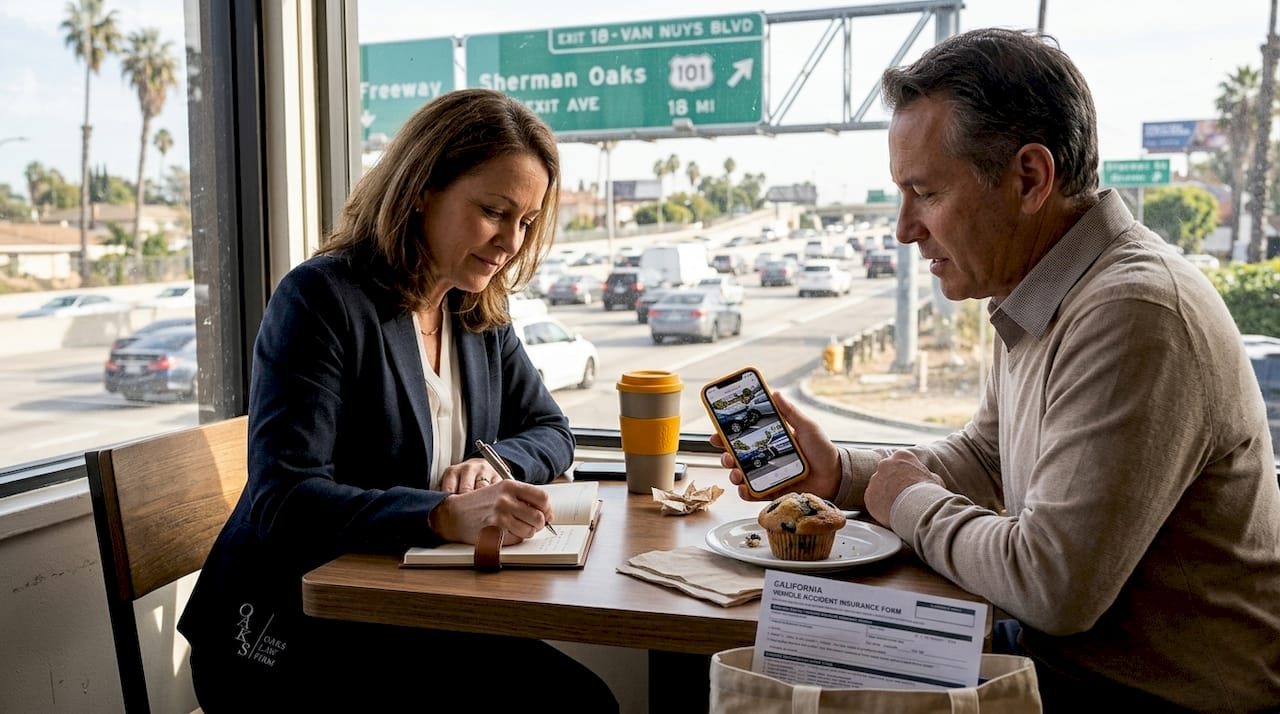
Sherman Oaks sits along the 405 and 101 freeways, two of the most congested corridors in Los Angeles County. Car and motorcycle accidents make up the largest share of local personal injury claims. But slip and fall incidents at retail stores, restaurants, and apartment complexes are equally frequent. Dog bites, workplace injuries, and pedestrian knockdowns on Ventura Boulevard round out the typical caseload at any local injury law firm serving this area.
The legal category matters because it shapes the strategy. A car accident claim runs differently than a premises liability case. The evidence you need differs. The liable parties differ. Understanding where your case fits helps you target lawyers with the right specialty.
California’s filing deadlines and the discovery rule
California’s 2-year statute of limitations applies to most personal injury claims. That clock typically starts on the date of your injury. But the state also recognizes the discovery rule for certain claims, which means the two-year window starts when you discovered your injury or reasonably should have discovered it. This matters in cases involving toxic exposure, delayed-onset injuries, or medical malpractice.
The distinction between civil and criminal proceedings also confuses many people after accidents. A personal injury claim is civil. You are not asking the state to punish anyone. You are asking to be made financially whole. A driver who hits you may face both a criminal reckless driving charge from the DA and a civil claim from you. Those two processes run separately, and one does not replace the other.
Pro Tip: Even a few months of delay can jeopardize your ability to file, since timely action is crucial when working within strict filing windows. Contact an attorney within weeks of your injury, not months.
| Claim Type | Typical Limitation Period | Special Rules |
|---|---|---|
| Auto accident | 2 years from incident date | Discovery rule may apply if injury delayed |
| Slip and fall | 2 years from incident date | Property owner notification rules vary |
| Government entity claim | 6 months to file a government tort claim | Strict pre-lawsuit notice required |
| Medical malpractice | 3 years or 1 year from discovery | Whichever comes first |
| Wrongful death | 2 years from date of death | Beneficiary standing rules apply |
Getting ready before you search
Smart preparation before your first attorney call separates clients who get strong representation from those who settle for whatever is available. The more organized you are, the more a lawyer can do for you in a short consultation.
Here is what you should gather before you contact any attorney:
- A written accident timeline with specific dates, times, and locations
- All medical records, emergency room reports, and treatment invoices
- Photos from the scene, including vehicle damage, hazardous conditions, or visible injuries
- Contact information for any witnesses
- Your insurance policy documents and any correspondence with the at-fault party’s insurer
- A police report or incident report if one was filed
- Documentation of lost wages if the injury kept you from working
Once you have those materials organized, get clear on what you actually want. Some clients want maximum compensation and are willing to litigate for years. Others want a fair settlement without prolonged stress. Both are legitimate goals. Knowing your priority helps you select a lawyer whose style matches.
Using California’s referral services
California regulates attorney referral services through the State Bar. Certified Lawyer Referral and Information Services in California must follow consumer-protection rules and match callers to attorneys based on their specific legal issue. This is a more reliable starting point than typing “best personal injury lawyers near me” into a search engine and picking whoever paid most for the top ad slot.
That said, referral services do not guarantee outcomes or representation. A referral is an introduction, not a contract. You still need to vet the attorney yourself.
Verifying attorney credentials
This step is non-negotiable. Before you schedule a consultation, run every prospective attorney through the California State Bar’s public search tool. You want to confirm the attorney holds an active license, has no current disciplinary actions, and has not been suspended or disbarred. Takes five minutes. Skipping it costs people dearly.
Pro Tip: Search the State Bar directory for each candidate before your consultation, not after. Finding out someone has a disciplinary record after you have already shared your case details is a frustrating waste of time.
Step-by-step: selecting the best personal injury lawyer near you
Now the practical work begins. This section gives you a concrete process to select local injury lawyer candidates, evaluate them, and make a confident decision.
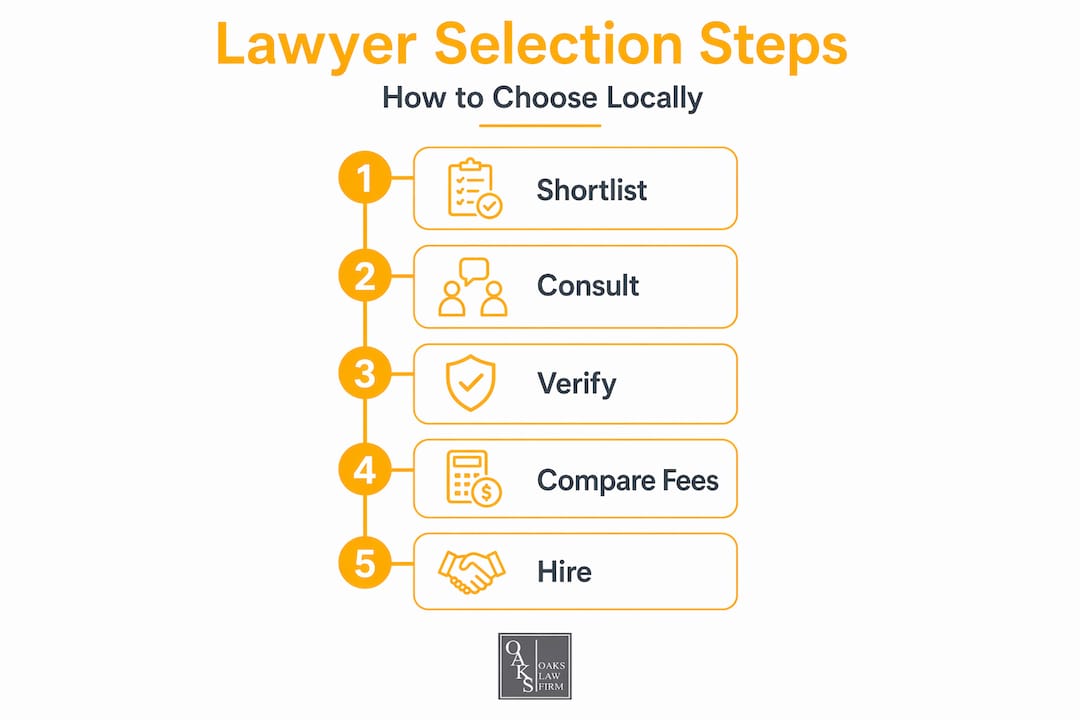
Step 1: Build your shortlist
Start with three to five candidates. Sources worth using:
- California State Bar certified referral services for your county
- Recommendations from people you trust who have handled similar cases
- Attorney profiles on verified legal directories that display bar numbers and review histories
- Referrals from other attorneys, since lawyers often refer cases outside their specialty to trusted colleagues
Avoid building your list entirely from TV ads or aggressive online retargeting. Those marketing budgets say nothing about the quality of the legal work.
Step 2: Schedule consultations efficiently
Most personal injury attorneys in Sherman Oaks offer free initial consultations. Book two or three in the same week so your impressions are fresh when you compare. Bar referral services often include a 30-minute consultation for roughly $40 to $45, which is a reasonable investment to access a screened attorney.
Use that time wisely. The first consultation’s real value is in detailed evidence review and deadline analysis. Go in with your organized documents and let the attorney assess your case with actual facts in front of them.
Step 3: Questions to ask every attorney
Ask each candidate these questions directly:
- How many personal injury cases similar to mine have you handled in the past three years?
- Have you litigated cases in Los Angeles County Superior Court?
- Who will actually work on my case day to day, you or a junior associate?
- What is your honest assessment of the strengths and weaknesses of my claim?
- How do you communicate with clients, and how quickly do you respond to messages?
The last question matters more than most people realize. Poor communication is the most common complaint against personal injury attorneys in California. If a lawyer hedges on that question or seems annoyed by it, that is information.
Step 4: Comparing fee structures
California personal injury attorneys typically charge contingency fees of 33% to 40% of the final settlement. The percentage usually increases if the case goes to trial. Make sure you understand exactly what percentage applies at each stage and how case expenses are handled.
Here is a quick comparison of fee arrangements you may encounter:
| Fee Type | How It Works | What to Watch For |
|---|---|---|
| Contingency fee | Attorney paid only if you win, typically 33%–40% | Confirm expense deductions and trial rate |
| Hourly rate | Billed by the hour regardless of outcome | Rare for personal injury, but verify |
| Flat fee | Fixed amount for specific legal tasks | Usually limited to consultations or document review |
| No fee unless we win | Variation of contingency with firm guarantee | Confirm all costs in writing |
Always get the fee agreement in writing before signing anything. California law requires it for contingency arrangements.
Mistakes that derail good cases
Knowing what not to do is just as useful as knowing what to do. These are the most damaging errors people make when trying to find a personal injury attorney in Sherman Oaks.
- Waiting too long to consult an attorney. California’s two-year deadline feels distant until it isn’t. Waiting six months to consult a lawyer is common. Waiting eighteen months is a crisis. Evidence disappears, witnesses forget details, and some claims require pre-lawsuit notices filed well before the main deadline.
- Choosing based on ad volume rather than credentials. The attorney with the most billboards is not necessarily the most effective. Verify bar status, check client reviews on independent platforms, and ask about trial experience specifically.
- Accepting vague promises about case outcomes. No ethical attorney can guarantee a settlement amount before reviewing your case. If someone quotes you a number in the first ten minutes without seeing your medical records, walk away.
- Ignoring red flags in communication. If a lawyer does not return calls promptly during the intake phase when they are trying to win your business, expect worse communication once you are a client.
- Not asking who handles your case. Some high-volume personal injury firms sign cases and hand them to newer associates with limited trial experience. Ask directly, and get the answer in writing if possible.
If your first choice declines your case, do not interpret that as a sign your claim has no merit. Attorneys decline cases for many reasons, including existing conflicts of interest, capacity limits, or case geography. Move to the next name on your list and repeat the evaluation process.
What happens after you hire your attorney
Signing a retainer agreement is the start, not the finish line. Here is what the early phase of your case typically looks like and what your role will be.
Within the first few weeks, your attorney will formally notify the at-fault party or their insurer of your claim, begin collecting all available evidence, and assess whether any immediate deadlines apply to your specific case type. You can expect a lot of communication early on as your legal team builds the foundation of your claim.
Your job during this period is to stay organized and responsive. Send medical records as you receive them. Notify your attorney about new treatment appointments or any changes in your symptoms. If an insurance adjuster contacts you directly, redirect them to your attorney immediately. Do not give recorded statements to any insurer without your attorney present.
Tracking progress is your right. Ask for regular updates at whatever interval makes sense for your case, whether weekly or monthly. Understand the rough timeline for each phase: investigation, demand letter, negotiation, and if necessary, litigation. Understanding how car accident compensation works in California will help you set realistic expectations for what your recovery might look like.
Pro Tip: Keep a personal log of your medical appointments, pain levels, and how the injury affects your daily life. This documentation supports your non-economic damages claim and often increases settlement value significantly.
My honest take on choosing the right attorney
I have been representing injured clients in Sherman Oaks and the for over two decades. Here is what I have actually learned, as opposed to what sounds good in a brochure.
The single most common way I have seen solid cases fall apart is deadline neglect. Not dramatic courtroom errors. Not weak evidence. Just someone waiting too long to call a lawyer because they assumed they had plenty of time. The discovery rule helps in some cases, but many clients misapply it and convince themselves their clock has not started when it has. If you are reading this after an accident, contact an attorney this week.
I have also learned that local knowledge is not a cliché. It is a real operational advantage. Knowing which insurance adjusters at a particular carrier fight hard on liability versus damages changes negotiation strategy. Knowing a local judge’s tendencies on specific motions changes how you draft your pleadings. A top-rated personal injury attorney based in a different county is not carrying that context into your case.
The other thing I tell every prospective client: treat your initial consultation as a strategic session, not an audition. Come in with your facts organized and your questions ready. You are evaluating the attorney as much as they are evaluating your case. The best outcomes I have seen consistently come from clients who stayed engaged, asked hard questions, and chose an attorney because of demonstrated competence, not because of a catchy slogan.
One last thing. Be wary of any attorney who promises a in the first meeting. s usually favor the insurer, not you.
— Matthew Nezhad
How Oaks Law Firm can help Sherman Oaks injury victims
If you are at the point where you are ready to take the next step toward getting the compensation you deserve, Oakslawfirm is built to serve clients exactly like you.

Oakslawfirm was founded by Matthew Nezhad in 2002 and operates with offices in Sherman Oaks and Woodland Hills, meaning your attorney is genuinely local. The firm intentionally limits its caseload annually so every client receives focused, personal attention rather than being one file among thousands. You can learn exactly what the personal injury filing process looks like in California, and the firm’s no fee unless you win policy means you face zero financial risk to start. If you were injured in a car accident, the firm’s Los Angeles car accident attorneys have a track record of recovering maximum compensation for clients throughout the . Contact Oakslawfirm today for a free case evaluation.
FAQ
What is the statute of limitations for injury claims in California?
California’s statute of limitations for most personal injury cases is two years from the date of injury, though government entity claims require a notice filing within six months.
How do contingency fees work for personal injury attorneys?
Contingency fees typically range from 33% to 40% of your settlement, meaning you pay nothing upfront and the attorney collects only if your case succeeds.
How do I verify that a local injury lawyer is licensed in California?
Use the California State Bar’s public attorney search tool to confirm any attorney’s active license status and check for any disciplinary history before hiring.
What should I bring to my first consultation with a personal injury attorney?
Bring your accident timeline, medical records, photos from the scene, witness contact information, and any insurance correspondence so the attorney can conduct a proper evidence and deadline assessment from the start.
Is a certified lawyer referral service better than searching online?
Certified LRIS in California vet attorneys for licensure, insurance, and relevant experience, making them more reliable than random online listings or paid advertisements where any attorney can appear at the top.
