
A Message to Our Community
To Our Garden Grove Neighbors: You’re Home, and You’re Not Alone
The chemical tank emergency that emptied your neighborhoods is finally over. If you are still shaken, exhausted, or unsure what comes next, please know: that is completely understandable and you don’t have to figure it out by yourself.
For nearly a week, tens of thousands of our Orange County neighbors lived with a fear most of us can barely imagine the possibility that a tank a mile or two from their kitchen table might explode or release something toxic into the air their children breathe. Families grabbed what they could and left. Parents slept on cots in shelters. Business owners stared at locked doors and wondered how they would make payroll. Pets were boarded, prescriptions were left behind, and an entire community held its breath through a holiday weekend that was supposed to be for barbecues and rest.
If that was you, we want to begin by saying something simple and sincere: we’re so glad you’re safe, and we’ve been thinking about you. This article isn’t really about the law. It’s about what you and your family are going through right now, and the practical, caring steps that can help you find your footing again. We’ll point you to trustworthy resources, we’ll talk honestly about the things that may still be weighing on you, and only if and when you’re ready we’ll explain how our team can help.
You shouldn’t have to carry the cost of someone else’s mistake. And you definitely shouldn’t have to carry it alone.
Where Things Stand Now The Good News
First, the relief everyone was waiting for: the immediate danger has passed. After days of round-the-clock work by emergency crews, officials confirmed that the worst-case explosion scenario at the GKN Aerospace facility had been eliminated, and evacuation orders were lifted, allowing the last residents to return home. As reported by ABC7 Los Angeles, Unified Command which included the Orange County Fire Authority, the EPA, and county health agencies confirmed there was no longer any active chemical leak, threat of explosion, threat of fire, or risk to the public. Reassuringly, no injuries were reported throughout the entire incident.
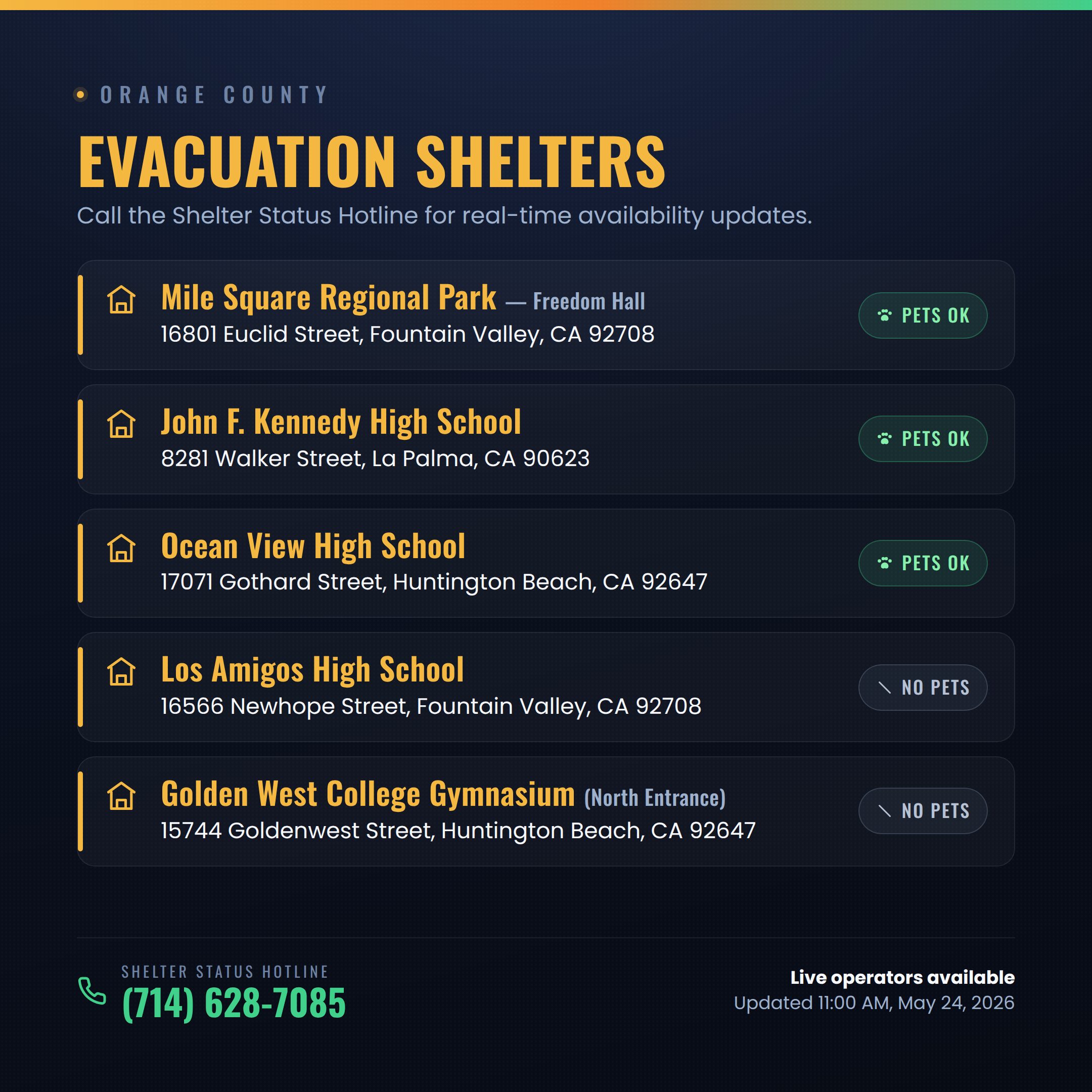
That is genuinely wonderful news, and it is thanks to the firefighters and responders who worked through the night so the rest of us could go home. For the most current information including any lingering road closures near the site—keep an eye on the Orange County Fire Authority and the City of Garden Grove emergency page. The investigation into what caused the tank to overheat is ongoing.
It’s Okay to Still Feel Shaken
Here’s something we don’t say often enough: an evacuation doesn’t end when you walk back through your front door. The fear, the disruption, and the not-knowing take a real toll—and it is completely normal if you’re feeling anxious, irritable, or unsettled even now that the danger has passed. You may be sleeping poorly. Your kids may be clingy or asking a lot of questions. You may feel a wave of relief one minute and worry the next. None of that means anything is wrong with you. It means you’re human, and you just lived through something hard.
Be gentle with yourself and your family over the coming days. Talk about it. Lean on neighbors who went through the same thing. And if the stress feels like more than you can manage, please reach out—free, confidential, 24/7 support is available through the SAMHSA Disaster Distress Helpline at 1-800-985-5990. There is no shame in asking for help. It’s one of the bravest things you can do.
Coming Home: Caring for Your Family in the Days Ahead
As you settle back in, a few simple steps can help protect your family’s wellbeing and ease your mind:
- Air out your home. Open windows and let fresh air circulate before settling back in, especially if your home was closed up for days.
- Check your food. If your power flickered or your refrigerator and freezer sat unattended, inspect perishables and discard anything questionable. When in doubt, throw it out.
- Watch how everyone feels. Keep an eye on yourself, your children, older relatives, and your pets for any unusual symptoms in the days ahead, and don’t hesitate to call your doctor or pediatrician with questions.
- Hold on to your records. Save receipts from hotels, meals, gas, and supplies, and snap a few photos of any spoiled food or property issues. You may never need them but it’s far easier to keep them now than to recreate them later.
- Take it one day at a time. You don’t have to get everything back to normal today. Rest matters too.
 Listening to Your Body
 Listening to Your Body
The chemical at the center of the emergency, methyl methacrylate, can irritate the eyes, skin, and respiratory system, and according to the U.S. EPA and public-health officials, exposure may cause symptoms like coughing, a sore throat, headaches, dizziness, or nausea. Officials repeatedly reported that air-quality readings stayed within healthy limits, which is reassuring. Still, if you or a loved one experienced any unusual symptoms during or after the evacuation, it’s wise to see a doctor both for your peace of mind and to keep a record. If you ever have an urgent question about a possible exposure, the California Poison Control System is available 24/7 at 1-800-222-1222.
For Our Local Business Owners and Workers
Some of the quietest victims of a week like this are the people who run our neighborhood—the family restaurant that had to dump its inventory, the salon that lost a week of appointments, the hourly worker who simply couldn’t get to a job that was inside the evacuation zone. If that’s you, please know your losses are real and they matter. Document what you can: the days you were closed, the orders you canceled, the inventory you lost, the shifts and wages that vanished. The U.S. Small Business Administration’s disaster assistance program and local relief efforts may offer support, and keeping clear records now will make any avenue you pursue far smoother later.
Helpful Resources & Hotlines
- Emergencies: Call 911
- Official updates: Orange County Fire Authority & City of Garden Grove Emergency Info
- Health questions: OC Health Care Agency
- Emotional support (24/7): SAMHSA Disaster Distress Helpline — 1-800-985-5990
- Possible exposure questions (24/7): California Poison Control — 1-800-222-1222
- Local help & referrals: Dial 211 or visit 211 Orange County
- Shelter & relief: American Red Cross of SoCal
- Business recovery: SBA Disaster Assistance
You Have Support and Options, When You’re Ready
We didn’t write this to ask you for anything. We wrote it because this is our community too, and watching our neighbors go through this has been hard. But we’d be doing you a disservice if we didn’t gently mention one thing: this emergency happened because of a failure at a private facility not because of anything you did. And when a company’s problem upends thousands of innocent lives, the people affected shouldn’t be the ones left holding the bill.
That’s the part we know something about. For more than two decades, Oaks Law Firm has stood beside Southern California families when large companies and their insurers would rather they quietly absorb the loss. We’ve walked this road before including representing residents affected by the Aliso Canyon gas leak, one of the largest toxic-release disasters in our region’s history. We understand both the human side of these events and the legal one. If you’d like to understand your rights and options in plain language—evacuation costs, lost income, business losses, or health concerns—we’ve written a companion guide on the legal rights of Garden Grove evacuees and exposed residents.
And if you simply want to talk it through with someone who will listen and tell you honestly whether you even need a lawyer, our door is open. There’s no cost to ask, no pressure, and no fee unless we help you recover. You can reach our caring team through our Sherman Oaks and Woodland Hills offices or learn more about the kinds of cases we handle. Whenever you’re ready today, next week, or not at all we’re here.
We’re here to listen, not to pressure you.
If you were evacuated, exposed, or financially hurt by the GKN Aerospace incident and want to understand your options, reach out for a free, no-obligation conversation. We treat every client like family.
Call or text (877) 539-5366 · Talk With Our Team
