
Two Pedestrians Struck in Northridge; One Person in Custody: How California Law Handles Pedestrian Crashes Involving a Criminal Investigation
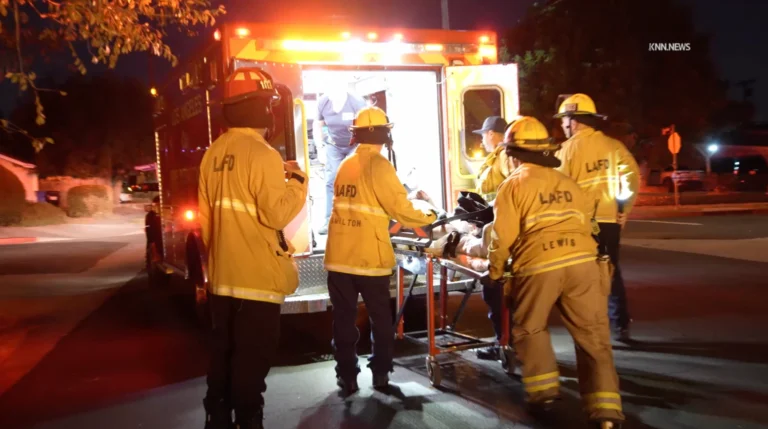
Two pedestrians were struck by a car in the early Sunday morning, and police have taken one person into custody in connection with the collision. As reported by KTLA, the Los Angeles Police Department received the call at 3:35 a.m.; the victims were found in the 8300 block of Vanalden Avenue in Northridge, though the collision itself is believed to have occurred a few blocks west, at Winnetka Avenue and Roscoe Boulevard. A Los Angeles Fire Department official said one victim sustained non-life-threatening injuries; the condition of the second was not immediately known. The identity of the person in custody was not released, and the investigation is ongoing.
A detail in the early reporting stands out: the victims were found blocks from where the collision reportedly happened. Investigators will work to establish what accounts for that distance, and it is a reminder that first reports rarely contain the full story of how a pedestrian crash unfolded.
What Does It Mean That Someone Is in Custody?
An arrest signals that police believe a crime may have been committed in pedestrian collision cases, that can range from driving under the influence to felony hit-and-run but it is only the beginning of a legal process. Any charges are allegations, and the person is presumed innocent unless and until proven guilty.
For the people who were struck, the criminal case and their own civil rights run on separate tracks. The criminal case is brought by the government and belongs to the government; it does not compensate the injured. A civil pedestrian accident claim belongs to the injured person, proceeds independently, and is decided on a lower standard of proof a preponderance of the evidence rather than proof beyond a reasonable doubt. Evidence gathered in the criminal investigation often matters on the civil side, but the civil claim does not have to wait for the criminal case to finish, and the civil filing deadline keeps running while the prosecution proceeds.
Who Can Be Responsible When a Pedestrian Is Hit?
That depends on facts an investigation must establish: the driver’s speed, attention, and sobriety; the lighting and visibility at the intersection; where the pedestrians were and whether they had the right of way; and whether any roadway condition played a role. California’s pure comparative negligence rule means that even if an injured pedestrian bears some share of fault, a claim is not automatically barred — recovery is reduced in proportion to fault rather than eliminated. Pre-dawn crashes make visibility and reaction time central questions, and answering them typically requires the official accident report, physical evidence, and any available camera footage — much of which can be overwritten or lost within days.
If a hit-and-run is ultimately alleged, one point is worth knowing: an injured pedestrian may still have avenues for compensation even where a driver fled or was uninsured, most commonly through uninsured motorist coverage on their own or a household member’s auto policy. That coverage applies to pedestrians more often than people realize.
What Deadlines Apply?
For most California personal injury claims, the general statute of limitations is two years from the date of injury under Code of Civil Procedure § 335.1. A much shorter deadline applies if a government entity may share responsibility for example, if a dangerous condition of the intersection contributed — in which case the California Government Claims Act (Government Code § 911.2) generally requires a formal written claim within six months. A pending criminal case does not pause either deadline. Anyone affected should confirm their specific deadlines with an attorney rather than assume the general rules apply, and an overview of how filing a lawsuit works in California can help put those timelines in context.
Practical Steps Worth Knowing
For anyone hurt in a pedestrian collision, a few steps protect both health and options: seek medical care even for injuries that seem minor, since symptoms of head and internal injuries can surface later; keep the police report number and every document received; preserve clothing and belongings from the crash; and be thoughtful about early conversations with any insurance company before the facts are established. None of these steps commits anyone to a legal claim they simply keep the record intact while the investigation runs its course.
Oaks Law Firm | OaksLawFirm.com | (877) 539-5366 Why Us? Because We Listen!™
