
Pedestrian Killed on the 210 Freeway in Azusa: What California Law Says About Fatal Freeway Pedestrian Accidents
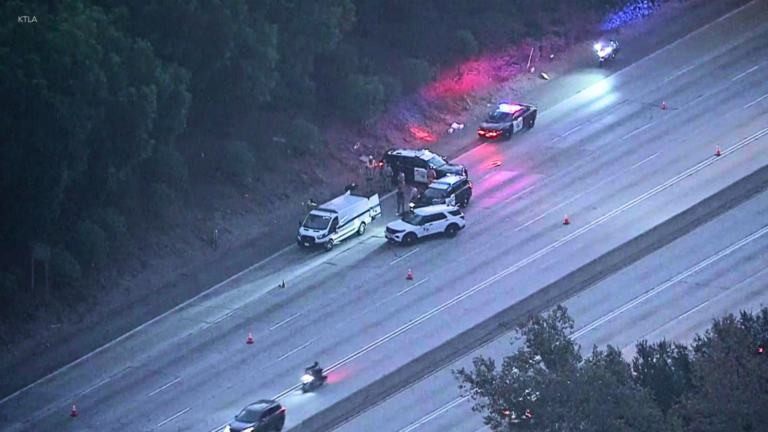
A pedestrian was struck and killed on the westbound 210 Freeway in Azusa early Wednesday morning, shutting down all lanes during the start of the commute. As reported by KTLA, the California Highway Patrol responded to the crash shortly after 3:30 a.m. near Citrus Avenue and issued a SigAlert about 15 minutes later, backing up traffic for miles toward the Inland Empire before all lanes reopened just after 6:20 a.m. There was no immediate word on what led to the crash or on the identity of the person who died. For grieving families, that early uncertainty is common after a freeway pedestrian death, and it is exactly why understanding how California law treats these cases matters. This article explains the legal questions that follow a fatal pedestrian accident on a Los Angeles-area freeway.
How Do Pedestrians End Up on a Freeway?
Pedestrians are on freeways more often than many people realize, and frequently through no fault of their own. A driver whose vehicle breaks down or is involved in an earlier collision may have no safe choice but to exit the car. Others are struck while checking damage after a minor crash, while assisting another motorist, or while working near the roadway. In some situations, a person on foot enters the freeway for reasons that are never fully explained, and in the pre-dawn hours, darkness and limited visibility make any such situation far more dangerous.
Why the person was there matters legally, but it is rarely the whole story. Even when a pedestrian is somewhere they should not be, California law does not automatically bar a claim, because responsibility in these cases is almost never all-or-nothing.
Who Can Be Held Responsible When a Pedestrian Is Killed on a Freeway?
Responsibility depends entirely on the specific facts. Depending on what an investigation reveals, potentially responsible parties can include a driver who was speeding, distracted, impaired, or following too closely to react in time; a driver whose earlier collision or unsafe conduct created the situation that put the pedestrian in the roadway; a motor carrier or employer, if a commercial vehicle was involved; or, in some circumstances, a public entity, if a dangerous condition of the roadway, such as inadequate lighting on a stretch of freeway, contributed to what happened.
Pedestrian accident claims in California turn heavily on reconstruction: where the person was, how visible they were, how fast vehicles were traveling, and what each driver could reasonably have seen and done. In a crash that occurred in darkness before dawn, lighting, visibility, and reaction time become central questions.
Does It Matter If the Pedestrian Was Partly at Fault?
California follows a pure comparative negligence rule. This means that even if the person who was struck bears some share of responsibility for being on the freeway, a claim is not automatically barred; instead, any recovery is reduced in proportion to that person’s share of fault. Insurance companies sometimes treat a freeway pedestrian death as an open-and-shut case of pedestrian fault, but the law does not work that way, and the full circumstances, including why the person was on the roadway and how each driver behaved, must be examined before fault can fairly be assigned.
This is one of the most important reasons families should not accept early conclusions about blame, whether from an insurer or from initial reports, before an independent investigation is complete.
What Is a Wrongful Death Claim in California?
When someone dies because of another party’s negligence or wrongful conduct, California law allows certain surviving family members to bring a wrongful death claim. Under California Code of Civil Procedure § 377.60, eligible claimants typically include a spouse or domestic partner, children, and, in some circumstances, other family members who were financially dependent on the person who died. A wrongful death claim addresses the family’s losses, including the loss of financial support, the loss of love, companionship, and guidance, and funeral and related expenses.
California also recognizes a separate survival action, brought on behalf of the decedent’s estate, for certain losses the person experienced before death. Because a fatal freeway crash can raise overlapping claims against different parties and insurers, families often benefit from speaking with a wrongful death attorney about how these pieces fit together in their situation.
How Long Do I Have to File a Claim After a Fatal Pedestrian Accident in California?
For most California personal injury and wrongful death claims, the general statute of limitations is two years from the date of injury or death under California Code of Civil Procedure § 335.1. Missing that deadline can mean losing the right to pursue a claim entirely, so it helps to understand how filing a lawsuit works in California and how the deadline may apply to your circumstances.
There is a significant exception that can apply to freeway cases. When a claim involves a government entity, and California’s freeways are designed, built, and maintained by public agencies, the California Government Claims Act (Government Code § 911.2) generally requires a formal written claim to be presented to the public entity within six months of the incident, before any lawsuit can be filed. If a dangerous roadway condition contributed to a death, that six-month window arrives quickly for a family still in mourning. Because deadlines vary depending on who is responsible and other case-specific factors, it is important to act promptly and confirm your specific deadline with an attorney as soon as possible.
Why Does the Investigation Need to Begin Quickly?
Evidence from a freeway crash disappears fast. Once a SigAlert is lifted and lanes reopen, the physical scene is largely gone: debris is cleared, marks fade under traffic, and vehicles are towed, repaired, or salvaged. Camera footage from nearby cameras or from the vehicles involved may be overwritten within days. Witness recollections, especially of a chaotic pre-dawn crash, fade quickly. In a case where visibility and the exact sequence of events are in question, physical evidence and vehicle data can be decisive, but only if they are preserved in time. Obtaining the official accident report from the CHP is often one of the first practical steps.
What Should Families Do After a Fatal Freeway Accident?
In the immediate aftermath, the priority is caring for one another and cooperating with the official investigation. When they feel ready, families often find it helpful to keep every document they receive, including the CHP report number, correspondence from insurers, and records of expenses. It also helps to be cautious when dealing with insurance companies before the facts are established. Speaking with an attorney early does not commit a family to litigation; it simply allows them to understand their options before evidence or deadlines slip away.
How Oaks Law Firm Can Help
At Oaks Law Firm, we help grieving families across Azusa, Los Angeles, and throughout California understand their rights after fatal pedestrian and freeway accidents. Every situation is different, and the right path depends on the specific facts, including why the person was on the roadway, how each driver behaved, and whether a roadway condition played a role. Contingency fee arrangements, which relate to attorney’s fees, may be available and can be discussed during a consultation; case costs and expenses may be handled separately.
To speak with us about your situation, request a free case evaluation or contact Oaks Law Firm for a consultation specific to your circumstances.
Oaks Law Firm — Office Locations Why Us? Because We Listen!™
This article is provided for general informational purposes only and does not constitute legal advice. The information presented may not reflect the most current legal developments and should not be relied upon as a substitute for consultation with a licensed attorney. Every personal injury case involves unique facts and circumstances, and the outcome of any case depends entirely on those specific facts. Any results, settlement amounts, or verdicts referenced in this content are specific to the individual cases described, are not typical, and do not guarantee, promise, or predict a similar outcome in your case. Reading this content does not create an attorney-client relationship with Oaks Law Firm. Contact us directly for a consultation specific to your situation.
