Deadly Crash on Angeles Crest Highway: What California Law Says After a Vehicle Goes Off a Mountain Road
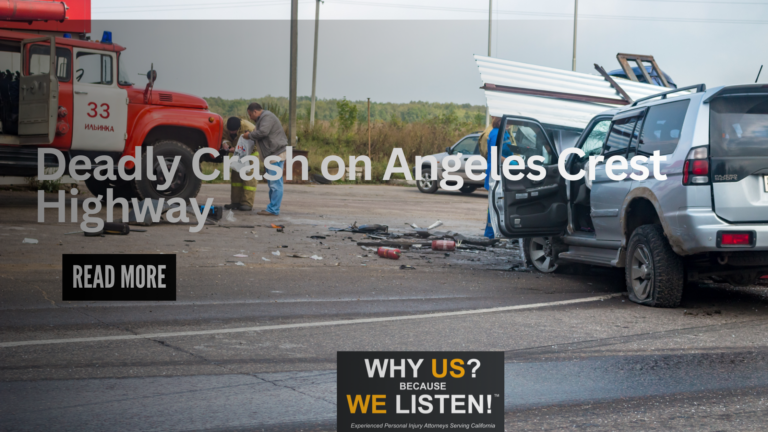
One person died and three others were injured when a car went off the side of the Angeles Crest Highway in La Cañada Flintridge late Wednesday night. As reported by CBS Los Angeles, the California Highway Patrol said the crash happened around 10:10 p.m. near Mile Marker 26-50, and the vehicle came to rest roughly 200 feet below the roadway. Los Angeles County Fire Department Search and Rescue crews worked to extricate the occupants; three passengers were taken to hospitals in stable condition, and one person was pronounced dead at the scene. For the families involved and for anyone who travels California’s mountain highways, a crash like this raises hard questions about what happened and what legal options may exist. This article explains how California law approaches serious and fatal crashes on mountain and canyon roads.
Why Are Mountain Highways Like Angeles Crest So Dangerous?
Mountain highways combine several hazards that ordinary streets do not: sharp curves, steep drop-offs with limited or no shoulder, changing visibility, and long stretches where a single loss of control can send a vehicle far off the roadway. When a car leaves the road on a route like the Angeles Crest Highway, the resulting fall can turn a survivable crash into a catastrophic or fatal one, and it can make rescue itself difficult and time-consuming, as the response to this crash showed.
These roads also raise questions that flatter, urban crashes often do not, including whether guardrails or barriers were present and adequate, whether signage and curve warnings were sufficient, and whether the roadway itself was reasonably safe for the speeds it invites. Those questions matter both for understanding what happened and for identifying who may bear legal responsibility.
What Can Cause a Vehicle to Go Off a Mountain Road?
A single-vehicle crash on a canyon highway can have many contributing causes, and more than one may be involved at once. Common factors include driving too fast for a curve, driver fatigue or impairment, another driver forcing an evasive maneuver even without direct contact, roadway conditions such as loose gravel, debris, or poor pavement, inadequate or missing guardrails, and, in some cases, a mechanical failure or vehicle defect. Because these point to very different responsible parties, from a driver, to a public entity responsible for the road, to a manufacturer, identifying the true cause early is important.
Can There Be a Legal Claim After a Single-Vehicle Crash?
Sometimes, yes. Families often assume that when only one vehicle is involved, no claim is possible. But a solo-vehicle crash is not automatically a solo-fault crash. Depending on what an investigation reveals, potentially responsible parties can include another driver whose conduct forced a reaction even without a collision, a public entity responsible for a dangerous condition of the roadway, such as a missing barrier or a hazardous curve, or a manufacturer if a defect in the vehicle, tires, or brakes contributed. Passengers, in particular, are rarely responsible for how a vehicle is driven, and passengers injured in a crash may have claims regardless of what caused the driver to lose control.
Whether any of these applies depends entirely on the facts, and the facts of a crash 200 feet down a mountainside can be difficult to reconstruct. That is one reason a prompt, thorough investigation matters so much. A car accident lawyer familiar with California law can help evaluate whether a viable claim exists.
What Is a Wrongful Death Claim in California?
When someone dies because of another party’s negligence or wrongful conduct, California law allows certain surviving family members to bring a wrongful death claim. Under California Code of Civil Procedure § 377.60, eligible claimants typically include a spouse or domestic partner, children, and, in some circumstances, other family members who were financially dependent on the person who died. A wrongful death claim addresses the family’s losses, including the loss of financial support, the loss of love, companionship, and guidance, and funeral and related expenses.
California also recognizes a separate survival action, brought on behalf of the decedent’s estate, for certain losses the person experienced before death. Because a crash that kills one occupant and injures others can give rise to several overlapping claims, families and injured survivors alike often benefit from speaking with a wrongful death attorney about how these pieces fit together in their situation.
How Long Do I Have to File a Claim After a Fatal Crash in California?
For most California personal injury and wrongful death claims, the general statute of limitations is two years from the date of injury or death under California Code of Civil Procedure § 335.1. Missing this deadline can mean losing the right to pursue a claim entirely, so it helps to understand how filing a lawsuit works in California and how the deadline may apply to your circumstances.
There is a critical exception that can be especially relevant on a mountain highway. California’s state highways are designed, built, and maintained by public agencies, and when a dangerous condition of the roadway may have contributed to a crash, the California Government Claims Act (Government Code § 911.2) generally requires a formal written claim to be presented to the public entity within six months of the incident, before any lawsuit can be filed. That six-month window arrives quickly for families still coping with a loss or a serious injury. Because deadlines vary depending on who is responsible and other case-specific factors, it is important to act promptly and confirm your specific deadline with an attorney as soon as possible.
Why Does the Investigation Need to Begin Quickly?
Evidence from a mountain crash can disappear fast. The vehicle may be recovered, towed, and later salvaged or repaired before it can be examined for a mechanical failure. Marks on the roadway fade, debris is cleared, and roadway conditions, such as loose gravel or a barrier gap, can be altered when repairs are made or when the highway reopens to traffic. In a case like this, where the car ended up far below the road, preserving the vehicle and documenting the scene and the barrier conditions promptly can be central to understanding what actually happened, independent of any filing deadline. Obtaining the official accident report from the CHP is often one of the first practical steps.
What Should Families and Injured Survivors Do After a Crash Like This?
In the immediate aftermath, the priority is medical care and recovery, and, for families, caring for one another and cooperating with the official investigation. When they feel ready, families and injured survivors often find it helpful to keep everything they receive, including the CHP report number, medical records, correspondence from insurers, and records of expenses, and to be thoughtful when dealing with insurance companies before the full picture is understood. Speaking with an attorney early does not commit anyone to litigation; it simply allows them to understand their options before evidence or deadlines slip away.
How Oaks Law Firm Can Help
At Oaks Law Firm, we help injured people and grieving families across Los Angeles and throughout California understand their rights after serious and fatal crashes, including crashes on mountain and canyon highways. Every situation is different, and the right path depends on the specific facts, including whether a roadway condition, another driver, or a vehicle defect may have played a role. Contingency fee arrangements, which relate to attorney’s fees, may be available and can be discussed during a consultation; case costs and expenses may be handled separately.
To speak with us about your situation, request a free case evaluation or contact Oaks Law Firm for a consultation specific to your circumstances.
Oaks Law Firm — Office Locations
This article is provided for general informational purposes only and does not constitute legal advice. The information presented may not reflect the most current legal developments and should not be relied upon as a substitute for consultation with a licensed attorney. Every personal injury case involves unique facts and circumstances, and the outcome of any case depends entirely on those specific facts. Any results, settlement amounts, or verdicts referenced in this content are specific to the individual cases described, are not typical, and do not guarantee, promise, or predict a similar outcome in your case. Reading this content does not create an attorney-client relationship with Oaks Law Firm. Contact us directly for a consultation specific to your situation.
