Deadly 16-Vehicle Crash in Norwalk: What California Law Says When a Suspected Street Racing Crash Damages Cars and Injures Bystanders
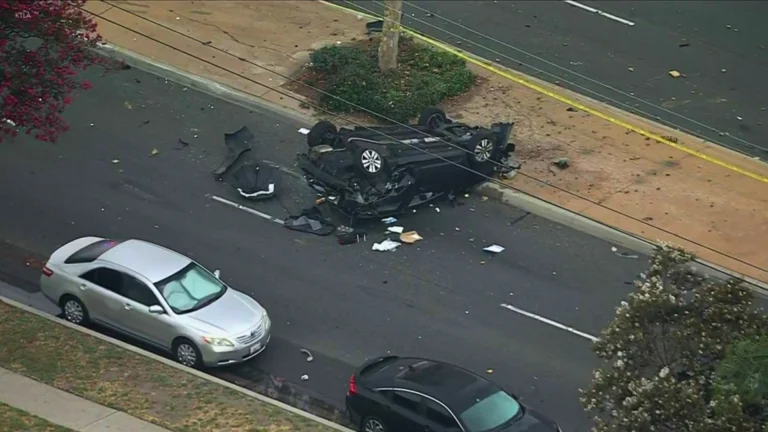
A high-speed crash in Norwalk early Tuesday morning left one driver dead, injured two other drivers, and damaged sixteen vehicles — five that were moving and eleven that were parked. As reported by KTLA, the Los Angeles County Sheriff’s Department responded to Rosecrans Avenue near Longworth Avenue just before 1 a.m., where one vehicle had overturned onto its roof; its driver was pronounced dead at the scene. Detectives are examining whether street racing played a role, though authorities have not confirmed that anyone was racing, and investigators said during a morning update that the man who died was believed to be responsible for the crash. No arrests have been made. Neighbors told KTLA that late-night reckless driving has been an ongoing concern on the street.
A crash like this leaves an unusually wide circle of affected people: injured drivers, the owners of eleven parked cars, residents of a street they believed was safe — and, painfully, the family of the driver who died. California law has answers for each of them, and some of those answers are not intuitive. This article explains how these situations work.
What Happens When the At-Fault Driver Died in the Crash?
Many people assume that if the driver believed responsible for a crash was killed, there is no one left to make a claim against. California law says otherwise. A claim ordinarily proceeds against the deceased driver’s estate and, in practice, is typically handled and paid through the driver’s auto insurance, the same as if the driver had survived. California has specific procedures for claims against a decedent’s estate, including provisions that allow a claim to proceed directly against available insurance coverage. The process has its own rules and timelines, which is one reason injured people and vehicle owners in this situation benefit from understanding how filing a claim works sooner rather than later.
One caution: early fault assessments can shift. Investigators’ initial belief about who caused a crash — announced within hours, while the investigation is open — is a starting point, not a final determination. In a five-moving-vehicle crash where racing is being examined, the full picture may implicate more than one driver.
If Street Racing Is Confirmed, Does That Change the Legal Picture?
It can, in significant ways. If an investigation establishes that two or more drivers were racing, California law can treat the participants as jointly responsible for the harm the race caused — including harm inflicted by the other racer’s vehicle. That means an injured person or a damaged vehicle’s owner may have claims against a surviving race participant, not only against the driver who died. Conduct like racing can also show a conscious disregard for the safety of others, which can open the door to remedies beyond ordinary compensation in a civil case. Whether any of this applies here depends entirely on what detectives conclude; at this stage, racing is a possibility under examination, not an established fact.
What About the Owners of the Eleven Parked Cars?
Property-damage claims are the most common ripple from a crash like this, and owners of parked vehicles are essentially blameless by definition. Their claims proceed against the responsible driver’s insurance — or, if racing is established, potentially against more than one driver. Where coverage is insufficient or unavailable, an owner’s own policy may respond through collision or uninsured motorist property damage coverage. Owners should photograph the damage before repairs, keep the sheriff’s report number, and get repair estimates in writing. It is also worth knowing that property damage claims carry their own statute of limitations under California law — three years for damage to property, distinct from the two-year period for injury claims — so a vehicle owner’s deadline differs from an injured person’s.
What Are the Injured Drivers’ Rights?
The two injured drivers have personal injury claims governed by the familiar framework: California’s pure comparative negligence rule allocates fault among everyone involved in proportion to their share, and an injured person’s recovery is reduced by their own percentage rather than barred. In a chaotic multi-vehicle crash, reconstructing the sequence — who was moving, at what speed, and who struck whom — is the heart of the case, and it depends on evidence that fades fast: vehicle event data, debris patterns, camera footage from nearby homes and businesses, and witness accounts. The official accident report is the starting point, and careful documentation of injuries matters even when injuries initially seem minor, since symptoms often surface in the days that follow. Injured drivers should also be thoughtful when dealing with insurance companies early on — in a sixteen-vehicle crash, many insurers are involved at once, and early recorded statements follow a claim.
What Deadlines Apply?
For most California personal injury and wrongful death claims, the general statute of limitations is two years from the date of injury under Code of Civil Procedure § 335.1; property damage claims generally carry a three-year period. Shorter deadlines can apply in specific circumstances — including claims involving a government entity, where the California Government Claims Act (Government Code § 911.2) generally requires a formal written claim within six months, and claims against a deceased person’s estate, which follow their own procedural rules and timelines. Because several different deadlines can run at once from a single crash, anyone affected should confirm which apply to their situation with an attorney rather than assume the general rules cover them.
Oaks Law Firm | , California | OaksLawFirm.com | (877) 539-5366 Why Us? Because We Listen!™
This article is provided for general informational purposes only and does not constitute legal advice. The information presented may not reflect the most current legal developments and should not be relied upon as a substitute for consultation with a licensed attorney. Every personal injury case involves unique facts and circumstances, and the outcome of any case depends entirely on those specific facts. Any results, settlement amounts, or verdicts referenced in this content are specific to the individual cases described, are not typical, and do not guarantee, promise, or predict a similar outcome in your case. Reading this content does not create an attorney-client relationship with Oaks Law Firm. Contact us directly for a consultation specific to your situation.
