
Attorney Advertising. This article was prepared with the assistance of artificial intelligence and reviewed by Oaks Law Firm prior to publication.
The driver who moved out of their lane without a safe gap is typically primarily at fault under California Vehicle Code §22107. But California’s pure comparative negligence rule means your own share of blame, if any, cuts your recovery proportionally. Photos, dashcam footage, and a police report often decide close cases, and deadlines to file only make sense once fault is sorted out.
TL;DR:
- Fault in a lane-change accident generally depends on whether the driver moved without a safe gap and signaling properly, with violations of CVC §22107 constituting negligence per se.
- Evidence such as damage patterns, scene photos, dashcam footage, and police reports greatly influences fault assessment, especially in ambiguous cases or disputed injuries.
- Most California lane-change claims involve a fault split under pure comparative negligence, meaning your compensation reduces proportionally to your assigned fault percentage.
- The two-year statute of limitations for filing injury claims and the shorter six-month deadline for government-related crashes make prompt evidence preservation and legal consultation critical.
- Hiring an experienced attorney early improves your chances of securing fair damages and effectively overcoming insurer tactics that rely on thin evidence or documentation gaps.
Table of Contents
- California Law and DMV Rules on Unsafe Lane Changes
- How Fault Gets Decided in a Lane-Change Crash
- Evidence That Proves Who Actually Moved
- Common Scenarios That Complicate Fault
- How Insurers Investigate Lane-Change Claims
- Deadlines That Can End Your Claim Early
- How Oaks Law Firm Handles Disputed Lane-Change Claims
- What to Do Right After an Unsafe Lane-Change Crash
- What Most Drivers Get Wrong About Lane-Change Fault
- Get Help From a California Car Accident Attorney
- Sources
- FAQ
California Law and DMV Rules on Unsafe Lane Changes
California Vehicle Code §22107 is the backbone of nearly every unsafe lane change accident California case. The statute bars a driver from turning or moving a vehicle from a direct course “until such movement can be made with reasonable safety” and only after signaling. It doesn’t matter whether the driver meant to cut someone off. Intent isn’t the test. Reasonable safety is.
The California Driver Handbook translates that legal standard into a checklist most drivers learned for their test and then forgot:
- Signal before moving, not while moving.
- Check mirrors and do an actual shoulder check for blind spots.
- Confirm there’s enough space and time for the new lane, not just an opening.
- Avoid weaving between lanes or making last-second moves near exits and intersections.
Other Vehicle Code passing and lane-use provisions can also come into play on multi-lane highways or near turn-only lanes, adding context to how “reasonable safety” gets defined in a specific stretch of road.
Here’s where it gets useful for a claim: violating §22107 can amount to negligence per se, meaning a jury can treat the statutory violation itself as evidence of negligence, without you having to reconstruct a full duty-of-care argument from scratch.
How Fault Gets Decided in a Lane-Change Crash
California follows pure comparative negligence, a doctrine confirmed by the state’s courts decades ago and still governing every lane-change accident claim today. Under this rule, a jury or insurer assigns each driver a percentage of fault, and your compensation shrinks by your own percentage. Even if you’re found 40% responsible, you can still recover the other 60% of your damages. There’s no cutoff that bars recovery entirely, unlike states with modified comparative fault rules.
Adjusters and courts weigh several factors when dividing fault after an unsafe lane change:
- Signaling and timing. Did the merging driver signal early enough to give notice, or was it a last-second flick of the blinker?
- Vehicle position and gap. Was there actually room to merge safely, or did the driver force their way into a closing gap?
- Speed differential. A lane change into slower or faster traffic changes how “safe” the move really was.
- Evasive action by the other driver. Braking hard, swerving, or laying on the horn can shift some fault back onto the driver who reacted late or poorly.
- Road and visibility conditions. Rain, glare, or a blocked mirror can spread responsibility across both drivers.
A few realistic examples show how this plays out. A driver who merges into an occupied lane with no signal and causes a sideswipe is often assigned 90 to 100% fault. A case where the merging driver signaled but misjudged the gap, and the other driver was speeding, might land closer to 70/30. A disputed sideswipe with no clear evidence of who drifted often settles near 50/50, which is exactly why documentation matters so much.
Evidence That Proves Who Actually Moved
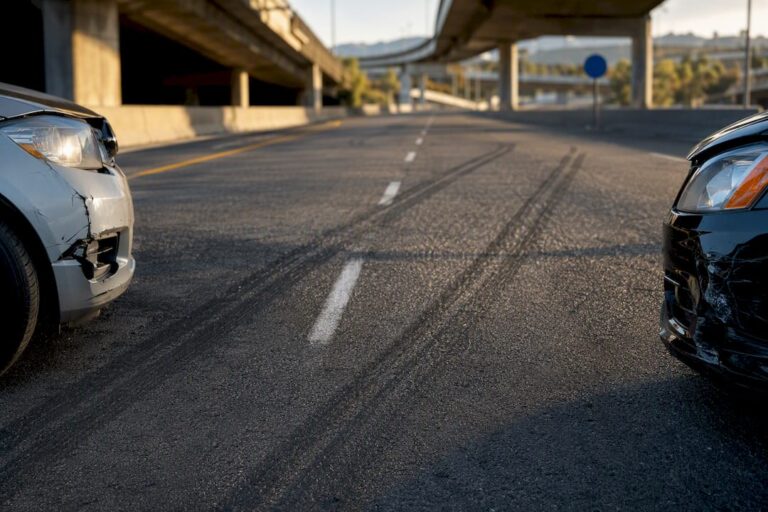
Fault fights in lane-change accident claims usually come down to physical proof, not competing stories. Damage patterns and paint transfer often settle the argument on their own: a diagonal scrape running from front to rear on one car, paired with a matching diagonal mark on the other vehicle’s side panel, tends to show which car drifted into which lane. A straight parallel scratch pattern tells a different story than an angled gouge.
Build your evidence file in this order of priority:
- Wide scene photos showing lane lines, vehicle final positions, and any skid marks or debris fields.
- Close-up shots of every point of impact, at multiple angles, before either car moves if it’s safe to stay put.
- Dashcam or nearby traffic camera footage, requested immediately since most systems overwrite recordings within days.
- Witness names and phone numbers, collected on scene since people are far harder to track down a week later.
- The police report, including the responding officer’s notes on fault and any citation issued.
- Vehicle event data (EDR/“black box”) information, which can show speed, braking, and steering input in the seconds before impact.
Pro Tip: Ask witnesses to text you a quick photo of the scene from their own phone before they leave. A timestamped image from an independent bystander can be more persuasive to an adjuster than your own dashcam footage.
In serious injury cases or disputed commercial-vehicle crashes, an accident reconstruction expert can translate crush patterns and skid data into a speed and trajectory analysis that holds up in negotiation or at trial.
Common Scenarios That Complicate Fault
Not every lane-change crash looks the same, and the fact pattern often decides how fast an insurer settles.
- Sideswipe collisions are the most contested type because both drivers frequently insist the other one drifted. Paint transfer direction and dent angle usually break the tie.
- Big rig and truck lane changes raise separate issues tied to blind spots (“no-zones”) and FMCSA safety rules; trucking companies often carry onboard telematics that can be subpoenaed.
- Motorcycle lane-change crashes carry a visibility problem: riders are harder to spot in mirrors and blind spots, but that doesn’t excuse a driver’s duty to check before merging.
- Intersection lane changes, where a driver shifts lanes while also turning, often involve overlapping fault questions about right-of-way and signaling.
“I didn’t see them” is one of the weakest defenses in California traffic law. §22107 puts the burden on the driver making the move to confirm the lane is clear, not on the other driver to be more visible.
How Insurers Investigate Lane-Change Claims
Insurance adjusters move fast, and their first calls are rarely just friendly check-ins. They’re building a fault file, and what you say on that first call can shape the entire claim.
Adjusters typically prioritize:
- The police report and any citation issued at the scene.
- Photos and damage patterns from both vehicles.
- Recorded statements from both drivers and any witnesses.
- Repair estimates that reveal impact angles.
Avoid giving a recorded statement to the other driver’s insurer before speaking with an attorney, and never guess at fault percentages or say “I’m sorry” in a way that gets recast as an admission. If fault is contested or injuries are serious, that’s the point to bring in counsel before the conversation goes further.
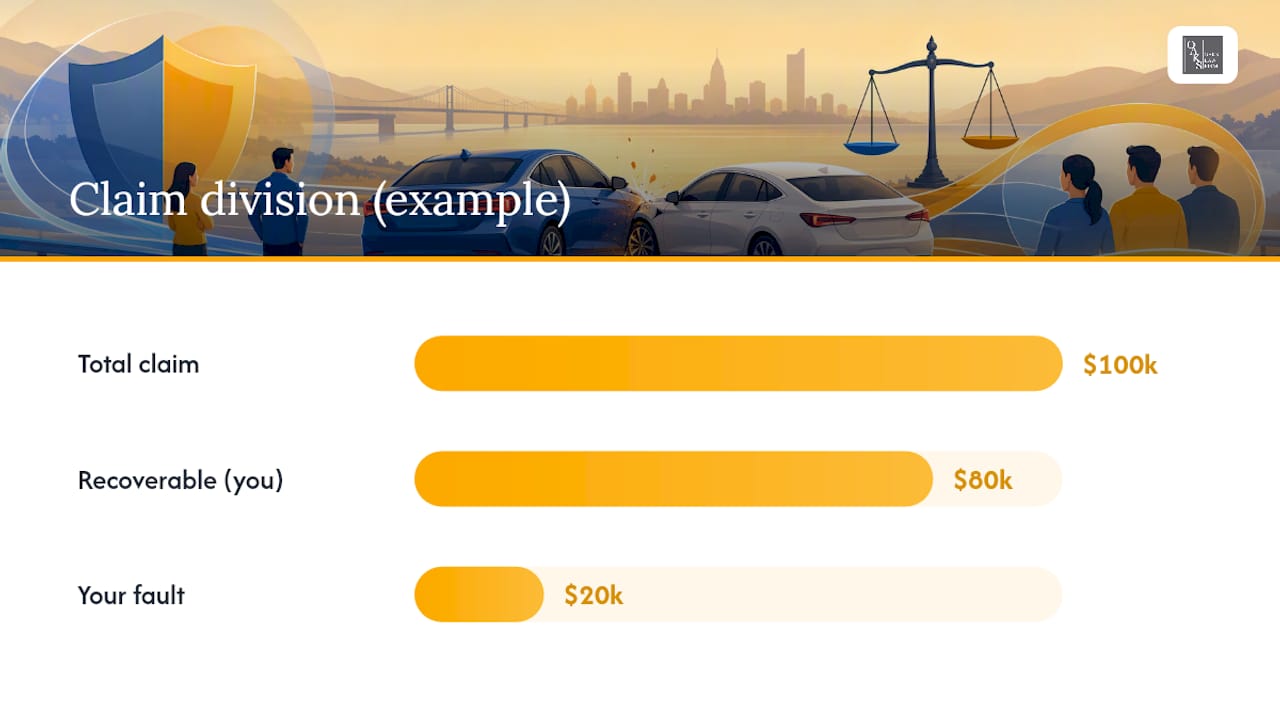
Compensable damages in a California lane-change claim generally include medical bills, property damage and lost income, and pain and suffering. Comparative negligence applies directly to the math: a $100,000 claim where you’re found 20% at fault yields roughly $80,000 in recoverable damages.
Deadlines That Can End Your Claim Early
California gives most injury victims two years from the crash date to file a lawsuit under CCP §335.1. Miss it, and the courthouse door closes regardless of how strong your evidence is. Exceptions exist for minors, cases involving delayed discovery of an injury, and certain tolling situations, so don’t assume your case falls outside the standard rule without checking.
Claims against a government entity, such as a crash involving a city bus or a poorly maintained state highway, follow a much shorter six-month deadline under Gov. Code §911.2. That clock starts running immediately, and missing it can bar the claim entirely.
A short mental checklist helps:
- Preserve evidence (photos, dashcam, witness contacts) within days, not weeks.
- Notify your own insurer promptly, but keep statements factual and brief.
- Talk to an attorney before signing anything or giving a formal statement if fault is disputed.
How Oaks Law Firm Handles Disputed Lane-Change Claims
Matthew Nezhad founded Oaks Law Firm (formerly Nezhad Law Firm) in 2002 and has focused his career on representing injured Californians, with offices in Sherman Oaks and Woodland Hills. The firm takes on a limited number of cases each year, which allows the legal team to dig into evidence rather than process files on a conveyor belt.
For lane-change claims specifically, that means moving quickly to preserve dashcam and traffic camera footage before it’s overwritten, retaining accident reconstruction experts when damage patterns are ambiguous, and negotiating directly with insurance adjusters who are trained to minimize payouts. When a case involves a commercial truck, a seriously disputed fault split, or catastrophic injury, hiring an attorney early, rather than after the insurer has already locked in its narrative, tends to matter most.
What to Do Right After an Unsafe Lane-Change Crash
- Check for injuries and call 911. Move to safety if you can, and get medical attention even if symptoms seem minor.
- Document the scene with wide and close-up photos, and collect names and phone numbers from any witnesses.
- Preserve digital evidence immediately, including your own dashcam footage and any phone recordings.
- Notify your insurer with basic facts only, and hold off on a recorded statement to the other side’s insurer until you’ve spoken with an attorney if fault is unclear.
- Track every medical visit, expense, and missed workday in a dedicated folder, since insurers scrutinize gaps in treatment.
Pro Tip: Take your scene photos in “burst mode” or shoot a slow video pan instead of single stills. It captures the exact position of skid marks and debris relative to the lane lines, details a single photo can miss entirely.
What Most Drivers Get Wrong About Lane-Change Fault
Most people assume a lane-change crash is an obvious call: one driver drifted, end of story. In practice, insurers routinely default to 50/50 splits when the evidence file is thin, which shortchanges the driver who did nothing wrong. The gap between “who was actually careless” and “who gets paid” is almost always a documentation problem, not a legal one.
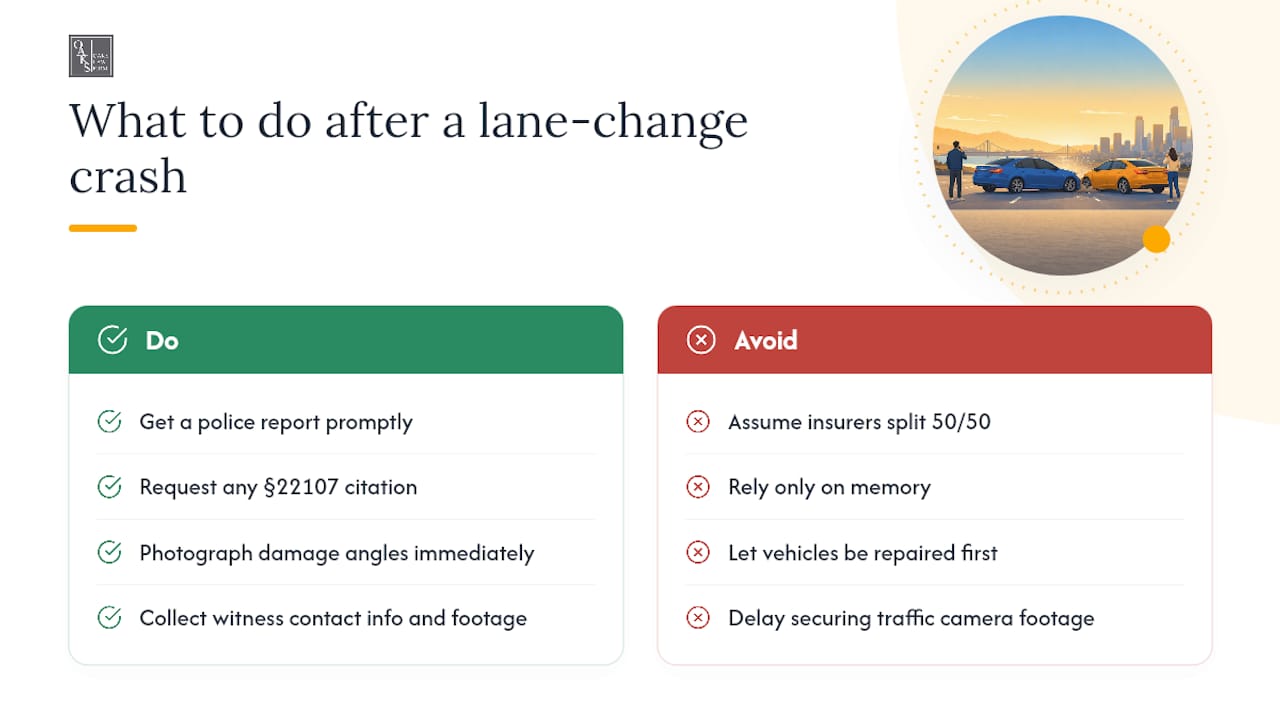
The conventional advice, “get a police report and let the insurance companies sort it out,” undersells how much a citation for violating §22107 can do for a civil claim. It’s not automatic proof of liability, but it’s a strong evidentiary anchor that most adjusters take seriously.
If there’s one thing worth prioritizing above everything else, it’s understanding the potential legal consequences of your actions, such as how a hit and run can be a felony in California, alongside speed on evidence. Traffic camera footage disappears, witnesses stop answering calls, and vehicles get repaired before anyone photographs the damage angle properly. The law hasn’t changed much in decades. What decides these cases now is who moved fastest to lock down proof of what actually happened on the road.
— Matthew Nezhad
Get Help From a California Car Accident Attorney
Oaks Law Firm has spent more than two decades untangling exactly the kind of “he said, she said” lane-change disputes covered in this article, and the firm works on contingency, so there’s no upfront cost and no fee unless the case results in a settlement or award. That matters most when an insurer is leaning toward a 50/50 fault split and you need someone to push back with real evidence.

If you were hurt in a lane-change collision anywhere in California, the firm’s car accident attorneys in Los Angeles can review your dashcam footage, damage photos, and police report to determine whether the other driver’s fault percentage is being understated. Case evaluations are free, and given the six-month and two-year deadlines that govern these claims, reaching out sooner rather than later protects your options. Contact Oaks Law Firm today to have your case reviewed.
This article is general information, not a substitute for advice from a qualified lawyer. Consult a qualified legal professional about your own circumstances before acting on anything here.
Sources
- California Vehicle Code § 22107 (Justia)
- California Driver Handbook — Navigating the roads (DMV)
- Sideswipe and Unsafe Lane-Change Accident Claims | Know Your Rights (Observed)
- California Courts official site
FAQ
How much is a ticket for an unsafe lane change in California?
A citation under CVC §22107 commonly carries a fine cited around $238, plus DMV points that can raise your insurance rates, though it isn’t automatically conclusive proof in a civil injury claim.
What are the rules for unsafe lane changes in California?
Drivers must signal, confirm there’s a safe gap, and only move into a new lane when it can be done with reasonable safety, following both CVC §22107 and the practical steps outlined in the California Driver Handbook.
What should I avoid telling my insurance company?
Avoid giving a recorded statement, guessing at fault percentages, or apologizing in a way that could be read as admitting fault, especially before you’ve spoken with an attorney if liability is contested.
Is lane switching illegal in California?
Lane switching itself is legal; what’s illegal is switching lanes without signaling or without a safe gap, which is exactly what CVC §22107 prohibits and what typically drives fault in an unsafe lane change accident California claim.
How long do I have to file a claim after a lane-change accident?
California’s general statute of limitations gives you two years from the crash date under CCP §335.1, while claims against a government entity require a notice filed within six months under Gov. Code §911.2.
Attorney Advertising. This article is for informational purposes only and does not constitute legal advice. Prior results do not guarantee a similar outcome. No attorney-client relationship is formed by reading this article. Contact Oaks Law Firm for a free consultation regarding your specific situation.
