
Attorney Advertising. This article was prepared with the assistance of artificial intelligence and reviewed by Oaks Law Firm prior to publication.
Most slip-and-fall accidents produce one of nine injury patterns: sprains and strains, fractures, head injuries and concussion, spinal injuries and herniated discs, soft-tissue contusions, dislocations, cuts and lacerations, nerve damage, or chronic long-term pain. Slips, trips, and falls account for roughly 15% of all accidental deaths and rank as the second leading cause of workplace fatalities behind motor vehicle crashes, according to a factsheet from the Public Employees Federation. If you or someone nearby just fell, here’s what to do in the next hour:
- Watch for red flags: confusion, severe headache, numbness, or inability to bear weight.
- Call 911 for loss of consciousness, seizure, or visible deformity.
- Photograph the scene, the hazard, and any visible injury before anything changes.
- Get names and contact information from witnesses.
- See a doctor even if you feel “fine.” Adrenaline hides pain.
- Report the fall to the property owner or employer in writing to help establish liability as explained in this public liability insurance guide.
The Cleveland Clinic and the CDC both treat fall injuries as a spectrum from minor bruising to life-altering trauma, and where your injury lands on that spectrum shapes both your treatment plan and, if negligence caused the fall, your legal options.
Key Takeaways
Documenting injury severity immediately after a slip and fall, and acting before California’s filing deadlines expire, determines how strong a resulting claim can be.
| Point | Details |
|---|---|
| Identify the injury tier | Match symptoms to minor, moderate, or major harm to gauge urgency and next steps. |
| Watch for delayed symptoms | Adrenaline can mask pain, so track when the fall happened and when symptoms began. |
| Seek care based on red flags | Loss of consciousness, numbness, or inability to bear weight warrants an ER visit. |
| Preserve evidence fast | Photos, witness names, medical records, and incident reports strengthen a claim. |
| Know your deadlines | California gives two years under CCP §335.1, or six months under Gov. Code §911.2 for government property. |
This article is general information, not a substitute for advice from a qualified doctor. Consult a qualified healthcare professional about your own circumstances before acting on anything here.
Table of Contents
- Slip and Fall Injury Types: What Each One Looks Like
- When Should You See a Doctor After a Fall?
- How Long Does Recovery Take?
- How Injury Type Affects a Slip and Fall Claim
- The National Picture: How Common and How Serious
- What Oaks Law Firm Wants You to Know
- Sources
- FAQ
Slip and Fall Injury Types: What Each One Looks Like
Identifying the injury is the first step toward getting the right care. Here’s how the most common types actually present.
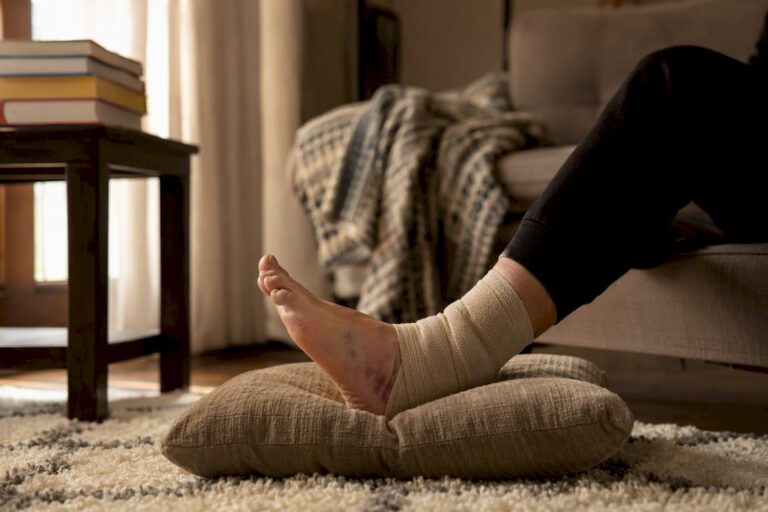
Sprains and strains happen when a ligament (sprain) or muscle/tendon (strain) gets overstretched during the fall, usually at the ankle, wrist, or lower back. Watch for swelling, bruising, limited range of motion, and pain that worsens with movement. Most are moderate injuries treated with rest, ice, compression, and elevation, though persistent soft-tissue limitations often require physical therapy.
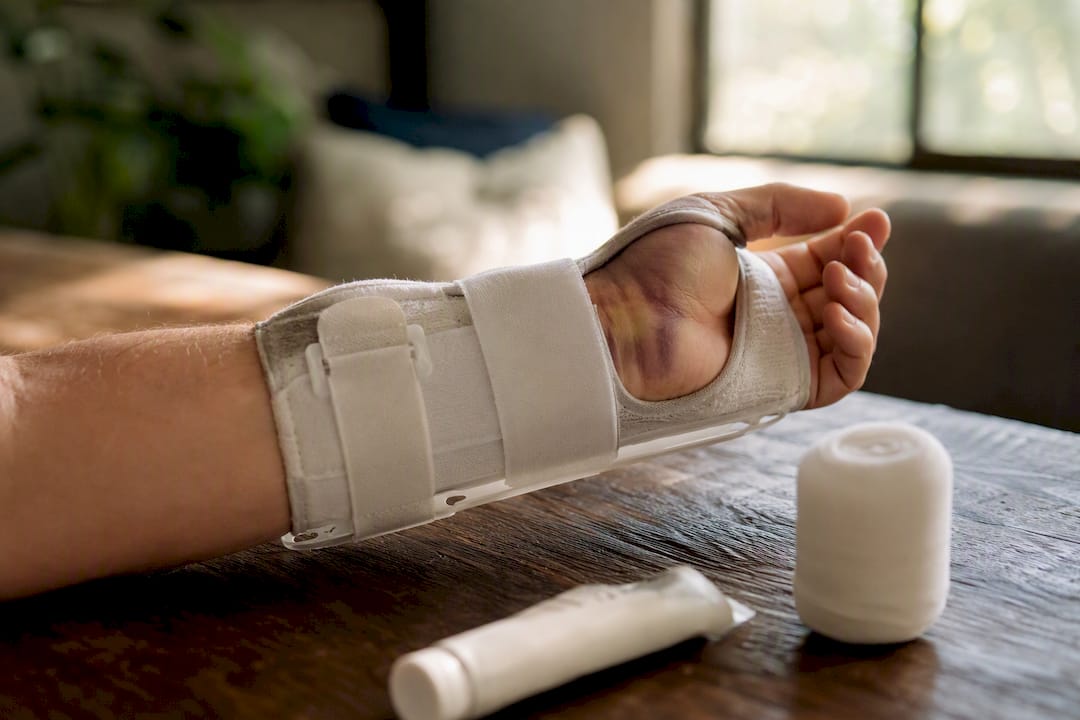
Fractures are among the most disabling slip-and-fall outcomes. The wrist (distal radius), ankle, hip, and ribs break most often when someone falls and instinctively catches themselves. Signs include severe pain, swelling, visible deformity, and inability to use the limb. Hip fractures in particular carry major consequences for older adults, frequently requiring surgery and extended hospitalization.
Head injuries and concussion or traumatic brain injury (TBI) occur when the head strikes the ground or another surface. Symptoms include headache, dizziness, nausea, confusion, or brief loss of consciousness. Falls are a leading cause of TBI, and any head impact deserves same-day medical evaluation, especially in older adults or anyone on blood thinners.
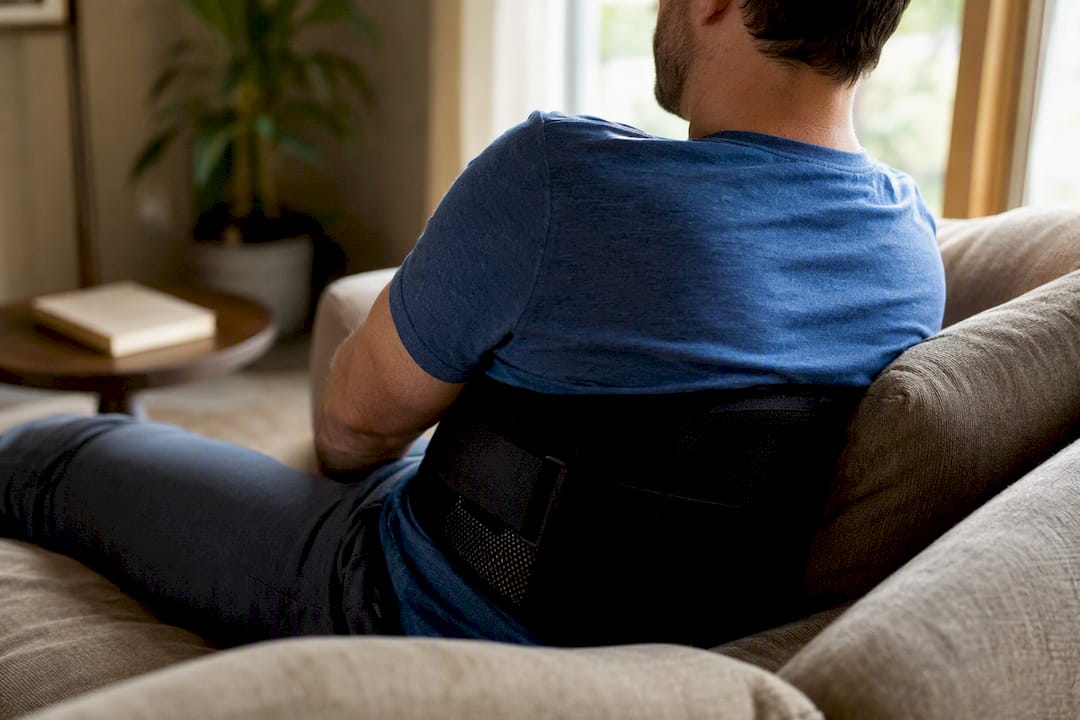
Spinal injuries and herniated discs range from a bruised tailbone to nerve compression that causes radiating pain, tingling, or leg weakness. Sudden impact can also worsen a preexisting disc condition. Moderate cases respond to rest and physical therapy; major spinal cord injuries are medical emergencies requiring imaging and often surgery.
Soft-tissue injuries and contusions are the bruises and deep tissue damage that show up almost immediately after impact. They’re usually minor to moderate, but a large contusion over the hip or spine can mask a more serious injury underneath, which is why imaging matters when swelling seems disproportionate to the fall.
Dislocations, most commonly of the shoulder or finger, happen when a joint gets forced out of its socket. The joint looks visibly out of place and is often accompanied by intense pain and swelling. These require prompt reduction by a medical provider and typically several weeks of immobilization afterward.
Cuts, lacerations, and dental injuries result from striking sharp edges, glass, or hard flooring. Deep lacerations need stitches within hours to reduce infection risk and scarring; chipped or knocked-out teeth need a dentist the same day.
Nerve injuries, including radial, ulnar, or sciatic neuropathy, develop when a fall compresses or stretches a nerve pathway. Numbness, tingling, or a “pins and needles” sensation that doesn’t resolve within a day or two signals nerve involvement rather than simple bruising.
Chronic pain and long-term complications develop in some cases regardless of how minor the initial injury looked. Post-concussive syndrome and complex regional pain syndrome are two documented outcomes that can linger for months, and both matter enormously when a claim’s value depends on how long the injury actually affects daily life.
When Should You See a Doctor After a Fall?
Call 911 or go to the emergency room immediately for loss of consciousness, worsening headache, repeated vomiting, weakness or numbness, inability to bear weight, visible bone deformity, heavy bleeding, confusion, seizure activity, or signs of internal bleeding such as abdominal rigidity.
If none of those apply but you’re still hurting, urgent care usually covers:
- Limited but not absent mobility in a joint or limb
- Pain that hasn’t improved after a day of rest
- Cuts that likely need stitches but aren’t actively gushing
- Suspected fractures in a patient who is otherwise stable
Pro Tip: Adrenaline routinely masks pain immediately after a fall, so an injury that feels minor at the scene can turn out to be a hairline fracture or internal injury by the next morning. Write down exactly when the fall happened and when each symptom started. That timeline becomes medically and legally important later.
Older adults, anyone on anticoagulant medication, children, and people with cognitive impairment should use a lower threshold for seeking evaluation, since falls that look minor in these groups carry a disproportionately higher risk of serious injury.
How Long Does Recovery Take?
Treatment tracks severity. Minor injuries usually need only self-care; moderate injuries call for outpatient treatment and physical therapy; major injuries often mean hospitalization, surgery, and months of rehabilitation.
- Minor injuries (bruises, mild sprains): typically 1 to 6 weeks with rest and basic care.
- Moderate injuries (wrist fractures, moderate sprains, minor concussions): a wrist fracture generally takes 6 to 8 weeks to reach bony union with proper immobilization.
- Major injuries (hip fractures, spinal cord injuries, severe TBI): often months of recovery, frequently with surgery and a meaningfully higher complication rate in older patients.
A 70-year-old with a hip fracture faces a very different road than a 30-year-old with a wrist fracture from the same type of fall. The older patient risks longer hospitalization, higher infection risk, and a real chance the injury never fully resolves. Common complications worth watching for include:
- Infection at surgical or open-wound sites
- Delayed union or malunion of a fracture
- Chronic back pain following a spinal injury
- Post-concussion symptoms lasting weeks or months
How Injury Type Affects a Slip and Fall Claim
More serious, well-documented injuries generally produce stronger claims because they generate more measurable damages: higher medical bills, longer lost-wage periods, and greater pain and suffering. Insurance adjusters and courts weigh the medical record heavily, so the evidence you gather in the first days after a fall matters as much as the injury itself.
The evidence that carries the most weight includes:
- Contemporaneous medical records and provider notes
- Imaging reports (X-rays, MRIs, CT scans)
- Prescription records and physical therapy notes
- Documentation of missed work and lost income
- Photos of the hazard, the scene, and visible injuries
- Witness statements and an incident or accident report
- Preserved shoes or clothing worn at the time of the fall
Permanent or long-term injuries expand the damage categories a claim can pursue, adding future medical care and diminished earning capacity to the mix, not just the bills already paid. In California, the general statute of limitations for a personal injury claim is two years under CCP §335.1, but if a government entity owns or maintains the property where you fell, you must file a claim within six months under Gov. Code §911.2. Exceptions exist for both deadlines, particularly involving minors or delayed discovery of an injury, so it’s worth talking to an attorney early rather than assuming you have the full window. Solid medical records preserved from day one make that conversation far more productive.
The National Picture: How Common and How Serious
Medical providers generally sort fall injuries into three tiers: minor harm (bruises, scrapes), moderate harm (sprains, some fractures, minor concussions), and major harm (traumatic brain injury, displaced hip or pelvic fractures, internal bleeding). Mapping your symptoms to one of these tiers helps you gauge urgency before you even reach a doctor.
- Minor: a bruised knee, a scraped palm, mild soreness that fades in days.
- Moderate: a sprained ankle that limits walking, a wrist fracture, a concussion with brief confusion.
- Major: a hip fracture requiring surgery, a spinal cord injury, loss of consciousness lasting more than a few seconds.
Falls remain a leading cause of traumatic brain injury and a major driver of hospitalization among older adults, and prevention research consistently points to traction, housekeeping, and eliminating level changes as the fixes property owners most often skip. These figures describe national patterns, not your individual prognosis, which depends on age, health, and how quickly you got treatment.
What Oaks Law Firm Wants You to Know
Every serious slip-and-fall case I’ve reviewed shares one thing in common: the injuries that got documented early held up. The ones that didn’t get flagged in the first days are the hardest to prove months later. If your fall left you with a moderate or major injury, or you’re unsure whether you’re inside the claim deadline, get a free case evaluation. You pay nothing upfront, and nothing at all unless we win.
Sources
- Slips, Trips and Falls factsheet (PEF)
- Slip-and-fall injury guidance (Cleveland Clinic)
- Falls data and research (CDC)
- Soft-tissue injuries overview (Johns Hopkins Medicine)
- Slips, trips and falls prevention (National Safety Council)
FAQ
What are the different types of fall injuries?
The most common types are sprains and strains, fractures, head injuries and concussion, spinal injuries, soft-tissue contusions, dislocations, lacerations, nerve injuries, and chronic pain conditions.
What is the highest payout for slip and fall?
Payouts vary widely based on injury severity, permanency, and documented losses; major injuries like spinal cord damage or traumatic brain injury typically produce the largest settlements because they involve the greatest medical costs and long-term impact.
How long does it take to heal from a slip and fall?
Recovery ranges from 1 to 6 weeks for minor injuries, roughly 6 to 8 weeks for a typical fracture like a wrist injury, to several months for major injuries such as hip fractures or spinal cord damage.
What are the 7 types of injuries?
Common lists of slip-and-fall injuries typically include fractures, sprains and strains, head trauma, spinal injuries, soft-tissue damage, dislocations, and lacerations, though nerve injuries and chronic pain are frequently added as well.
Attorney Advertising. This website is designed for general information only. The information presented should not be construed to be formal legal advice, nor the formation of a lawyer/client relationship. Prior results do not guarantee a similar outcome.
