
Two Big Rigs Collide on the 210 Freeway in La Crescenta: What Makes California Truck Accident Claims Different
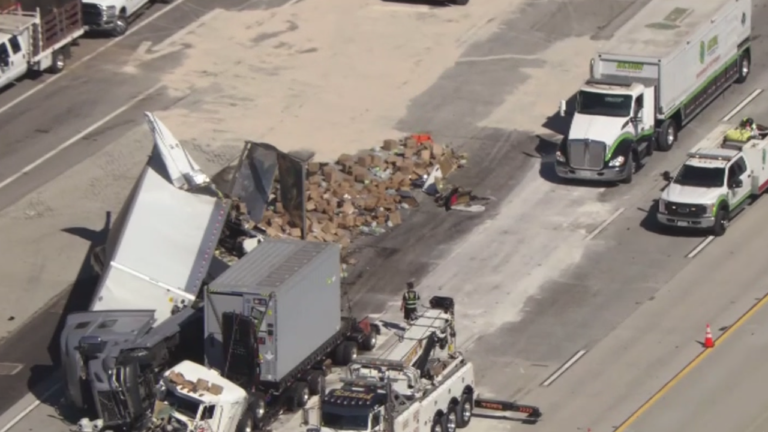
A violent collision between two semitrucks shut down all westbound lanes of the 210 Freeway in La Crescenta for more than 12 hours this week, scattering debris across the roadway. As reported by ABC7, the crash occurred Wednesday morning just before 11 a.m. east of Pennsylvania Avenue, and one person was taken to a hospital in unknown condition, according to the Los Angeles County Fire Department. The cause remains under investigation, and lanes did not fully reopen until around 1 a.m. Thursday. The crash came the same morning as a separate incident nearby in Sunland, where a big rig caught fire on the westbound 210 and the flames spread to surrounding brush before firefighters put them out. Two serious big rig incidents on one stretch of freeway in a single morning is a reminder of how much is at stake when commercial trucks are involved in a crash — and why truck accident claims work differently than ordinary car accident cases under California law.
Why Are Truck Accidents Treated Differently Than Car Accidents?
The differences start with physics and end with law. A loaded semitruck can weigh many times more than a passenger car, so when something goes wrong, the resulting damage — to vehicles, to the roadway, and to people — is typically far more severe. A crash violent enough to scatter debris and close a freeway for half a day illustrates the forces involved.
Legally, truck accidents involve a web of parties and rules that ordinary car crashes do not. Commercial trucking is governed by federal and state safety regulations covering driver hours, vehicle maintenance, inspections, and cargo loading. And responsibility rarely stops with the driver: depending on the facts, potentially responsible parties can include the trucking company that employed the driver, the owner of the tractor or trailer, the company that loaded the cargo, a maintenance contractor, or a manufacturer if a mechanical failure played a role.
What Evidence Matters Most in a Truck Crash — and Why Does It Disappear So Fast?
Commercial trucks generate evidence that passenger vehicles do not: electronic logging data recording the driver’s hours, engine and event data recorders capturing speed and braking, inspection and maintenance records, dispatch and communication records, and sometimes dash camera footage. This evidence can answer the questions an investigation like this one is asking — how fast the trucks were moving, whether a driver was fatigued or out of hours, whether the equipment was properly maintained.
But much of it is held by the trucking companies themselves, and routine document retention policies mean records can be overwritten or destroyed in the ordinary course of business unless a preservation demand is sent early. Physical evidence vanishes even faster: once a freeway reopens, the debris field is gone, and damaged trucks are moved, repaired, or salvaged. This is one of the strongest reasons people injured in truck crashes benefit from acting quickly, entirely apart from any filing deadline. Obtaining the CHP accident report is a practical first step, but in a truck case it is only the beginning.
Who Can Be Held Responsible After a Commercial Truck Crash?
Responsibility depends on what the investigation reveals, and in a collision between two big rigs it may be shared. California’s pure comparative negligence rule allows fault to be divided among multiple parties in proportion to their share, and an injured person’s recovery is reduced by their own percentage of fault rather than barred. An injured truck driver may also have claims — against the other driver and carrier, and potentially through workers’ compensation against their own employer, which is a separate system from a personal injury claim and can proceed alongside one.
Trucking companies and their insurers typically begin their own investigations within hours of a serious crash, often with rapid-response teams at the scene. That head start is another reason injured people should be careful when dealing with insurance companies before understanding the full picture, and why early legal guidance matters more in truck cases than almost any other kind of crash.
How Long Do I Have to File a Truck Accident Claim in California?
For most California personal injury claims, the general statute of limitations is two years from the date of injury under Code of Civil Procedure § 335.1, and it helps to understand how filing a lawsuit works before that window narrows. A much shorter deadline can apply when a government entity may share responsibility — for example, if a dangerous roadway condition contributed — in which case the California Government Claims Act (Government Code § 911.2) generally requires a formal written claim within six months of the incident. But in truck cases, the practical deadline is often the evidence itself: logging data, maintenance records, and camera footage can be gone long before any legal deadline arrives, so the effective clock runs much faster than the statute suggests.
What Should I Do If I Was Hurt in a Truck Crash?
The fundamentals apply, with added urgency. Get medical attention even if you initially feel fine, since serious injuries can surface hours or days later. Keep everything: the report number, medical records, photographs of your vehicle before repair, and every communication from any insurer. Do not give recorded statements to a trucking company’s insurer before understanding your rights — their investigators are working from day one. And consider speaking with an attorney early, so preservation demands can go out before critical records are lost. A consultation commits you to nothing; it protects your options while they still exist.
How Oaks Law Firm Can Help
At Oaks Law Firm, we help people injured in truck and commercial vehicle crashes across Los Angeles and throughout California understand their rights and act before evidence disappears. Every situation is different, and the right path depends on the specific facts, including which companies and insurers are involved. Contingency fee arrangements, which relate to attorney’s fees, may be available and can be discussed during a consultation; case costs and expenses may be handled separately.
To speak with us about your situation, request a free case evaluation or contact Oaks Law Firm for a consultation specific to your circumstances.
This article is provided for general informational purposes only and does not constitute legal advice. The information presented may not reflect the most current legal developments and should not be relied upon as a substitute for consultation with a licensed attorney. Every personal injury case involves unique facts and circumstances, and the outcome of any case depends entirely on those specific facts. Any results, settlement amounts, or verdicts referenced in this content are specific to the individual cases described, are not typical, and do not guarantee, promise, or predict a similar outcome in your case. Reading this content does not create an attorney-client relationship with Oaks Law Firm. Contact us directly for a consultation specific to your situation.
