
What to Do After a Multi-Car Crash in California: Lessons from the Reseda Collision
A serious crash on a busy San Fernando Valley street is a reminder of how quickly an ordinary afternoon drive can turn into a life-altering event. On the afternoon of June 23, 2026, eight people were hurt in a multi-vehicle collision in Reseda, and the scene that emerged offers a useful window into how California personal injury law treats pileups involving several drivers and passengers. If you were involved in a multi-car wreck anywhere in Los Angeles, this guide explains what California law says about your rights, your deadlines, and the steps that tend to matter most.
What happened in the Reseda multi-car crash?
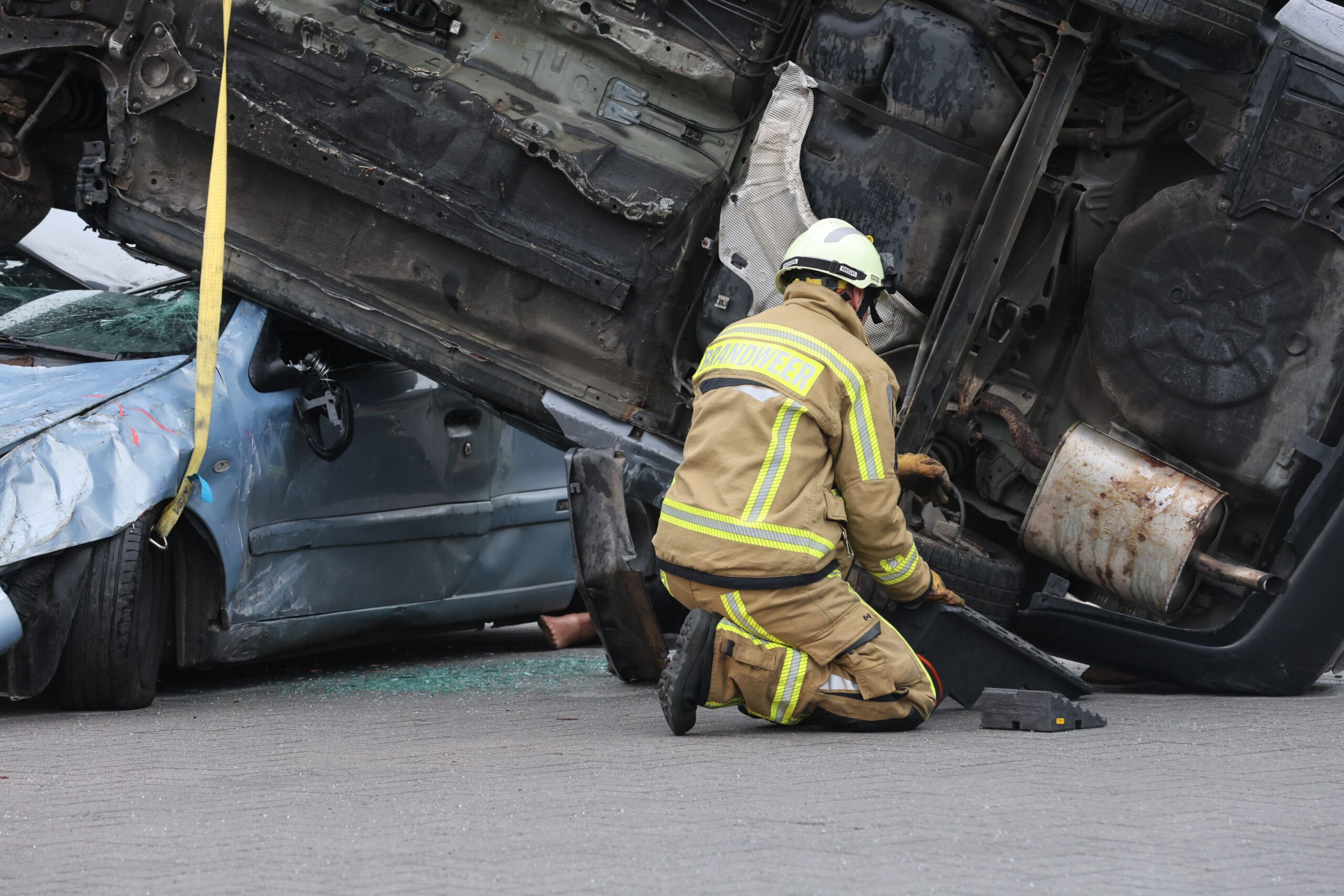
According to CBS Los Angeles, the collision occurred around 4:40 p.m. on a Tuesday in the 7100 block of North Tampa Avenue in Reseda. The Los Angeles Fire Department reported that eight people were injured, that two of them were in critical condition, and that one victim was ejected from a vehicle. Paramedics transported multiple people to the hospital. Aerial footage of the aftermath showed five damaged cars spread across three lanes of the road, with another heavily damaged vehicle, showing major front-end damage, on the opposite side. Authorities closed the road while the Los Angeles Police Department investigated.
As with most crashes in the immediate hours afterward, key facts were still unknown, including exactly how the collision unfolded and who may have been at fault. Nothing in this article assigns blame to any person involved in the Reseda crash; the investigation is the proper place for those questions to be answered. What the incident illustrates well, though, is how complicated a multi-vehicle crash can be once the legal questions begin.
Why are multi-car crashes legally more complicated than two-car accidents?
In a straightforward two-car collision, the central question is usually which of two drivers was at fault. A pileup involving five or six vehicles multiplies that question. There may be a single driver whose conduct set off a chain reaction, or there may be several drivers who each contributed in different ways one following too closely, another braking late, another changing lanes without enough room. Sorting out who is responsible, and to what degree, often requires reconstructing the sequence of impacts.
This matters because in California, more than one party can share legal responsibility for the same crash. California follows a “pure comparative negligence” rule, which means fault can be divided among multiple parties by percentage, and an injured person’s recovery is generally reduced in proportion to their own share of fault rather than eliminated entirely. In a multi-car wreck, that framework can come into play in complex ways, with insurers for several drivers each trying to shift responsibility elsewhere. Untangling it usually depends on physical evidence, witness accounts, and sometimes accident reconstruction.
What should you do right after a car accident in California?
If you are injured in a crash and are able to do so safely, a few steps tend to protect both your health and your legal options. First and most important, get medical attention. Some injuries, including those affecting the head, neck, and spine, may not be obvious in the adrenaline of the moment, and a prompt evaluation both protects your health and creates a dated medical record. Call 911 so that police and paramedics respond and an official report is created, as happened in Reseda. If you can, document the scene with photographs of the vehicles, their positions, the roadway, and any visible injuries, and collect the names and contact information of other drivers and any witnesses. Exchange insurance information, and report the crash to your own insurer.
A few cautions are worth keeping in mind. Be careful about giving recorded statements or accepting any early characterization of fault before you understand your own situation, and avoid signing anything you do not fully understand. In a chaotic multi-car scene, early assumptions about what happened are often incomplete.
How long do you have to file a car accident claim in California?
California sets firm deadlines for taking legal action, and they are enforced strictly. Understanding which one applies to your situation early can make the difference between preserving a claim and losing it permanently.
For most California personal injury claims, including the great majority of car accident cases, the general statute of limitations is two years from the date of injury, under Code of Civil Procedure section 335.1. Courts apply this deadline rigidly; filing even slightly late typically results in dismissal regardless of how strong the underlying claim might be. There is also a separate, longer deadline for property damage to your vehicle, but the personal injury deadline is the one that most directly affects a person’s right to seek compensation for their injuries.
That two-year general rule has significant exceptions. The most important arises when a claim is against a government entity a city, county, the state, a public transit agency, a public hospital, or a similar public body. In those situations, the California Government Claims Act (Government Code section 911.2) generally requires a formal written claim to be presented to the entity within six months of the incident, and that step must occur before any lawsuit can be filed. Six months is far shorter than many people realize, and whether a public entity could be a responsible party is not always apparent right away. Other rules can also shift these deadlines depending on the circumstances and the people involved. Because of all this, the safest course is to confirm the specific deadline that applies to your situation with an attorney as soon as possible rather than assuming you have the full two years.
There is also a practical reason not to wait that has nothing to do with the filing deadline itself. Evidence in a multi-car crash can disappear quickly. Vehicles get repaired or scrapped, the roadway is cleared and reopened as it was in Reseda once the investigation concluded surveillance footage is overwritten, and witnesses’ memories fade. Photographs, vehicle data, the police report, and medical records created close in time to the crash are far more persuasive when gathered early. Preserving that information promptly matters regardless of when any legal deadline ultimately falls.
Do you need a lawyer after a multi-car accident?
Not every fender-bender requires an attorney, and many minor collisions are resolved directly with insurers. But a serious multi-vehicle crash with several injured people, critical injuries, an ejection, and multiple insurance companies the kind of scenario the Reseda collision presents is precisely the type of situation where the questions become complicated. When fault may be shared among several drivers, when injuries are significant, or when more than one insurer is involved, having someone evaluate the facts and protect your interests can be valuable.
What an attorney cannot ethically do is promise a particular result. Every case turns on its own facts, and outcomes depend entirely on those specific facts. What an attorney can do is help identify who the potentially responsible parties are, determine which deadlines apply to your circumstances, work to preserve evidence before it is lost, and deal with insurers on your behalf so you can focus on recovering.
Talk to Oaks Law Firm about your situation
If you or a family member was injured in a multi-car crash in the San Fernando Valley or elsewhere in Los Angeles, Oaks Law Firm offers consultations to discuss the specific facts of your situation and explain your options under California law. There is no obligation, and reaching out simply gives you accurate information to decide what, if anything, you want to do next. You can contact Oaks Law Firm to arrange a consultation specific to your circumstances.
Oaks Law Firm — Los Angeles, California.
This article is provided for general informational purposes only and does not constitute legal advice. The information presented may not reflect the most current legal developments and should not be relied upon as a substitute for consultation with a licensed attorney. Every personal injury case involves unique facts and circumstances, and the outcome of any case depends entirely on those specific facts. Any results, settlement amounts, or verdicts referenced in this content are specific to the individual cases described, are not typical, and do not guarantee, promise, or predict a similar outcome in your case. Reading this content does not create an attorney-client relationship with Oaks Law Firm. Contact us directly for a consultation specific to your situation.
