What to Know After the Boyle Heights Warehouse Fire
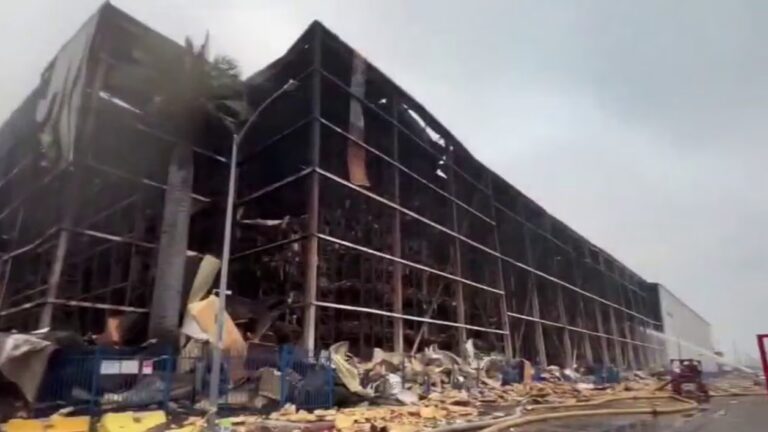
For more than a week in June 2026, a cold-storage warehouse on South Los Palos Street in Boyle Heights burned in one of the most stubborn structure fires Los Angeles has seen in recent memory. The blaze sent smoke across much of the metropolitan area and left thousands of residents, workers, and nearby business owners wondering what it means for their health, their property, and their legal options. If you live, work, or own property in East Los Angeles and were affected, this guide explains how California personal injury law applies to a disaster like this one and what steps you may want to take while the situation is still fresh.
What happened in the Boyle Heights warehouse fire?
The fire broke out the afternoon of June 17, 2026, at a roughly 500,000-square-foot frozen-food facility operated by Lineage Logistics, located east of downtown Los Angeles directly across the street from homes in the working-class Boyle Heights neighborhood. According to the Los Angeles Fire Department, the building was insulated like a giant freezer and packed with steel rack shelving rising 65 feet high, holding an estimated 85 million pounds of frozen seafood, pork, beef, and poultry bound for grocery stores and restaurants along the West Coast.
That construction is exactly what made the fire so hard to fight. As the LAFD explained, cold-storage warehouses can burn for weeks because their heavily insulated roofs and walls trap heat and smoke and resist the ventilation tactics firefighters normally rely on. Crews were never able to safely enter the building; instead, they stripped away exterior wall sections and poured heavy water streams inside, at one point even using water-dropping helicopters on a structure fire — a rare measure. The department declared a knockdown the evening of June 24, after the fire had burned for roughly eight days, and announced plans to demolish part of the structure and monitor the debris for hot spots, a process officials said could take months.
Fire officials have said preliminary information points to subcontractors working on rooftop solar panels when the fire started. Lineage, which operates the facility, said in a public statement that it believes the fire began during that solar work but that the official cause had not yet been determined and that it was cooperating with investigators. It is important to understand that an official cause has not been finalized, and nothing in this article assigns legal fault to any company or person.
Was the smoke from the Boyle Heights fire dangerous to breathe?
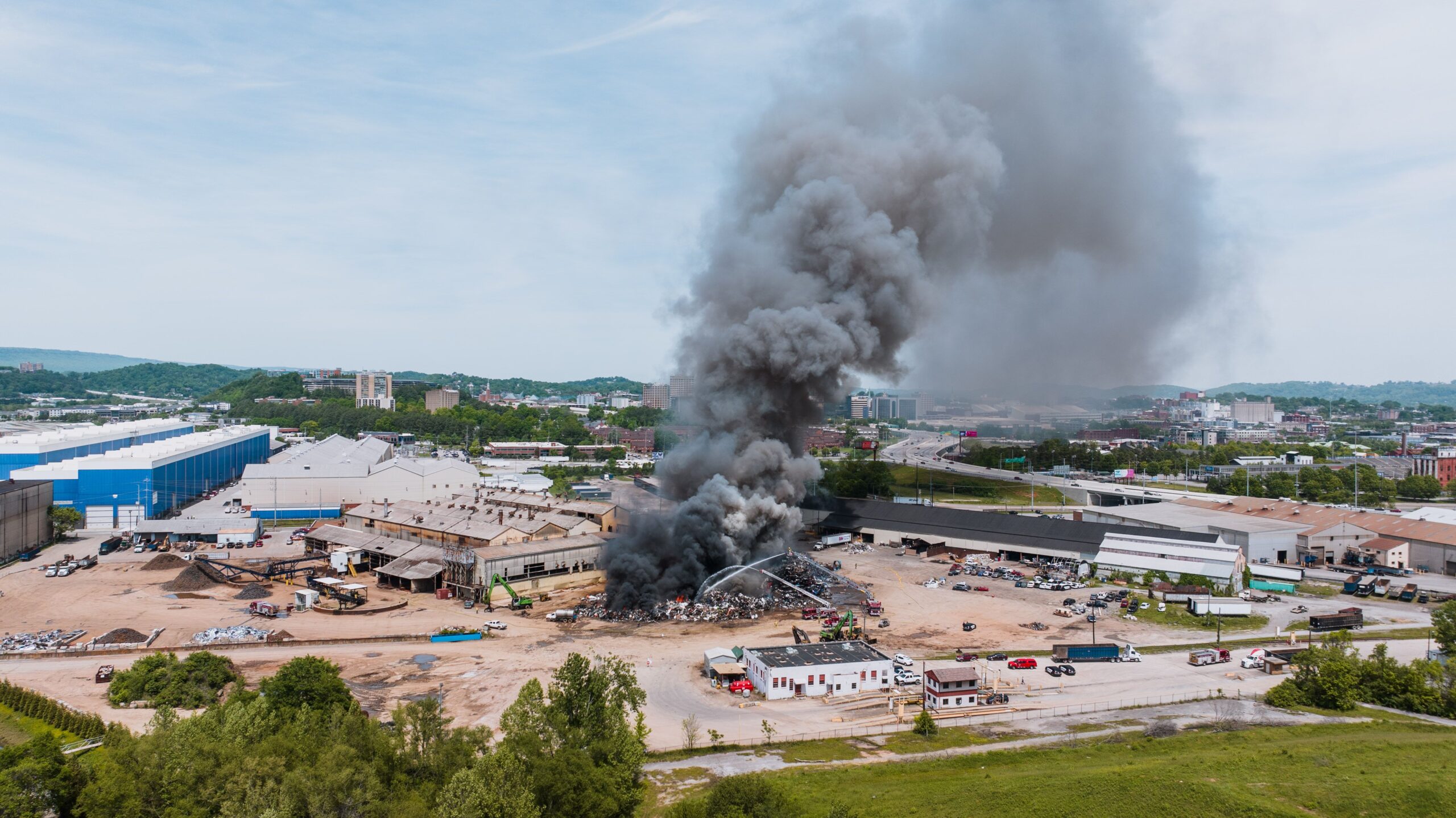
Air quality was the most widespread concern. The South Coast Air Quality Management District issued and repeatedly extended smoke and particle-pollution advisories, warning that the fire was producing fine particulate matter known as PM2.5 microscopic particles small enough to travel deep into the lungs. City and county health officials told residents in the most affected areas to stay indoors, close windows and vents, turn off air conditioning that draws in outside air, and bring pets inside, and they advised anyone who had to go outside to wear an N95 or P100 mask.
According to air-quality monitoring organization IQAir, the smoke’s reach extended well beyond Boyle Heights itself, with effects reported across a wide swath of the region including communities such as Commerce, Vernon, Montebello, Monterey Park, Burbank, the San Gabriel Valley, parts of Orange County, and the Inland Empire as winds pushed the plume in shifting directions. Authorities also reported a shelter-in-place order tied to an ammonia line rupture during firefighting operations, later lifted as conditions improved. The American Red Cross opened assistance centers in the area for displaced and affected residents.
Smoke exposure can affect people very differently. Children, older adults, pregnant women, and people with asthma, COPD, heart conditions, or other respiratory illnesses are generally considered more vulnerable to fine-particle pollution. If you or a family member experienced breathing problems, aggravated asthma, or other health effects you believe are connected to the smoke, the most important first step is medical: get evaluated by a healthcare provider, both for your health and because contemporaneous medical records create a clear, dated account of what you experienced.
Can you bring a personal injury claim after a fire like this in California?
This is the question many affected residents are asking, and the honest answer is that it depends heavily on the specific facts. California personal injury law generally allows a person to seek compensation when they are harmed by another party’s negligence that is, by a failure to use reasonable care that causes injury. In the context of a large industrial fire, the people potentially affected can include nearby residents exposed to smoke, workers, and owners of nearby property or businesses that suffered damage or disruption.
Whether any particular individual has a viable claim turns on questions that can only be answered through investigation: who was responsible for the condition or activity that led to the harm, what duties they owed, whether those duties were breached, and whether that breach actually caused a compensable injury. Because the official cause of this fire has not been determined and the facts are still developing, no one can responsibly tell you in advance whether you personally have a case or what it might be worth. What an attorney can do is evaluate your specific situation against the evidence as it becomes known. Every case is different, and outcomes depend entirely on the individual facts.
What kinds of harm can California personal injury law address?
When someone is injured because of another party’s negligence, California law recognizes several categories of potential recovery. These commonly include medical expenses for treatment of physical injuries, lost income or earning capacity when an injury keeps a person from working, and compensation for physical pain and emotional suffering. In cases involving harm to property, separate legal rules govern recovery for property damage.
It is worth being realistic about how these categories apply to a smoke-exposure situation specifically. A claim generally requires an actual, demonstrable injury, not simply exposure or inconvenience. That is one reason documentation matters so much: a clear record of medical symptoms, treatment, missed work, and property impacts is what allows a claim to be evaluated on its merits. We are not suggesting that any particular result is likely or available in any individual case only describing the kinds of harm the law is designed to address.
How long do you have to file a personal injury claim in California?
Time limits are one of the most important things to understand early, because in California they are strict and missing them can permanently end a claim.
For most California personal injury claims, the general statute of limitations is two years from the date of injury, under Code of Civil Procedure section 335.1. Courts enforce this deadline rigidly, and filing even a short time late typically results in dismissal regardless of how strong a case might otherwise be.
That two-year general rule, however, has significant exceptions and one of them is especially relevant when public agencies may be involved in an incident. If a claim is against a government entity, such as a city, county, state agency, public hospital, or other public body, the California Government Claims Act (Government Code section 911.2) generally requires a formal written claim to be presented to that entity within six months of the incident and that step must happen before any lawsuit can be filed. Six months is a much shorter window than many people expect, and whether a government entity could be a responsible party in any given situation is not always obvious from the outset. Other exceptions and tolling rules can also shorten or extend deadlines depending on the circumstances and who is involved, so the safest approach is to confirm your specific deadline with an attorney as soon as possible rather than assuming you have two full years.
There is also a practical reason not to wait, independent of any filing deadline. Evidence in a case like this can be lost or altered quickly. The fire scene itself is slated for partial demolition, debris is being cleared, air-quality conditions change by the hour, and memories fade. Photographs, air-quality readings, medical records created close in time to symptoms, and witness accounts are far more persuasive when gathered early. Preserving that information promptly matters regardless of when any legal deadline ultimately falls.
What should you do now if you were affected by the Boyle Heights fire?
If you were impacted by the smoke or the fire, a few sensible steps can protect both your health and any future legal options without committing you to anything:
Seek medical attention for any symptoms and keep copies of records and bills. Photograph and document any property damage, ash, soot, or debris on your home, vehicle, or business, with dates. Save any official notices, air-quality advisories, or evacuation and shelter-in-place instructions you received. Keep a simple written log of symptoms, days of missed work, and out-of-pocket costs. And hold on to receipts for anything you had to buy or replace because of the fire, such as masks, air purifiers, or temporary lodging.
None of these steps requires you to make any legal decision today. They simply preserve your ability to make an informed choice later.
When should you talk to a personal injury attorney?
Because the cause of this fire is still under investigation and the legal picture will develop as more facts emerge, the most useful thing an affected resident or worker can do is get an early, individualized assessment of their situation. An attorney can help identify who the potentially responsible parties are, determine which deadlines apply to your circumstances including whether any shorter government-claim deadline might be in play and advise you on preserving evidence before it disappears.
If you or your family were affected by the Boyle Heights warehouse fire, Oaks Law Firm offers consultations to discuss the specific facts of your situation and explain your options under California law. There is no obligation, and reaching out simply gives you accurate information to decide what, if anything, you want to do next. You can contact Oaks Law Firm to arrange a consultation specific to your circumstances.
Oaks Law Firm, Los Angeles, California.
This article is provided for general informational purposes only and does not constitute legal advice. The information presented may not reflect the most current legal developments and should not be relied upon as a substitute for consultation with a licensed attorney. Every personal injury case involves unique facts and circumstances, and the outcome of any case depends entirely on those specific facts. Any results, settlement amounts, or verdicts referenced in this content are specific to the individual cases described, are not typical, and do not guarantee, promise, or predict a similar outcome in your case. Reading this content does not create an attorney-client relationship with Oaks Law Firm. Contact us directly for a consultation specific to your situation.
