
You’ve just been in an accident. Your car is damaged, your stress is high, and someone is already telling you to “just file a claim.” But a car accident property damage claim is not as simple as making a phone call and waiting for a check. The process involves specific deadlines, documentation requirements, insurance tactics designed to minimize payouts, and legal rights most people don’t know they have. This guide breaks down everything you need to know, from what counts as property damage to how long you can expect to wait for a settlement and what to do when the insurance company undervalues your loss.
Table of Contents
- Key takeaways
- What you need to know before filing a car accident property damage claim
- Step-by-step process for filing a car damage claim
- Common mistakes that can hurt your claim
- What to expect after filing: timelines and settlement outcomes
- My take on property damage claims after car accidents
- How Oaks Law Firm can help with your claim
- FAQ
Key takeaways
| Point | Details |
|---|---|
| Document everything immediately | Time-stamped photos, police reports, and repair estimates are your strongest tools in any claim. |
| Know your deductible first | Filing minor claims near your deductible can raise your premiums without giving you a real financial benefit. |
| Diminished value is real money | Even after repairs, your car loses resale value and you may be entitled to compensation for that loss. |
| Timelines vary widely | Minor property claims resolve in 1 to 2 months, but injury-linked claims can stretch well beyond a year. |
| An attorney changes the outcome | Early legal involvement protects your rights and counters insurer tactics that reduce what you recover. |
What you need to know before filing a car accident property damage claim
Before you call your insurance company or the other driver’s insurer, you need a clear picture of what you’re actually dealing with. A property damage claim after a car accident is a formal request for compensation covering physical damage to your vehicle or other property caused by the collision. That can include your car, a fence you hit, a parked vehicle, or personal items destroyed in the crash.
Understanding your coverage types
The type of coverage you carry determines who pays and how much. Here’s how the main options break down:
- Liability coverage: Covers damage you cause to someone else’s property. If the other driver was at fault, their liability coverage should pay for your repairs.
- Collision coverage: Covers damage to your own vehicle regardless of fault. You pay the deductible; your insurer covers the rest.
- Comprehensive coverage: Handles non-collision damage like theft, flooding, or a fallen tree.
- Uninsured/underinsured motorist property damage: Protects you when the at-fault driver has no insurance or not enough of it.
Your deductible plays a bigger role in your decision than most people realize. Filing minor claims near or under your deductible can trigger premium increases without giving you any real financial benefit. If your deductible is $1,000 and the damage is $1,200, paying out of pocket may be the smarter move once you factor in potential rate hikes.
Your legal rights after property damage
California law gives you the right to seek full compensation for your vehicle’s repair costs, a rental car while yours is being fixed, and diminished value if the accident reduced your car’s market worth. You are also entitled to choose your own repair shop in most cases. The insurer cannot legally force you to use a specific facility, though they may try to steer you toward preferred vendors.
Pro Tip: Before accepting any settlement offer for your vehicle, get at least two independent repair estimates. Insurers sometimes base initial offers on the lowest possible repair cost, not the actual cost to restore your car properly.
Understanding the difference between property and personal injury claims matters here too. Property damage and bodily injury are handled separately, and settling your property damage claim too quickly can sometimes complicate a concurrent injury claim.
Step-by-step process for filing a car damage claim
Getting the process right from the first minutes after a crash makes everything that follows easier. Here is the sequence that protects your claim from the start.
- Stay at the scene and check for injuries. Call 911 if anyone is hurt. Even for property-only accidents in California, a police report creates an official record that strengthens your claim.
- Document the scene thoroughly. Take photos from multiple angles of all vehicles involved, the road conditions, traffic signs, skid marks, and any other property damage. Time-stamped documentation is one of the most decisive factors in claim success.
- Exchange information. Get the other driver’s name, contact information, license plate number, driver’s license number, and insurance details. Collect contact information from any witnesses as well.
- Report the accident to your insurer promptly. Most policies require notification within a reasonable time after the accident. Late reporting is one of the most common reasons insurers deny claims outright.
- Obtain a copy of the police report. This typically takes a few days to process. Your insurer and any attorney will want this document.
- Get repair estimates. Take your vehicle to at least two reputable shops and get written estimates. Keep copies of everything.
- Submit your claim with organized documentation. Include your photos, estimates, police report, and any receipts for expenses like towing or a rental car.
- Cooperate with the insurance adjuster. An adjuster will inspect the vehicle and assess damage. You have the right to be present during this inspection.
What documentation you actually need
Organized evidence is the backbone of any successful car insurance property claim. Here is a practical reference:
| Document | Why it matters |
|---|---|
| Accident scene photos | Establishes scope and cause of damage visually |
| Police report | Creates an official, third-party account of the accident |
| Repair estimates | Provides baseline for negotiating the settlement amount |
| Rental car receipts | Supports reimbursement for transportation costs during repairs |
| Witness statements | Strengthens your version of events if fault is disputed |
| Medical records (if injured) | Links injuries to the accident for any concurrent injury claim |
Pro Tip: Create a single folder on your phone or cloud storage the moment you leave the accident scene. Drop every photo, screenshot, and scanned document into it. This makes sharing with your insurer or attorney instant instead of stressful.
Strong organized evidence also gives an attorney the foundation needed to fight for full compensation when fault is contested or the insurer lowballs the repair estimate.

Common mistakes that can hurt your claim
Even well-intentioned claimants make errors that cost them money or delay resolution. Knowing where things typically go wrong puts you ahead of most people going through this process.
The single most damaging mistake is under-documenting. People often take a few photos at the scene and assume that’s enough. It rarely is. Adjusters look for precise evidence of what was damaged and how severely. Insufficient documentation is one of the leading causes of claim denials, alongside late reporting and disputed pre-existing damage.
Another common mistake is accepting the first settlement offer without questioning it. Insurance companies have a financial incentive to close claims quickly and cheaply. The first offer is almost never the best offer. You are entitled to negotiate, and having an independent repair estimate in hand gives you real leverage.
Diminished value: the payout most people never ask for
Here is something most claimants never even know to request. After an accident, even a perfectly repaired car is worth less on the market than an identical car with a clean history. A vehicle’s resale value can drop 10% for minor accidents and up to 50% for severe structural damage. That lost value is something you can and should claim from an at-fault driver’s insurer in California.
Insurers use depreciation and diminished value aggressively to limit payouts. To counter this, you need an independent appraisal from a certified vehicle appraiser who can document the loss in writing.
One of the most overlooked parts of auto accident damage recovery is the gap between what your car costs to fix and what it’s actually worth afterward. Repairs get you back on the road. A diminished value claim gets you closer to whole.
- Keep every receipt. Towing, storage fees, rental cars, and even rideshare costs while your car is in the shop can be reimbursed.
- Never admit fault at the scene. Even casual comments like “I didn’t see you” can be used against your claim later.
- Avoid recorded statements without legal advice. Insurers may ask for a recorded statement early in the process. You are not required to give one, and doing so without preparation can harm your position.
- Consult an attorney before signing a release. Once you sign a settlement release, you typically cannot reopen the claim no matter what you discover later.
For more on how to maximize what you recover, the car accident compensation guide from Oaks Law Firm walks through the full picture for California claimants.
What to expect after filing: timelines and settlement outcomes
Once you submit your claim, the waiting begins. How long that wait lasts depends heavily on the complexity of the damage and whether injuries are involved.
Minor versus complex claims: a realistic comparison
| Claim type | Typical resolution timeline | Key factors affecting speed |
|---|---|---|
| Minor property damage only | 1 to 2 months | Clear liability, minimal documentation disputes |
| Moderate property damage | 2 to 4 months | Multiple vehicles, fault disputes, adjuster delays |
| Property damage plus injury | 6 months to 1.5 years or longer | Medical treatment completion, liability disputes |
| Total loss vehicle | 3 to 6 weeks (property portion only) | Comparable vehicle valuation, lien resolution |
Minor property-damage-only claims typically resolve within 1 to 2 months when liability is clear and documentation is solid. The moment injuries enter the picture, the timeline changes dramatically. Claim settlement for injury-linked cases cannot be finalized until medical treatment is complete and the full extent of harm is known. That process alone can take six months to well over a year.
When your car is declared a total loss
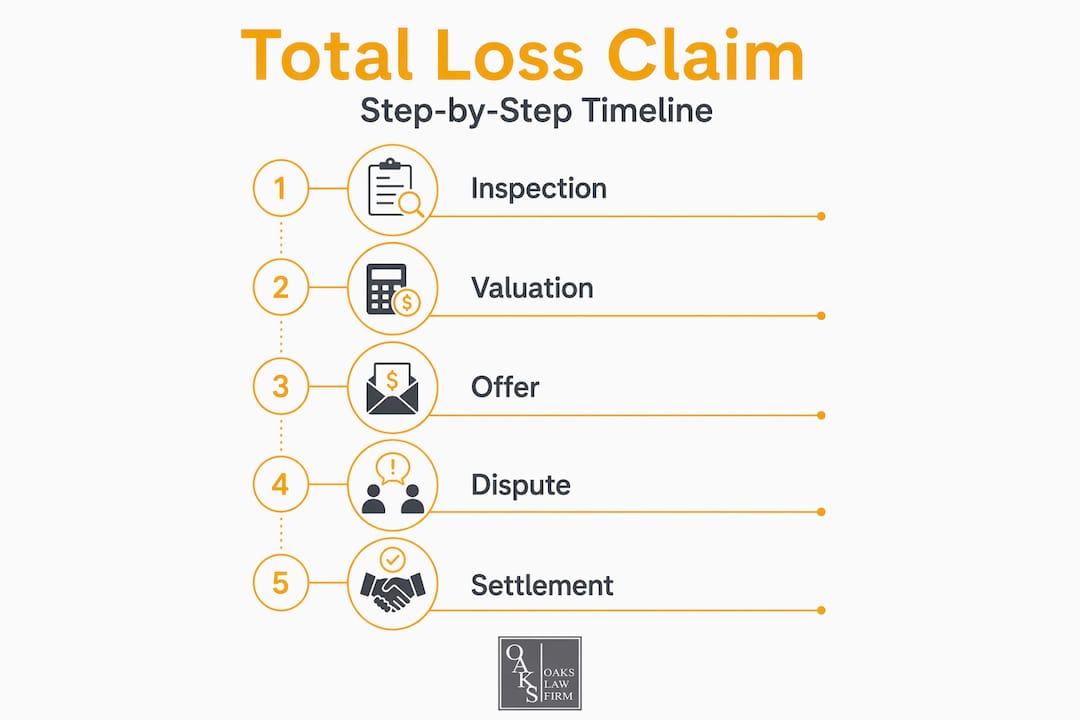
If the cost to repair your vehicle exceeds a certain percentage of its actual cash value (the threshold varies by state but is typically around 70% to 75% in California), the insurer will declare it a total loss. They will offer you the car’s pre-accident market value, minus your deductible if you are going through your own collision coverage.
The problem is that insurers often use low comparable sales to calculate that value. You have the right to dispute the total loss valuation. Gather your own comparable listings for similar vehicles in your area and present them formally. If the insurer still won’t budge, an attorney or a public adjuster can press the issue on your behalf.
If your claim is denied or the settlement offer is genuinely unfair, you can file a complaint with the California Department of Insurance. You can also pursue the matter through litigation. Understanding how long a personal injury claim takes in California will help set realistic expectations if you do end up in that position.
Pro Tip: Do not return the rental car the moment your vehicle is repaired. Wait until you have physically inspected the repair work and are satisfied with the quality. Once you return the rental and accept the vehicle, it signals the insurer that the claim is resolved.
My take on property damage claims after car accidents
I’ve represented accident victims in the San Fernando Valley and across California for more than two decades. In that time, I’ve watched the same patterns repeat themselves. People get into accidents, feel relieved the injuries seem minor, and then rush through the property damage side of things because they want it over with. That urgency almost always costs them money.
The biggest misconception I encounter is the belief that having insurance automatically means getting fair compensation. It doesn’t. Insurers are businesses. Their adjusters are trained to settle claims efficiently, which often means settling them cheaply. The tactics insurers use to limit payouts are systematic, and most claimants don’t recognize them until after they’ve signed a release.
What I’ve seen make the biggest difference is not the facts of the accident itself. It’s the quality of the documentation. A client who photographs everything, keeps every receipt, and gets independent repair estimates in writing is in a completely different negotiating position than someone who just trusted the adjuster’s assessment. Strong evidence shifts power back to the claimant.
My honest advice is this: consult an attorney before you accept any settlement offer, even on a purely property-based claim. A 30-minute conversation can save you thousands of dollars. Most personal injury attorneys, including my firm, offer free consultations. You have nothing to lose by getting a second opinion on what your claim is actually worth.
— Matthew Nezhad
How Oaks Law Firm can help with your claim

Dealing with an insurance company after an accident while also trying to repair your car and resume your life is genuinely difficult. At Oaks Law Firm, attorney Matthew Nezhad and his team have spent more than two decades helping accident victims across the San Fernando Valley and California get the compensation they actually deserve, not just what an insurer is willing to offer first.
Whether you are facing a disputed liability decision, a lowball total loss offer, or an insurer that keeps delaying your payout, our team knows how to push back effectively. We handle both property damage and personal injury claims, and we take on a limited number of cases each year so every client gets focused attention. If you are ready to understand what your claim is truly worth, start your case evaluation today. The consultation is free, and there is no obligation.
FAQ
What is a property damage claim after a car accident?
A property damage claim is a formal request for financial compensation covering physical damage to your vehicle or other property caused by a car accident. It is typically filed through either your own insurer or the at-fault driver’s insurer, depending on who was responsible and what coverage is in place.
How long does a car accident property damage claim take?
Minor property damage claims typically resolve within 1 to 2 months when liability is clear. Claims that involve injuries or disputed fault can take 6 months to over a year to reach final settlement.
Should I file a claim if the damage is close to my deductible?
Probably not. Filing claims near your deductible can trigger premium increases that cost more over time than the claim itself would pay out. If the damage is only slightly above your deductible, paying out of pocket often makes more financial sense.
Can I claim diminished value after my car is repaired?
Yes. In California, you can seek compensation for diminished value from the at-fault driver’s insurer. A vehicle that has been in an accident is worth less on the resale market even after repairs, and that resale loss can range from 10% to 50% depending on damage severity.
When should I hire an attorney for a property damage claim?
Hire an attorney when the insurer denies your claim, disputes fault, offers a settlement that does not cover actual repair costs, or when your vehicle is declared a total loss at a value you believe is inaccurate. Early legal consultation protects your rights before you accidentally waive them by signing a release.
